Languages
Thursday, November 19, 2026



News and Views from the Global South
Global Geopolitics
POLITICS: Balkanisation of Libya
As the battle for Libya rages on - with the country’s economic heartland, Misurata, being the scene of some of the uprising’s fiercest fighting - experts are warning that a ‘Balkanisation’ of Libya is possible if the U.S. and NATO opt to exploit loopholes in U.N. Resolution 1973 by arming the opposition.
Egypt Seeks End to Foreign Wheat Dependence
Egypt is stepping up its wheat production in a bid to stem the country’s rising dependence on foreign imports that escalated during the 30-year rule of former President Hosni Mubarak, who was ousted in February.Humanity Hitting the Resource Ceiling
Better living through using far fewer material resources is the only possible future, experts agree. Humanity is pressing up against the limits of a finite planet to provide resources like water, oil, metals and food, according to a new report released Thursday.
DEVELOPMENT: Market Forces Rise Above Declarations
Upstairs in halls where the conference of the Least Developed Countries (LDCs) is being held, all the right things were being said about the misery of poverty and the virtue of opportunity and development. Several floors below, what are called ‘market forces’ were at work.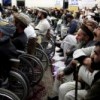
Armed Conflicts Claim Unprecedented Number of Civilians
Afghanistan, once described as the graveyard of empires, is ranked number one as the country with the most "significant rise" in civilian deaths last year, turning it into a veritable killing field, according to a new report by the London-based Minority Rights Group International (MRG).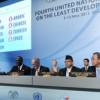
DEVELOPMENT: Civil Society Rejects ‘Toothless’ Istanbul Plan of Action
Civil society groups have vowed to mobilise citizens of the world’s poorest nations to take to the streets, rejecting the Istanbul Programme of Action agreed today by the Fourth U.N. Conference on the Least Developed Countries.U.N. to Host World Summit on Nuclear Safety
The severity of the recent nuclear accident at the Fukushima Daiichi power plant in Japan has prompted U.N. Secretary- General Ban Ki-moon to convene a high-level meeting of world leaders on a politically-sensitive issue: nuclear security.
YEMEN: Youth Want New Faces and a New Modern Country
Yemen’s young anti-government protesters have learnt a vital lesson about the world of politics during their seemingly endless revolution - betrayal is inevitable.Seed Proteins May Help Plants Weather Drought
British researchers are working on techniques to improve seeds chances of surviving drought by tapping the potential of little-known proteins that regulate water intake.HEALTH: ‘Lifestyle Diseases’ Cause Two-Thirds of Deaths
Health experts from around the world have acknowledged rising numbers of ‘lifestyle’ or non-communicable diseases (NCDs) in different countries, admitted inadequate funds are the biggest obstacle in health delivery, and called on the global community to consolidate efforts to effectively tackle the problem.
LDCs Seek Mini Trade Deal
Leaders from the Least Developed Countries are making a strong push in Istanbul for a mini trade deal for their 48 impoverished nations - ahead of any worldwide agreement under the Doha Round.
DEVELOPMENT: Women Demand Access to Water and Energy
"Women in LDCs bear the brunt of economic and social hardships," said Wubitu Hailu, managing director of an Ethiopian NGO, the Kulich Youth Reproductive Health and Development Organisation. The failure to provide access to basic services like clean water and electricity is a major factor preventing women from realising their full potential.
MIDEAST: Egyptian Activists Gear Up For Third Intifadah
Following the February ouster of Egypt’s longstanding President Hosni Mubarak, calls have been circulating in Egypt and throughout the region for a ‘Third Intifadah’ to begin May 15.Obama Faces Tough Choices on Mideast Diplomacy
With Israeli Prime Minister Benjamin Netanyahu scheduled to descend on Washington in less than two weeks, President Barack Obama faces some difficult decisions about how to restore the credibility of his promise to achieve a two-state solution to the Israeli-Palestinian conflict without triggering a backlash in a Congress that is solidly pro-Israel.WORLD: Better Global and Local Governance Keys for LDCs
The world’s poorest citizens must struggle for more democratic governance and demand that their leaders fulfill their duties and responsibilities if their countries are to graduate from the group of 48 least developed countries, say civil society representatives.POPULATION: Promise Rises With a Problem
On the face of it, a rapidly rising population among the Least Developed Countries (LDCs) spells the usual doom about adequate resource distribution. But the least developed are also among the youngest in the world - and well channelled, they can be a valuable asset, United Nations Population Fund (UNFPA) head Babatunde Osotimehin told IPS.TRADE: Glencore: Profiteering From Hunger and Chaos
The rapid rise in prices for food, fuel and commodities has been disastrous for the world's poor, including Indonesian market vendor Lia Romi. But it's a bonanza for multinational trading firms such as Glencore.ECONOMY: Looking for Development Leverage
Given a few incentives, private companies can be attracted to invest in poor countries that before were not on their radar. Donor countries are betting on this new avenue of public-private-partnerships (PPPs) to channel funds, technology and business knowledge to the 48 Least Developed Countries (LDCs) - the impact can be huge, but many challenges remain.U.N. Experts Push for Details on Bin Laden Operation
Was last week's killing of an unarmed Osama bin Laden in his hideout in Pakistan legitimate self-defence, justified homicide or extra-judicial execution?
DEVELOPMENT: Investment, Not Charity for LDCs
Least Developed Countries do not need charity; they want more and smarter investments. This is the point of departure for the Fourth U.N. Conference for the world’s poor countries (LDC-IV) begins in Istanbul, Turkey.OP-ED: Private Beliefs, Public Change
When the suicide bomb exploded as worshippers left New Year's mass at a Coptic church in Alexandria, 21 people died and 79 were wounded. It's hard to imagine a more grim, ghastly, or tragic way to ring in a new decade.« Previous Page — Next Page »


Is the world dominated by three great empires -- the U.S.A, China and the European Union? How much power do the great behemoths of the south -- India, Brazil, and South Africa -- wield? And where does Russia fit in that equation? Are we in the middle of a new Cold War? What are the implications of the armed conflict with Georgia? What about the new axis: Venezuela-Russia? And what role does Turkey play? What about issues like Climate Change and other global forces like the food crisis and the high energy prices? How is all this reshaping the world's forces? IPS looks for some answers.

The Week with IPS

NEXT STOP - SDGs
Tracking global progress towards a sustainable world
Tracking global progress towards a sustainable world
