Languages
Thursday, November 19, 2026



News and Views from the Global South
Global Geopolitics
World Bank Sees Strong Growth for Some Developing Nations
A report released Thursday by the World Bank indicates that for the next two years, developing nations are better poised on the road to economic recovery than their more developed counterparts.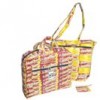
LEBANON: Trashy Bag Gets Trendy
Wafa Saab, a high-powered executive at the leading Lebanese-manufactured paint company Tinol, is an environmentally friendly fashionista. On her arm hangs a pink and blue gym bag. It’s made of garbage.Women’s Coalition Denounces Exclusion by Security Council
In October 2001, the United Nations Security Council endorsed a resolution recognising that women's participation is essential to sustain efforts for peace in the world. But did the international body ever ask world's women leaders to take part in the decision-making process?VIETNAM: Communists Gag the Web
By clamping down on the Facebook.com social networking service, Vietnam’s ruling Communist Party is revealing its discomfort with the rapidly expanding avenue for free expression even as it pushes to transform the once poor agrarian nation into a modern industrial society by 2020.
US: EcoATMs Swap E-waste for Cash
It's hardly news that the U.S. love affair with electronic gadgets has a dark side. The global toll on natural resources and the potential health and environmental hazards are staggering.
Q&A: In Search of Buen Vivir
The clock is ticking to live up to the promises governments made a decade ago to improve the lives of hundreds of millions of people. But are those promises themselves inherently flawed?
Climate Change Could Be Worsening Effects of El Niño, La Niña
The strongest La Niña weather system in 50 years has brought historic flooding to Australia and drought to Argentina, Brazil and Uruguay, driving up food prices.U.S. Bank Blacklists U.N. Missions
When the United Nations decided to locate its secretariat in the city of New York, the United States as host nation signed a "headquarters agreement" back in 1947 not only ensuring diplomatic immunity to foreign diplomats but also pledging to facilitate the day-to-day activities of member states without any hindrance.
HAITI: Haphazard Aid Hindering Long-Term Recovery
That Haiti will not recover from the trauma of 2010 for many years is an unfortunate but understood fact. More disturbing, according to a new analysis, is that aspects of current aid efforts are undermining Haiti's ability to begin the reconstruction process and develop a strong, functional state infrastructure.Latest Food Crisis Brewing for Months
The United Nations, which is trying to reach out to nearly a billion undernourished people, some living in perpetual hunger, is anticipating another food crisis later this year.
U.N. Tight-Lipped on Use of Military Force in Cote d’Ivoire
As the continuing political stalemate threatens to unleash a civil war in Cote d'Ivoire, the United Nations is taking an increasingly aggressive stance in the widening standoff with the West African nation.OP-ED/HAITI: Give Us Just a Day to Grieve
The anniversary of the earthquake is in less than a week, on Jan. 12. Never before had Haiti seen so many victims from a single catastrophe in so short a time. Never had Haitians experienced such solidarity, nor received so much attention from abroad and from the international community.Pressure Mounts on Security Council to Rein in Israel
Calls are growing for a swift international response to the situation in the Middle East, as Israel continues to build new settlements in Palestinian territories with increased military actions against civilians.Oil Leak, Haiti, Afghanistan Dominated 2010 U.S. TV News
The disastrous BP oil leak in the Gulf of Mexico, the catastrophic earthquake in Haiti, and the continuing war in Afghanistan comprised the major news stories in 2010, according to the latest annual review of network news coverage by the authoritative Tyndall Report.U.N. Chief Leaves Women out of Year-End Summing Up
When Secretary-General Ban Ki-moon wrote a year-end op-ed piece for an Australian newspaper last week, he talked about the future of a world body facing a new generation of threats: climate change, poverty, nuclear disarmament and human rights.How Afghanistan Became a War for NATO
The official line of the International Security Assistance Force (ISAF), the NATO command in Afghanistan, is that the war against Afghan insurgents is vital to the security of all the countries providing troops there.U.N. Threatens Ivorian Leaders With Possible War Crimes
The United Nations has warned the beleaguered president of Cote d’Ivoire and his military leaders that they may well go the way of Sudanese President Omar Hassan al-Bashir: face charges of war crimes and genocide before the international criminal court.DEVELOPMENT: Running Out of Engineers
As Brazil looks ahead to hosting the 2014 FIFA World Cup and the 2016 Summer Olympics, the country is struggling to line up the technical workers necessary for these projects, officials say.BURMA: Junta’s Drug ‘Exports’ to China Test Economic Ties
As military-ruled Burma prepares to unveil its new political cast, an enduring link between the junta and the country’s notorious drug lords is poised to come under the spotlight.
A Caribbean Cinderella: St. Domingo’s Colonial Zone
Santo Domingo de Guzmán was the New World’s first colonial city, the Spanish Empire’s capital, the Catholic Church’s Rome in the West Indies, and Francis Drake’s most coveted prize.Assumptions on Overfishing Challenged
For decades, fisheries around the world have relied on practices that take for granted certain assumptions about the industry, such as protecting younger fish while exploiting older fish and using trophic levels to monitor the health of fisheries. Recently, however, some scientists have begun to question these unanimously accepted practices. Experts are beginning to think that the science behind the global fishing industry may be completely wrong.« Previous Page — Next Page »


Is the world dominated by three great empires -- the U.S.A, China and the European Union? How much power do the great behemoths of the south -- India, Brazil, and South Africa -- wield? And where does Russia fit in that equation? Are we in the middle of a new Cold War? What are the implications of the armed conflict with Georgia? What about the new axis: Venezuela-Russia? And what role does Turkey play? What about issues like Climate Change and other global forces like the food crisis and the high energy prices? How is all this reshaping the world's forces? IPS looks for some answers.

The Week with IPS

NEXT STOP - SDGs
Tracking global progress towards a sustainable world
Tracking global progress towards a sustainable world
