Languages
Friday, November 13, 2026



News and Views from the Global South
Global Geopolitics

Preoccupied with Syria, U.S. Still Saddled with Egypt
The United States, which is preoccupied with the ongoing political and military developments in Syria, is still saddled with an unresolved problem elsewhere in the Middle East: the military takeover of Egypt's first democratically-elected government.
Africa in Debt to Brazil: Forgiveness Isn’t Always Free
The Brazilian government projects the cancellation of nearly 900 million dollars in debt owed by a dozen African countries as a gesture of solidarity. But others simply see an aim to expand the economic and political influence of South America’s powerhouse.
Even if Syria Complies on Chemical Arms, Six Others Still at Large
If Syria eventually agrees to relinquish its stockpile of chemical arms under the 1993 international Chemical Weapons Convention (CWC), what of the six other countries that have either shown reluctance or refused to join the treaty?
Afghans Caught Between Terror and Corruption
The threat to the stability of the Hamid Karzai government in Afghanistan arises not so much from outside as from within. And the one thing that is eating into its edifice is the malaise called corruption.Russia Throws Obama a Life Preserver on Syria
With President Barack Obama facing increasingly certain defeat in his quest for Congressional authorisation to carry out military strikes against Syria, the Russian government Monday appeared to offer the White House a way out of the crisis.U.N. Inspection a Figleaf to Justify Air Strike on Syria
The United Nations, which has remained deadlocked over Syria, is in danger of being craftily exploited to justify the impending air strike on Damascus./CORRECTED REPEAT/Obama’s Case for Syria Didn’t Reflect Intel Consensus
Contrary to the general impression in Congress and the news media, the Syria chemical warfare intelligence summary released by the Barack Obama administration Aug. 30 did not represent an intelligence community assessment, an IPS analysis and interviews with former intelligence officials reveals.Turning the Tables on the Trackers: Wikileaks Sniffs Out Spy Salesmen
What was Mostapha Maanna of Hacking Team, an Italian surveillance company, doing on his three trips to Saudi Arabia in the last year? A new data trove from WikiLeaks reveals travel details for salesmen like Maanna who hawk electronic technology to track communications by individuals without their knowledge.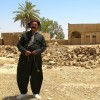
Where a Moustache Can Mean Life or Death
"The soul needs to reincarnate a thousand times before becoming one with god," says Rajab Assy Karim from Ali Saray, 190 kilometres north of Baghdad. Iraq is full of "shortcuts" to the ultimate, and several seem to pass through this tiny desert village.
Obama Increasingly Isolated on Syria Military Action
With a week of intense lobbying behind him, U.S. President Barack Obama looks increasingly beleaguered - both at home and abroad - in his effort to rally support for a military strike against Syria to punish its government for its alleged Aug. 21 chemical-weapons attack outside Damascus.
U.N. Urges Culture of Peace amid Rising Sectarian Strife
Against the backdrop of widespread sectarian violence in Iraq, Lebanon, Egypt and Syria - and rising xenophobia and Islamophobia in Western Europe and the United States - the United Nations hosted its second high-level forum on the "culture of peace".OP-ED: Syria Has Become Iran’s Vietnam – Let’s Help It Escape
As if the Iran nuclear issue was not already difficult enough, it became even more complicated when Bashar al-Assad unleashed his chemical weapons across Damascus suburbs last month. Suddenly, the Syria issue is overshadowing all other factors concerning Iran.Syria Crisis Yet to Derail Iran Nuclear Talks
Even with potential U.S. strikes against Iranian ally Syria looming, Washington and Tehran appear to be preparing for the resumption of nuclear talks.U.N. Chief Eyes Eight Holdouts in Nuke Test Ban Treaty
A group of about 20 "eminent persons" is to be tasked with an unenviable job: convince eight recalcitrant countries to join the Comprehensive Nuclear Test Ban Treaty (CTBT).Syria Strike Set to Overshadow G20 Summit
World leaders from G20 are meeting in St Petersburg, Russia, amid sharp differences over possible U.S. military action against Syria in response to what the U.S. administration calls a deadly chemical weapons attack by the Syrian government.Iran Looms over Syria Debate for Pro-Israel Groups
With Congress still deliberating over Barack Obama’s request for authorisation to take military action against Syria, the powerful Israel lobby here has taken the lead in pressing the president’s case.
Ex-World Leaders Urge U.S. to Forego Military Attack on Syria
The United States, which is preparing to launch a military strike on Syria, is being cautioned by several former world leaders and Nobel Peace laureates to seek a political solution to the ongoing crisis - and forego armed intervention in the beleaguered Middle Eastern nation.
Top Republicans, Israel Lobby Weigh for Obama’s Syria Strike
In an important boost for President Barack Obama, two key Republicans and the Israel’s lobby’s two most influential groups Tuesday announced their support for a proposed Congressional resolution authorising limited military strikes against Syria for its alleged use of chemical weapons.
U.N. Chief Dodges Question on “Illegal” Attack on Syria
When Secretary-General Ban Ki-moon was South Korea's foreign minister during 2004-2006, his answers to reporters were so predictably evasive the press corps in Seoul affectionately dubbed him "the slippery eel".
Water Scarcity Could Drive Conflict or Cooperation
When the General Assembly declared 2013 the International Year of Water Cooperation (IYWC) three years ago, the U.N.'s highest policy-making body was conscious of the perennial conflicts triggered by competition over one of the world's most critical finite resources.BOOKS: ‘Delusion’ Challenges U.S. Claims About Nuclear Iran
A Dangerous Delusion is the work of one of Britain's most brilliant political commentators, Peter Oborne, and an Irish physicist, David Morrison, who has written powerfully about the misleading of British public and parliamentary opinion in the run-up to the 2003 Iraq War.« Previous Page — Next Page »


Is the world dominated by three great empires -- the U.S.A, China and the European Union? How much power do the great behemoths of the south -- India, Brazil, and South Africa -- wield? And where does Russia fit in that equation? Are we in the middle of a new Cold War? What are the implications of the armed conflict with Georgia? What about the new axis: Venezuela-Russia? And what role does Turkey play? What about issues like Climate Change and other global forces like the food crisis and the high energy prices? How is all this reshaping the world's forces? IPS looks for some answers.

The Week with IPS

NEXT STOP - SDGs
Tracking global progress towards a sustainable world
Tracking global progress towards a sustainable world
