Languages
Friday, November 13, 2026



News and Views from the Global South
Global Geopolitics
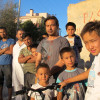
It’s Afghanistan Again in a Turkish Town
People run back home at dusk, just when the shooting intensifies. To Sha Mehmed the experience is familiar. He was 11 when he left his native Afghan village to settle in this small Turkish town on the border with Syria.Hard Times for Iran Hawks
Just three weeks ago, Washington’s hawks, particularly of the pro-Israel neo-conservative variety, were flying high, suddenly filled with hope.
Q&A: Congolese Wrongly Branded as “Pathological”
Western analysts all too often take a distorted and reductionist approach to the conflict in the Democratic Republic of Congo (DRC), says Kai Koddenbrock, who analysed more than 50 policy papers for a study published in the journal International Peacekeeping in November 2012.
Syria Diplomacy Helps Shuffle Global Order
When U.S. President Barack Obama tried to drum up momentum for airstrikes in Syria to punish and deter the use of chemical weapons, he failed to gain much of a following.Greek State Workers Rally Against Job Cuts
Thousands of civil servants have marched through the Greek capital, Athens, and the second largest city, Thessaloniki, amid a two-day nationwide strike against planned job cuts.OP-ED: High Opportunity for Nuclear Disarmament at High-Level Meeting
Every nation in the world has been invited to participate at the highest political level in the High-Level Meeting of the General Assembly on Nuclear Disarmament scheduled for Sep. 26. This has never happened before. We have never been at such a moment of crisis and opportunity.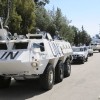
United Nations Still Popular in Most Countries
On the eve of the 68th session of the United Nations General Assembly, a newly released survey of 39 countries shows that the world body remains relatively popular around the globe.
Mutual Interests Could Aid U.S.-Iran Détente
In the wake of a renewed diplomatic push on the Iranian nuclear front, shared interests in Iran’s backyard could pave the way for Washington and Tehran to work toward overcoming decades of hostility.
The Emerging Economies and the G20 Summit at St. Petersburg
The eighth G20 Summit convened in St. Petersburg on Sept. 5-6, 2013 was dominated by the Syrian crisis, deflecting attention from the mandate of the gathering to serve as the premier forum for international economic coordination.
U.N. Team Confirms Syria Chemical Attack but Not Culpability
After an intense investigation of the military attack on civilians in Syria last month, a U.N. team of arms inspectors has reached a predictable conclusion: the deadly attack had all the trappings of the widespread use of chemical weapons.
“The Oil Is Ours” – But Its Secrets Are the NSA’s
Reported U.S. spying on Brazil’s Petrobras oil firm revived the controversy over opening up the company, a symbol of Brazilian sovereignty since the 1950s, to foreign investment.OP-ED: Making Sense of Syria
Tarzie Vittachi, a Sri Lankan journalist who in his final years was the bemused occupant of a high United Nations office, once summed up with his characteristic terse wit a central truth about international affairs: “Everything is about something else.”
Executions on Hold ‘for the Wrong Reasons’
The execution of three Taliban men ordered by the courts has been kept on hold - not because the Pakistani government opposes the death penalty but because it fears the Taliban, political leaders say.U.S. Public-Elite Disconnect Emerges Over Syria
While much of the foreign policy elite here sees the tide of public opposition to U.S. air strikes against Syria that swept over Washington during the past two weeks as evidence of a growing isolationism, veteran pollsters and other analysts say other factors were more relevant.
Low Expectations for High-Level Nuke Meet
The upcoming event at the United Nations is being billed as something politically unique.
When Mexico Let Big Brother Spy
Non-governmental organisations are urging the United Nations Human Rights Council to demand explanations from the Mexican state for the weak protection it provided its citizens from large-scale spying by the United States.Dutch Apologise for Indonesian Executions
The Dutch government has formally apologised for the mass killing of Indonesians during colonial occupation which ended in 1949.
Sliding Back to the Victorian Age
A recent report by the Centre for Analysis of Social Exclusion at the London School of Economics called attention to the fact that, at the present rate of inequality, by the year 2025, the United Kingdom will have returned to the unequal society of the end of the 19th century. In other words, we are going back to the times of Queen Victoria!
Europe Failing Syrian Refugees
Refugee rights organisations are demanding an EU-wide temporary protection regime for Syrian refugees. The announcement by some countries that they can take a few thousand refugees is not enough, the groups say.
Israelis Prepare Themselves Regardless
Unmindful of news of the U.S. delaying its military action on Syria to pursue the Russian plan for international monitors to take control and destroy Syria’s arsenal of chemical weapons, Israelis continue to collect their gas mask kits at Home Front Command distribution centres.
Mixed Reactions to Obama’s Embrace of Russian Deal
President Barack Obama’s decision to put off a vote by Congress on the use of military force against Syria in order to pursue a Russian proposal to place Damascus’ chemical-weapons arsenal under international control has evoked both cheers and jeers from across the political spectrum here Wednesday.« Previous Page — Next Page »


Is the world dominated by three great empires -- the U.S.A, China and the European Union? How much power do the great behemoths of the south -- India, Brazil, and South Africa -- wield? And where does Russia fit in that equation? Are we in the middle of a new Cold War? What are the implications of the armed conflict with Georgia? What about the new axis: Venezuela-Russia? And what role does Turkey play? What about issues like Climate Change and other global forces like the food crisis and the high energy prices? How is all this reshaping the world's forces? IPS looks for some answers.

The Week with IPS

NEXT STOP - SDGs
Tracking global progress towards a sustainable world
Tracking global progress towards a sustainable world
