Languages
Wednesday, November 18, 2026



News and Views from the Global South
Global Governance

People Affected by Leprosy in Latin America Unite for Their Rights and Their Voice
With the decision to found a regional coalition to promote rights and greater participation in national and international forums and decisions, the First Latin American and Caribbean Assembly of Organisations of People Affected by Hansen's disease, popularly known - and stigmatised - as leprosy, came to an end.
In Latin America, the Term Leprosy Still Carries a Burden from Biblical Times
Known scientifically as Hansen's disease, leprosy carries a symbolic burden from the past that people affected by the disease and experts from around Latin America are fighting, including the terminology used.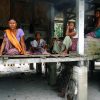
From 2018: When Environmental Crises Hit Homes, Women Suffer the Most
When Mandelena became a mother, she was only 16. During the prolonged dry season in Gwor County, South Sudan, her community saw crops failing and cattle dying. Children stopped going to school because of hunger and women and girls had to walk up to five hours every day to collect water.The Geneva Centre co-organizes a UN Library Event on Leadership in Modern Multilateralism
(Geneva Centre) - Multilateralism must be people-driven. The current rise of populism around the world is inextricably linked to a feeling of being excluded and kept out of decision-making processes broadly shared by ordinary people. These were the main conclusions of a joint event between the Geneva Centre for Human Rights Advancement and Global Dialogue and the UNOG Library entitled Leadership in Modern Multilateralism. The debate was held on 12 March 2019 at the United Nations Office in Geneva in the Library Events Room at Palais Des Nations.
People Affected by Leprosy Still Face Stigma in Latin America
The First Latin American and Caribbean Meeting of Organisations of People Affected by Hansen's Disease, more widely known as leprosy, seeks to exorcise stigma and discrimination. The meeting has brought together around a hundred activists in Brazil.
Multilateralism: A Testimony
For over 70 years, the UN system has been perceived as the guardian of peace and development in the world. However, multilateralism today is undeniably under strain. The effectiveness of global institutions and of global policymaking is questioned, and alliances are fraying.
Innovative Sustainable Business: A Three Trillion-Dollar Opportunity that UN Environment Wants People to Develop
In the East African region, communities around the continent’s largest water body, Lake Victoria, regard the water hyacinth as a great menace that clogs the lake and hampers their fishing activities. But in Lagos, Nigeria, some groups of women have learned how to convert the invasive weed into a resource, providing them with the raw material needed to make handicrafts.
Gender Quotas Help Women Parliamentarians to Rise in Numbers
When the Inter Parliamentary Union (IPU), based in Switzerland, released its annual report on the representation of women legislators worldwide, four of the top five countries were from the developing world. Rwanda led the way with 61.3 percent of the seats held by women in its lower or single house of parliament followed by Cuba (53.2 percent), Bolivia (53.1 percent) and Mexico (48.2 percent).
Promoting Privatization
Privatization has been central to the ‘neo-liberal’ counter-revolution from the 1970s against government economic interventions associated with Roosevelt and Keynes as well as post-colonial state-led economic development. Many developing countries were forced to accept privatization policies as a condition for credit or loan support from the World Bank and other international financial institutions, especially after the fiscal and debt crises of the early 1980s. Other countries voluntarily embraced privatization, often on the pretext of fiscal and debt constraints, in their efforts to mimic new Anglo-American criteria of economic progress.
UN Pays Homage to Staffers Who Died in Plane Crash
The United Nations headquarters is in mourning – and the UN flag is at half mast. The deaths of 21 UN staffers March 10, on board an Ethiopian Airlines flight in Addis Ababa, is one of the biggest tragedies in the extended UN family—with a flashback to the deaths of 22 people, mostly UN staffers, who lost their lives in the Canal Hotel bombing in the Iraqi capital of Baghdad in August 2003.
Preaching World Peace by Day, Peddling Lethal Weapons By Night
The Middle East, one of the world’s most politically-volatile and war-ravaged regions, has doubled its arms imports during the past five years, according to the Stockholm International Peace Research Institute (SIPRI).
Millions of Venezuelans in Need of Protection
The international community must extend protections for Venezuelans in light of a growing humanitarian crisis with no end in sight. Human Rights Watch has urged governments in the Americas to provide temporary protection to the millions of Venezuelans fleeing a severe humanitarian crisis.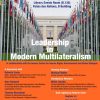
The Geneva Centre is co-organizing with the UNOG Library a discussion on Leadership in Modern Multilateralism
The Geneva Centre for Human Rights Advancement and Global Dialogue has partnered with the UNOG Library in the organization of the upcoming Library event entitled Leadership in Modern Multilateralism.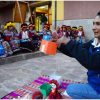
Women as Forerunners of Change: When Financial Inclusion Meets Digital Transformation
Imagine a world where women fully participate in society, and enjoy equal access to resources and opportunities. Most probably, the 2030 Agenda would be nearing its fulfillment and we would be closer to achieving the better planet we wish to build.
Break the Menstrual Taboo
It is time to rise up and fight a long neglected taboo: menstruation. Marking International Women’s Day, United Nations human rights experts called on the international community to break taboos around menstruation, noting its impacts on women and girls’ human rights.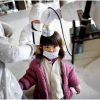
Eight Years on, Fukushima Still Poses Health Risks for Children
On March 11, we commemorate the 8th anniversary of the Fukushima nuclear disaster. To an outside observer, this anniversary passes as a technical progress report, a look at new robot, or a short story on how lives there are slowly returning to normal.
Decent Work Still a Distant Dream for Many Latin American Women
Women in Latin America earn one-fifth less than men for every hour worked, on average - one of the statistics that reflect the continuing inequality in the world of work that makes it unlikely for the region to meet the goal of equal pay by 2030.
Veteran Diplomat Challenges Security Council’s Imbalance of Power, Offers Solutions for Reforms
A reexamination of the role of the United Nations and a tallying of its successes and failure get underway as it prepares for the 75th anniversary next year in the world of the 21st century while its core entity, the Security Council, is trapped in the time warp of 1945, its founding year.
Latin American Women Programme Their World against the Digital Divide
Designed mostly by men, many digital applications are not suitable for women, but some initiatives are beginning to include them as programmers and beneficiaries in Latin America, where the gender gap is also technological.
Women’s Feature Service: Mapping the Struggles of Feminism in India
Pamela Phillipose was editor of the Women’s Feature Service, the only syndicated news service in India with a gender perspective, for nearly six years, until she stepped down this year as editor in chief and director. She wore other hats for the publication as well, writing and photographing.
Q&A: Important to Treat Anyone Suffering from Leprosy as an Equal Individual
Discrimination against women who are affected by leprosy or Hansen's Disease is a harsh reality, says Alice Cruz is the United Nations Special Rapporteur on the elimination of discrimination against persons affected by leprosy and their family members.« Previous Page — Next Page »


The Week with IPS

NEXT STOP - SDGs
Tracking global progress towards a sustainable world
Tracking global progress towards a sustainable world
