Languages
Friday, November 20, 2026



News and Views from the Global South
Global

UN Staff Unions Demand Stronger Action on Sexual Abuse
The United Nations claims it is doing its best to curb widespread sexual abuses in its peacekeeping operations overseas – from Haiti all the way to the Central African Republic.Rethinking Fiscal Policy for Global Recovery
Global economic recovery is being held hostage by the ideological dogma of the last three and a half decades. After long contributing to neo-liberal conventional wisdom, in its October 2015 World Economic Outlook, the IMF identified the vicious circle undermining global recovery and growth. Low aggregate demand is discouraging investment; slower expected potential growth itself dampens aggregate demand, further limiting investment.
Xenophobic Rhetoric, Now Socially and Politically ‘Acceptable’ ?
“Xenophobic and racist rhetoric seems not only to be on the rise, but also to be becoming more socially and politically acceptable.” The warning has been heralded by the authoritative voice of Mogens Lykketoft, current president of the United Nations General Assembly, who on World Refugee Day on June 20, reacted to the just announced new record number of people displaced from their homes due to conflict and persecution.
African Fisheries Plundered by Foreign Fleets
In 2011, Dyhia Belhabib was a volunteer in the Fisheries Centre at the University of British Columbia in Vancouver when she was asked to participate in the Sea Around Us’s project to determine how much fish had been taken out of the world’s oceans since 1950 in order to better avoid depleting the remaining populations of fish.
Fearing Violence, LGBT Refugees Rarely Seek Help
Despite their extreme vulnerability, lesbian, gay, bisexual, transgender and intersex (LGBTI) refugees often do not seek the assistance they need, since revealing their sexual or gender identities can put them in grave danger.
The Environment: Latin America’s Battleground for Human Rights
2015 was the deadliest year on record for the killings of environmental activists around the world, according to a new Global Witness report.
Yoga Unites the UN for Sustainable Development
The word yoga means "unite" in Sanskrit, and the Indian government hopes that the ancient practice will help United Nations member states to work together to achieve the Sustainable Development Goals (SDGs).
Islamic State: Foreign Fighter Trends
Thanks to Edward Snowden dumping sensitive data on to the net, there now exists more accurate estimates on foreign fighters recruited by the Islamic State (IS). Indeed, going by The Combating Terrorism Centre at West Point (United States Military Academy) recently made available a report titled 'The Caliphate's Global Workforce: An Inside Look at the Islamic State's Foreign Fighter Paper Trail' which provides data of some 4,600 foreign fighters recruited between early 2013 and 2014. This study which is a compilation of 4018 Mujahid Data forms, 2 Excel files (with 155 individuals entered), Exit records (31 files, 431 individuals) and 15 miscellaneous files provide a pattern of recruitment, which interestingly points to something rather disturbing, i.e. Europeans are signing up in alarming numbers, mostly from smaller countries like Belgium and Denmark. We are talking continental Europe here and the IS has successfully recruited from East and West and the Balkans.
What is Missing on the Global Health Front?
The last World Health Assembly (WHA) in Geneva (23-28 May) discussed the manifold global health crises that require urgent attention, and adopted resolutions to act on many issues. We are currently facing many global health related challenges, and as such multiple actions must be taken urgently to prevent these crises from boiling over.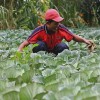
Asia’s Rising Prosperity, Climate Change Taking Toll on Food Security
Asia’s economic growth over the last decade has been relentless, bringing with it a rising population and an influx of people from the countryside to the cities in search of prosperity. These trends are not expected to abate.
Unmet Expectations
Donald Trump’s rise in America, a wave of pro-Brexit and xenophobic sentiment in the UK, mass demonstrations in France and Brazil, a political crisis in South Africa, communal polarisation in India, and religious zealotry coupled with anti-corruption agitation in Pakistan. On the face of it, there’s very little that connects these disparate events. Each appears unique to a country’s history and its contemporary interaction of domestic and global events.
Case for Overcoming the Ostrich Syndrome
The final week of May 2016 was a grisly one. More than 700 asylum seekers and migrants died as three boats attempting to carry them to Italy sunk in the Mediterranean, and the death toll for the year crossed 2000. A week ago, Unicef reported a doubling of the number of unaccompanied children arriving as asylum seekers this year. The report also highlighted that these children are subjected to sexual violence, forced prostitution and other forms of abuse.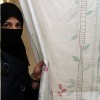
The Paradox of Refuge: Rise of Gender-Based Violence in Times of Crisis
Since the outbreak of war in 2011, 9 million Syrians have fled from their homeland, creating one of the gravest migrant crisis’ the world has ever seen. However, what happens to these vulnerable migrants once they secure the refuge they so perilously seek? Can refuge really bring safety to all? Or is ‘the refugee camp' nothing more than the creation of another war, in this case, fought against one’s own troubled people. Particularly, for those who are traditionally stigmatized, such as women and girls.
Civil Society in Latin America Campaigns Against Trans-Pacific Partnership
Civil society organisations from Chile, Mexico and Peru are pressing their legislatures and those of other countries not to ratify the Trans-Pacific Partnership (TPP).
Fences and Walls: A Short-sighted Response to Migration Fears?
European nations from which millions once left to escape hardship and hunger – Greece, Ireland, Italy - are today destinations for others doing the same.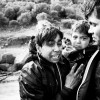
Xenophobia: ‘Hate Is Mainstreamed, Walls Are Back, Suspicion Kills’
“Hate is becoming mainstreamed. Walls – which tormented previous generations, and have never yielded any sustainable solution to any problem – are returning. Barriers of suspicion are rising, snaking through and between our societies – and they are killers…”
What If Turkey Drops Its “Human Bomb” on Europe?
Will the rapid--though silent escalation of political tensions between the European Union and Turkey, which has been taking a dangerous turn over the last few weeks, push Ankara to drop a “human bomb” on Europe by opening its borders for refugees to enter Greece and other EU countries?
Majority of Vulnerable Refugees Will Not Be Resettled in 2017
Only a small percentage of the world’s most vulnerable refugees will be resettled in 2017, according to new figures released by the UN High Commission for Refugees (UNHCR) this week.
The Orlando Massacre and the “Muslim Factor”
When I first saw the news flash scrolling at the bottom of my TV screen, my first thought was, please God, not another Muslim! With Donald Trump waging his own “jihad” against Muslims – all Muslims, including those who are American – I was hoping that the shooter was from another religion, any religion but Islam. My hope turned into a nightmare when the shooter was confirmed not only to be a Muslim, but someone who was born in New York and had gone to US schools. Omar Mateen was just a regular guy, it seems, who wore a bandana, loved taking selfies, dated a Pakistani woman, and even occasionally visited the same gay night club where he unleashed his vengeance. He may have been a closeted gay.Unfounded Debt Fears Block Economic Recovery
Debt anxieties are not new, often fanned by political competition. But so is a double dip recession due to premature deficit reduction. For example, to seek re-election, President Roosevelt backed down from his New Deal in 1937, promising that “a balanced budget [was] on the way”. In 1938, he slashed government spending, and unemployment shot up to 19 per cent.
The 50 Essential Products That Could Help People With Disabilities
Wheelchairs, hearing aids, white canes and braille typewriters are just some of the products that help people with disabilities to participate fully in everyday life.« Previous Page — Next Page »


The Week with IPS

NEXT STOP - SDGs
Tracking global progress towards a sustainable world
Tracking global progress towards a sustainable world
