Languages
Thursday, July 23, 2026



News and Views from the Global South
Green Economy
U.N. Chief Leads the Way on the ‘Road to Dignity’
Addressing the 193 member states of the General Assembly on Thursday, United Nations Secretary-General Ban Ki-moon called for sweeping changes that would set the world on the path of sustainable development.
Family Farming Eases Food Shortages in Eastern Cuba
Meat and vegetables are never missing from the dinner table of Damaris González and Omar Navarro, since they get almost all of their food from their farm, La Revelación, on the outskirts of the city of Santiago de Cuba, 765 km east of the Cuban capital.
Organic Farming in India Points the Way to Sustainable Agriculture
Standing amidst his lush green paddy fields in Nagapatnam, a coastal district in the southern Indian state of Tamil Nadu, a farmer named Ramajayam remembers how a single wave changed his entire life.
OPINION: Understanding Education for Global Citizenship
Education for Sustainable Development (ESD) brings together concerns about the environment, economic development and social aspects. Since 1972, when the first U.N. Conference on the Human Environment was held in Stockholm, Sweden, there has been increasing awareness of the intricate link between conserving the environment and human development.
Falling Oil Prices Threaten Fragile African Economies
The sharp decline in world petroleum prices - hailed as a bonanza to millions of motorists in the United States - is threatening to undermine the fragile economies of several African countries dependent on oil for their sustained growth.
GDP and the Unaccounted for 82 Percent of National Wealth
Virtually all countries use Gross Domestic Product (GDP) as their primary measurement of economic progress and overall societal progress. At the same time, countries express allegiance to the doctrine of sustainable development. This exposes an obvious disconnect.
REDD and the Green Economy Continue to Undermine Rights
Dercy Teles de Carvalho Cunha is a rubber-tapper and union organiser from the state of Acre in the heart of the Brazilian Amazon, with a lifelong love of the forest from which she earns her livelihood – and she is deeply confounded by what her government and policymakers around the world call “the green economy.”
Aboriginal Knowledge Could Unlock Climate Solutions
As a child growing up in Far North Queensland, William Clark Enoch would know the crabs were on the bite when certain trees blossomed, but now, at age 51, he is noticing visible changes in his environment such as frequent storms, soil erosion, salinity in fresh water and ocean acidification.
Lima Agrees Deal – but Leaves Major Issues for Paris
After a 25-hour extension, delegates from 195 countries reached agreement on a “bare minimum” of measures to combat climate change, and postponed big decisions on a new treaty until the 21st Conference of the Parties (COP 21), to be held in a year’s time in Paris.
Dirty Energy Reliance Undercuts U.S., Canada Rhetoric at Climate Talks
While U.S. and Canadian officials delivered speeches about how the world needs to step up to their responsibilities at the U.N. climate negotiations in Lima, Peru, activists from North America demanded clear answers back home on their governments’ relationships with fossil fuel corporations, as well as the future of several major oil projects across the continent.
OPINION: How Shifting to the Cloud Can Unlock Innovation for Food and Farming
The digital revolution that is continuing to develop at lightening speed is an exciting new ally in our fight for global food security in the face of climate change.
Glaciers and Fruit Dying in Peru with no Response from COP20
Snow-capped mountains may become a thing of the past in Peru, which has 70 percent of the world’s tropical glaciers. And farmers in these ecosystems are having a hard time adapting to the higher temperatures, while the governments of 195 countries are wrapping up the climate change talks in Lima without addressing this situation facing the host country.
OPINION: Climate Change and Inequalities: How Will They Impact Women?
Among all the impacts of climate change, from rising sea levels to landslides and flooding, there is one that does not get the attention it deserves: an exacerbation of inequalities, particularly for women.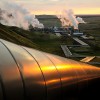
The Rapid Rise of Green Bonds
Most countries joining the growing list of nations pursuing clean geothermal power have been confronted with a huge financial challenge.
Mangrove Conservation Paves the Way to a Sustainable Future
 When the Asian tsunami washed over several Indian Ocean Rim countries on Boxing Day 2004, it left a trail of destruction in its wake, including a death toll that touched 230,000.

Divestment Campaign Aims to Bleed Dry the Fossil Fuel Industry
Even as the presence of major oil and gas corporations is nearly ubiquitous at the U.N. climate talks in the Peruvian capital known as COP20, fossil fuel divestment campaigns have gained ground in various countries and are moving to counter the influence of the "dirty energy" lobby here.
OPINION: Women Must Be Partners and Drivers of Climate Change Decision-Making
As leaders from around the world gather in Lima, Peru this week to discuss global cooperation in addressing climate change, a woman in Guatemala will struggle to feed her family from a farm plot that produces less each season.
Climate Neutrality – the Lifeboat Launched by Lima
Packed into stifling meeting rooms in the Peruvian capital, delegates from 195 countries are trying to find a path that would make it possible for the planet to reach climate neutrality in the second half of this century – the only way to avoid irreversible damage, scientists warn.
OPINION: Addressing Climate Change Requires Real Solutions, Not Blind Faith in the Magic of Markets
Norwegians know something of life in a climate change world. Migratory birds arrive earlier in spring, trees come into leaf before previously expected, and palsa mires (wetlands) are being lost as permafrost thaws.
“What’s Good for Island States Is Good for the Planet”
The lead negotiator for an inter-governmental organisation of low-lying coastal and small island countries doesn't mince words. She says the new international climate change treaty being drafted here at the ongoing U.N. Climate Change Conference “is to ensure our survival".
Q&A: Why Kyoto’s Clean Development Mechanism is at a Crossroads
The U.N. mechanism for supporting carbon emissions projects in developing countries – the Clean Development Mechanism (CDM) – is in crisis as a result of a dramatic slump in the prices being paid for carbon credits.« Previous Page — Next Page »


The Week with IPS

NEXT STOP - SDGs
Tracking global progress towards a sustainable world
Tracking global progress towards a sustainable world
