Languages
Thursday, November 19, 2026



News and Views from the Global South
Health

Formalising Informal Trade – Good for African Women?
Women constitute the largest share of informal traders in Africa–about 70 per cent in Southern Africa and more than half in other parts of this vast continent made up of 54 states, home to over 1,200 billion people.
In a “World of Plenty,” G7 Must Fight Famine
World leaders must step up and take action in fighting famine to prevent further catastrophic levels of hunger and deaths, said Oxfam.
Why the G7 Must Fund Health & Nutrition
The G7 Summit, held annually among the leaders of the world’s most powerful economies (Canada, France, Germany, Italy, Japan, the United Kingdom, the United States, and the EU), plays an important role in shaping responses to global challenges—theoretically at least.
Africa – More than Just Conflicts, Corruption, Disasters
Natural and man-made disasters, armed conflicts, widespread corruption and deep social inequalities have been so far a dramatic source for most news coverage when it comes to Africa, the world's second-largest and second-most-populous continent on Earth, which hosts 54 states spreading over 30 million square kilometres that are home to over 1.2 billion people.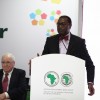
Nutrition Key to Developing Africa’s “Grey Matter Infrastructure”
Developing Africa’s ‘grey matter infrastructure’ through multi-sector investments in nutrition has been identified as a game changer for Africa’s sustainable development.
Mideast: Growing Urbanisation Worsens Water Scarcity, Food Imports
Conflict and insecurity remain the key barriers to development progress in the Middle East and North Africa. In Iraq, Libya, Syria, and Yemen, about half the population—around 40 million people—require humanitarian assistance. Across the region, countries depend heavily on food imports. As their populations urbanise and grow, the need for imports will increase.
Menstrual Health and Vitality: Breaking the Silence, Stemming the Flood
Menstruation matters to everyone, everywhere. But it still matters so much more to women and girls, who have historically been asked to bleed in stoic silence so that no one even knows they have their period.
The ‘Public’ in Public Health
The discourse must move beyond a top-down approach to listen to the people and formulate best insurance practices
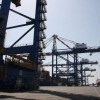
Africa and India – Sharing the Development Journey
Africa, like India, is a continent of rich and compelling diversity. Both continents share a similar landscape, a shared colonial history, and similar economic and demographic challenges. This helps both India and Africa work especially well with each other.
Genetically Engineered Disappointments
Advocates of genetically engineered (GE) crops have long claimed that genetic engineering is necessary to raise crop yields and reduce human exposure to agrochemicals. Genetic engineering promised two major improvements: improving yields affordably to feed the world, and making crops resistant to pests to reduce the use of commercial chemical herbicides and insecticides.
Kenya’s Drought: Response Must Be Sustainable, Not Piecemeal
A malnutrition emergency Food security in Kenya has deteriorated significantly since the end of 2016. UNICEF reports a significant increase in severe acute malnutrition. Nearly 110,000 children under-five need treatment, up from 75,300 in August 2016.

World Lags on Clean Energy Goals
It may be the 21st century but more than three billion people still use fire for cooking and heating. Of those, one billion people have no access to electricity despite a global effort launched at the 2011 Vienna Energy Forum to bring electricity to everyone on the planet.
The Very Survival of Africa’s Indigenous Peoples ‘Seriously Threatened’
The cultures and very survival of indigenous peoples in Africa are seriously threatened. They are ignored, neglected and fall victims of land grabbing and land dispossession caused by extractive industries, agribusiness and other forms of business operations.
Climate-Smart Agriculture – From Tanzania to Vietnam
As part of efforts to move towards "climate-smart" agriculture, several countries have shared In a meeting in Rome new experiences on how to produce food in ways that help farmers cope with the impacts of climate change and to reduce greenhouse gas emissions in agriculture.
20 Million People Could ‘Starve to Death’ in Next Six Months
Urgent action is needed to save the lives of people facing famine in North Eastern Nigeria, Somalia, South Sudan and Yemen, the UN leading food and agriculture agency’s chief on April 28 warned. "If nothing is done, some 20 million people could starve to death in the next six months."
Indigenous Women: The Frontline Protectors of the Environment
Indigenous women, while experiencing the first and worst effects of climate change globally, are often in the frontline in struggles to protect the environment.
Long Way to Go for Indigenous Rights Protection
Despite progress, many gaps remain in international indigenous rights protection, said representatives during an annual UN meeting.
Indigenous Peoples – Best Allies or Worst Enemies?
It all happened on the very same day—4 April. That day, indigenous peoples were simultaneously characterised as fundamental allies in the world’s war on hunger and poverty, while being declared as collective victims of a “tsunami” of imprisonments in Australia. See what happened.
Building resilient rural livelihoods is key to helping Yemen
People in Yemen are currently suffering from the world’s largest humanitarian crisis. More than 17 million people around Yemen’s rugged landscape are acutely food insecure, and the figure is likely to increase as the ongoing conflict continues to erode the ability to grow, import, distribute and pay for food. More than 7 million people are on the verge of famine, while the rest are marginally meeting the minimum day-to-day nutritional needs thanks to external humanitarian and livelihoods support. Large-scale famine is a real risk that will cast an awful shadow for generations to come.
Civil Society: “Everyday Things Are Getting Worse” for Children in Yemen
Persistent attacks on health care in Yemen is severely impacting children’s well-being, civil society detailed at the launch of a report.
Yemen, World’s Largest Humanitarian Crisis
With 18.8 million people –nearly 7 in 10 inhabitants-- in need of humanitarian aid, including 10.3 million requiring immediate assistance, Yemen is now the largest single-nation humanitarian crisis in the world, the United Nations informs while warning that the two-year war is rapidly pushing the country towards “social, economic and institutional collapse.“« Previous Page — Next Page »


 Bangladesh: Sarid, born one month early, receives specialized newborn care and grows stronger every day. Credit: UNICEF/UNI944397/Mojumder
Since the onset of the 2000s, global life expectancy has seen an overall rise, attributed to significant technological and scientific innovations in healthcare. Due to an increased understanding of different conditions as well as a rise in cooperation among healthcare experts around the world, there have been major strides made in ensuring that as few people die from chronic illnesses as possible. Despite the belief that healthcare is a fundamental human right, people from low- or middle-class backgrounds, marginalized groups, and underdeveloped countries have far more limited access to basic healthcare services.
The COVID-19 pandemic showed how marginalized communities are disproportionately affected by health crises, proving that we have much work to do in ensuring that no one dies of terminal conditions. While the global response to the coronavirus saw significant strides in immunization and vaccine development, the global outbreak of mpox in 2022 and its upsurge in parts of Africa in 2024 must remind us to remain vigilant.
Other major disease outbreaks in recent years have been linked to the destruction of infrastructure during warfare. Notably, in 2024, the Gaza Strip witnessed a return of the poliovirus since its eradication in the region 25 years ago. Israel’s blockade on Gaza has resulted in the collapse of the region’s sewage plants and desalination plants, and also destroyed healthcare capacities. The UN stated that this lack of clean water and sanitation would lead to an outbreak of cholera and other deadly infectious diseases. The 2026 OCHA Humanitarian Situation Report confirmed that the over two years of conflict in Gaza has produced a catastrophic health emergency, with millions remaining dependent on relief aid amid tight restrictions and no functioning public health system.
IPS is committed to providing full and comprehensive coverage on healthcare challenges around the world. IPS seeks to address the multifaceted causes of such challenges, including unprecedented pandemics, conflict-driven disease outbreaks, as well as socioeconomic barriers to equal healthcare access. IPS is also dedicated to reporting on innovations in the healthcare industry.

The Week with IPS

NEXT STOP - SDGs
Tracking global progress towards a sustainable world
Tracking global progress towards a sustainable world
