Languages
Monday, November 16, 2026



News and Views from the Global South
Health

Teachers Shoulder the Burden: Improving Support in Crisis Contexts
Teachers are at the heart of children and young peoples’ educational experiences. Teachers play multiple roles in their students’ lives by supporting their learning, providing them with inclusive and safe environments to grow and develop, and helping them become more confident as they make their way in the world. As we commemorate World Teachers’ Day on Monday, 5 October and its theme--Teachers: Leading in Crisis, Reimagining the Future--we must recognize the inspiring and transformative role that teachers working in armed conflicts, forced displacement, climate change induced disasters and protracted crises play in their students’ lives.
A Feminist Perspective from Middle East & North Africa on the COVID-19 Pandemic
Since before the COVID-19 pandemic, feminists across the Middle East and North Africa (MENA) have been increasingly shedding light on the global shifts that will shape the Future of Work. From their perspective, those shifts would mainly be driven by the Fourth Industrial Revolution, the impact of climate change and the looming global care crisis.
Covid-19 Deaths: 1 Million and Surging
Covid-19 deaths worldwide have surpassed 1 million. With new cases of coronavirus infections rapidly mounting again, the numbers of Covid-19 deaths are feared to surge in the coming months.
The Triple Humanitarian Crisis and Why Kenya Deserves An A + in its Response
The United Nations Deputy Secretary General, Ms Amina Mohammed recently commended “Kenya’s exemplary role in its response to COVID-19 and in advancing Agenda 2030”.
From Pledges to Policy and Practice: Moving Nature to the Heart of Decision-Making
This week, Heads of State and Government from 64 countries announced one of the strongest pledges yet to reverse the loss of biodiversity and nature’s contributions to people by 2030. Advancing from powerful pledges to concrete policy and action, however, means that nature must be moved to the heart of global, national and local decision-making. It’s time for nature to be reintegrated into everything we do.
30th anniversary of World Summit for Children – Today Children Need a New Initiative
On the eve of the UN's 75th anniversary, Antonio Guterres, the UN’s Secretary-General has declared that the coronavirus pandemic is the world's top security threat. He has called for action - for greater international co-operation in controlling outbreaks and developing an affordable vaccine, available to all. Such action is needed and possible -even in the absence of a large gathering of world leaders in New York to celebrate the anniversary. But children today in every country need more.
Judgment Free Online Platform Key to Helping Suicidal People, Says Survivor
Romana Hoque had it all, a comfortable life, a happy family. Despite this, the 43-year-old second-generation immigrant from Indonesia living in the United States was depressed enough to contemplate suicide.
Africa at the Crossroads: Time to Abandon Failing Green Revolution
As COVID-19 threatens farming communities across Africa already struggling with climate change, the continent is at a crossroads. Will its people and their governments continue trying to replicate industrial farming models promoted by developed countries? Or will they move boldly into the uncertain future, embracing ecological agriculture?
Central Sahel – Shaping peace together with women and young people Statement for International Peace Day
The countries of Central Sahel—Burkina Faso, Mali, and Niger—face an unprecedented crisis, marked by violent extremism, forced displacement, and rising insecurity. The sharp increase in armed attacks on communities, health centres, schools and other public institutions and infrastructure has disrupted livelihoods and access to social services. The impact on affected people is devastating.
Nono the Carbon Footprint Bear—Part of Peru’s Ambitious Work on Climate Action
On the eve of its bicentennial, Peru is addressing climate change with the needed sense of urgency and ambition. Our inclusive, ‘whole society’ approach aims to awaken new opportunities that are within reach of all of our citizens. Like COVID-19, climate change is a landmark which will have a clearly established before and after period. Without a doubt, it is paving a path towards sustainable development that will improve the well-being of all Peruvians.
Peace is the North Star During and the Post COVID-19 Pandemic
Amid various global conflicts in the 1980s and 1990s, the International Day of Peace (IDOP) was established to commemorate the strengthening of the ideals of peace globally. Today, peace is not just the absence of conflict, but a key prerequisite for development. It is in recognition of the crucial linkages between peace, respect for human rights and sustainable development that more than 36 indicators for peace were included across the Sustainable Development Goals (SDGs).
COVID-19 – Possible Human Rights Crisis in Asia as Disparities Expected to Widen
The negative impact of the coronavirus pandemic is likely to be felt long after the COVID-19 health risk is resolved, a high-level meeting under the auspices of the Asian Population and Development Association (APDA), heard.
Leveraging Research for Solution-driven Policymaking in the Era of COVID-19
The United Nations has tasked the Canadian Institutes of Health Research Institute of Population and Public Health (CIHR-IPPH) to lead the research roadmap to identify priorities that will support an equitable global socio-economic recovery from COVID-19 within the broader framework of the Sustainable Development Goals (SDGs). As the world grapples with the impacts of COVID-19, identifying the research agenda and partnering with academic institutions and think tanks have become more essential than ever before.
Impact of COVID-19 on Women and Children
The impacts of crises are never gender-neutral and COVID-19 is no exception. The pandemic has resulted in increased rates of violence against women and has exacerbated challenges in accessing justice. Women are losing their livelihoods faster than men.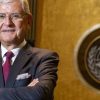
INTERVIEW: the top diplomat shepherding the General Assembly through its 75th year
The Turkish diplomat elected to be the president of the 75th session of the UN General Assembly, Volkan Bozkir, is taking on the role as the Organization grapples with an unprecedented pandemic, and questions surrounding the future direction it should take.
The Debt the Government Does Not Want to Recognize
The national occupation and employment survey prepared by INEGI, with figures updated to July 2020, shows an improvement that has occurred in the last two months. However, the employment situation, compared with the data existing before the pandemic still shows serious problems:
A Marathon, Not a Sprint: Peru Needs Fiscal Reforms to Quell High COVID-19 Death Rate
“It’s a major paradox, no?” asks Hugo Ñopo, a researcher at the Peruvian think tank Group for the Analysis of Development (GRADE). Since the beginning of the pandemic, Peru has presented itself as an example for the region: it quickly implemented drastic prevention measures, followed scientific recommendations and prepared an economic support plan for the most vulnerable segments of the population.
Why COVID-19 Vaccines Need to Prioritize ‘Superspreaders’
Once safe and effective COVID-19 vaccines are available, tough choices will need to be made about who gets the first shots.
Financing Economic Recovery
As the socio-economic impacts of the COVID-19 pandemic spread across the length and breadth of Asia and the Pacific, finance ministries are continuing their relentless efforts to inject trillions of dollars for emergency health responses and fiscal packages. With continued lockdown measures and restricted borders, economic rebound seems uncertain.
COVID-19: Lessons from the Losses
If countries considered Universal Health Coverage (UHC) a central policy in their health systems, the COVID-19 has surely demonstrated the need for its urgent and widespread roll out. The pandemic has upended world systems in a manner that no scientists or sophisticated global intelligence could have foreseen.UNESCO urges action to meet rampant $200 billion annual funding gap for education in poorest countries due to COVID-19
New research by the Global Education Monitoring Report at UNESCO shows an increase in the annual funding gap for education in the poorest countries to as much as US$200 billion a year. These findings are published in the new paper, Act Now: Reduce the impact of COVID-19 on the Cost of Achieving SDG4.« Previous Page — Next Page »


 Bangladesh: Sarid, born one month early, receives specialized newborn care and grows stronger every day. Credit: UNICEF/UNI944397/Mojumder
Since the onset of the 2000s, global life expectancy has seen an overall rise, attributed to significant technological and scientific innovations in healthcare. Due to an increased understanding of different conditions as well as a rise in cooperation among healthcare experts around the world, there have been major strides made in ensuring that as few people die from chronic illnesses as possible. Despite the belief that healthcare is a fundamental human right, people from low- or middle-class backgrounds, marginalized groups, and underdeveloped countries have far more limited access to basic healthcare services.
The COVID-19 pandemic showed how marginalized communities are disproportionately affected by health crises, proving that we have much work to do in ensuring that no one dies of terminal conditions. While the global response to the coronavirus saw significant strides in immunization and vaccine development, the global outbreak of mpox in 2022 and its upsurge in parts of Africa in 2024 must remind us to remain vigilant.
Other major disease outbreaks in recent years have been linked to the destruction of infrastructure during warfare. Notably, in 2024, the Gaza Strip witnessed a return of the poliovirus since its eradication in the region 25 years ago. Israel’s blockade on Gaza has resulted in the collapse of the region’s sewage plants and desalination plants, and also destroyed healthcare capacities. The UN stated that this lack of clean water and sanitation would lead to an outbreak of cholera and other deadly infectious diseases. The 2026 OCHA Humanitarian Situation Report confirmed that the over two years of conflict in Gaza has produced a catastrophic health emergency, with millions remaining dependent on relief aid amid tight restrictions and no functioning public health system.
IPS is committed to providing full and comprehensive coverage on healthcare challenges around the world. IPS seeks to address the multifaceted causes of such challenges, including unprecedented pandemics, conflict-driven disease outbreaks, as well as socioeconomic barriers to equal healthcare access. IPS is also dedicated to reporting on innovations in the healthcare industry.

The Week with IPS

NEXT STOP - SDGs
Tracking global progress towards a sustainable world
Tracking global progress towards a sustainable world
