Languages
Wednesday, November 11, 2026



News and Views from the Global South
Humanitarian Emergencies

South Asian Women, Girls Need Responsive Legal System to Gender Violence
Criminal justice systems in South Asia are failing women, despite stark statistics on the prevalence of violence. WHO estimates translate to one in every two women and girls in the region experiencing violence daily.
What’s in Store for Indian Farmers After Cop 28’s Conclusion in Dubai?
Durga Das*, a 59-year-old farmer from the Indian state of Maharashtra, committed suicide last year by ingesting a poisonous substance. He was unable to repay the loan he had taken from the bank for the renovation of his single-story house. This year, his 32-year-old son, Pradeep Das, a father of two children, is equally desperate. The family owns half an acre of cultivated land where they grow cotton. The harvest has been devastated due to intense heat waves, leaving farmers like Dass and his son Pradeep in dire straits. The loan the family had taken is yet to be paid, and the land they had mortgaged in the bank is about to be confiscated. This means no crops, no cultivation, no business, and no food.
Caribbean Confidence High Post COP28, But Vigilant Follow-Through on Key Deals Needed
Buoyed by USD 800 million in pledges to the Loss and Damage Fund and an unprecedented agreement to transition away from fossil fuels, but grounded in the reality of the work ahead to meet key climate targets, the Caribbean will need to maintain its focus on sustainable agriculture, renewable energy, and climate resilience.
UN and Humanitarian Partners Seek USD 46 Billion for Humanitarian Assistance
Funding humanitarian programs will continue into the new year, but the funding cuts of the previous year may impact the prioritization of the most immediate and most life-threatening needs. The Office for the Coordination of Humanitarian Affairs (OCHA) released the Global Humanitarian Overview (GHO) for 2024. This annual assessment of the global humanitarian sector provides insight into the humanitarian action undertaken by the UN and its partners and reviews current and future trends in this sector.
The United States, the United Nations, and Genocide in the Gaza Strip
The political significance of US-Israeli differences is easily exaggerated. It is certainly true that tensions in the relationship exist. Israel is currently committing genocide against the Palestinians in the Gaza Strip. The US would like Israel to reduce - not cease, but reduce – its slaughter Palestinian civilians,
A Desperate Plea from Palestinians: Drop Your Nuclear Bomb on Gaza–and Exterminate Us
The unrestrained destruction of Gaza and the disproportionate killings of over 17,000, mostly civilians-- in retaliation for 1,200 killings by Hamas and 120 hostages in captivity-- have left the Palestinians in a state of deep isolation and weighed down by a feeling of being deserted by the world at large.
IFAD’s Record-Breaking Pledges: Lifeline for Rural Communities Cornered by Climate, Hunger
The world is not on track to end hunger and poverty as a future of growing food insecurity and climate challenges beckon. Small-scale farmers are the backbone of food production, producing one-third of the world’s food and up to 70 percent of the food consumed in Africa and Asia, yet they are often cut off from the services they need to pull themselves out of poverty and food insecurity.
Sudan’s Conflict Needs Civil Society Solutions
It’s recently been reported that the two main protagonists of Sudan’s current conflict – leaders of the armed forces and militia at war since April – have agreed to face-to-face talks. The Intergovernmental Authority on Development (IGAD), an East African body, announced the potential breakthrough – although Sudan’s foreign ministry has since claimed IGAD’s statement is inaccurate, creating further uncertainty.
‘Imperfect COP28’ Gives Direction For Managed, Equitable Move From Fossil Fuels
While the outcomes of COP28 are being hotly debated in both the scientific and social justice arenas, the climate conference has taken an unprecedented step forward toward a just transition, says Yamide Dagnet, Director for Climate Justice at the Open Society Foundations.
‘Stop Wars and Step Up ‘Measly’ Contributions’ to Climate Finance—Jeffrey D. Sachs
The United State's contribution to the Loss and Damage Fund equals nine minutes of Pentagon spending, says Jeffrey D. Sachs, a world-renowned economist, bestselling author, innovative educator, and global leader in sustainable development.
Finance at COP28: After the Euphoria, Come Questions Galore
On November 30, the first day of COP28, the much-awaited Loss and Damage Fund—a landmark decision to compensate the world’s most climate-affected and climate-vulnerable people—was declared operational. Announcing the decision, COP28 President Dr Sultan Al Jaber said, ‘the fact that we have been able to achieve such a significant milestone on the first day of this COP is unprecedented. This is historic.”
Africa’s Negotiators Urged to Leverage on African Science at COP28 High Table
African scientists and researchers are concerned that the data shows that the continent is being cornered by the spiraling effects of climate change, that the real impact of climate devastation is yet to unfold, and that the region is on the cusp of more severe and catastrophic consequences.
Israel’s 2,000-pound Bunker-Busting Bombs, Supplied by US, May Have Annihilated Gaza
As the civilian death toll in Gaza continues to rise to unprecedented heights —reaching over 17,000 since October 7, with more than 46,000 injured – one of the most distressing reports to come out of the war zone is the use of excessively heavy weaponry by Israel. The Hamas attack on October 7, which killed 1,200 inside Israel, has resulted in a disproportionate number of Palestinians killed so far—and rising.
Climate Justice is the Responsibility of the Wealthier Nations, Says Bangladesh Climate Envoy
Wealthier nations must deliver the finances so developing countries can adapt—the time for excuses is over, says Saber Hossain Chowdhury, Bangladesh's Special Envoy for Climate Change in the Prime Minister's Office.
Farm to Fork: COP28 Provides RoadMap to Fix Africa’s Broken Food Systems – IFAD
In the absence of sufficient urgency to curb greenhouse gas emissions, it is becoming too hot to farm in Africa. Confronted by extreme, intense, and frequent climate events such as record-breaking prolonged dry spells, current agriculture and farming systems are ill equipped to adapt to or alleviate climate change.
COP28: One Health Steps Delight Many, Others Show Cautious Optimism
One Health activist, Kelly Dent, has been attending UNFCCC COPs since 2009, when it was held in Copenhagen. From there, it has been a 15-year-long journey to Dubai, but Dent is finally having a reason to feel good: for the first time, the majority of the countries have come together to formally declare their commitment to prevent the worsening health impacts of climate change.
COP28: Sowing Seeds of Change in Fertile Hearts and Minds
In the heart of Earth Child Institute's mission to nurture the future stewards of our planet, the story of Eric Hansel unfolds as a testament to the transformative power of educating children on environmental responsibility. Hailing from Pennsylvania, USA, Hansel's journey took a poignant turn when his career as a respiratory therapist plunged him into the harsh realities of a trauma unit, witnessing families losing their children to various diseases. It was during these challenging moments that Hansel resolved to be part of a movement that aimed to instill eco-consciousness in the hearts of the young.
Greening Education: Education Paying Highest Cost for Ongoing Climate Crisis
It is a global catastrophe of astounding proportions that millions of children are on the run today, forcibly displaced from their homes. As conflict and climate change increasingly become the most pressing challenges facing the world now, the number of displaced children has doubled in the last decade alone, reaching a record high of 43.3 million children.
Why Climate Justice and Global Financial Reform Are Inseparable
An award-winning international development expert and a climate justice expert have called for a rethink of the global financial system that would bring reparatory justice to small, climate-vulnerable nations while offering concessionary development financing to the countries most in need of assistance. Hannah Ryder, the Chief Executive Officer of international development consultancy Development Reimagined, and Yamide Dagnet, Director of Climate Justice at the Open Society Foundations, for a side event on the margins of the Dubai Climate Talks on December 7.
COP28 Hits: Key Wins as Africa-Focused Pledges, Deals Announced
A record-breaking drought is unfolding in the Horn of Africa, where millions of people are trapped in the world’s worst acute food insecurity emergency. Food insecurity and malnutrition in West and Central Africa are on track to reach a 10-year high as coastal countries edge even closer to the debilitating effects of climate change.
Faith Pavilion Adds Spiritual Dimension to Climate Crisis Resolution
For the first time at COP28, faith has a pavilion alongside science, technology, nations, and philanthropy, allowing religious leaders from all over the world to discuss the potential for using spiritual merits to protect the earth from climate change.« Previous Page — Next Page »





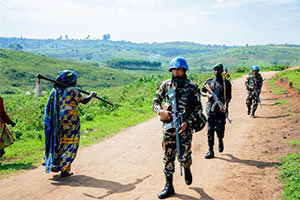 MONUSCO Peacekeepers and FARDC Soldiers Patrol Fataki Area. Credit: UN Photo/Jorkim Jotham Pituwa
Conflict, human rights violations, natural disasters, and famine have been at the forefront of concerns for humanitarian organizations. The escalation of humanitarian crises has led to over 239 million people in need of humanitarian assistance at the start of 2026, as estimated by OCHA’s Global Humanitarian Overview. The 2025 humanitarian appeal received only $12 billion, the lowest funding in over a decade, which has left 24 million fewer people reached in comparison to 2024. Conflict has remained the primary driver of crisis.
Humanitarian emergencies massively impact progress towards the Sustainable Development Goals (SDGs), adversely affecting economic development, inequality, education, planetary well-being, and poverty. Millions of people are faced with reduced access to essential services, including shelter, food, healthcare, and access to clean drinking water. UN Organizations such as UNHCR and the United Nations Children’s Fund (UNICEF) are committed to providing direct relief to affected communities when state governments cannot.
The United Nations 2024 Summit of the Future discussed measures that will be taken to reduce global inequality and promote peacekeeping efforts around the world. The recent UN Climate Change Conference (COP30) in Belém, Brazil, agreed to mobilize $1.3 trillion annually for climate action by 2035, operationalize the loss and damage fund, and triple adaptation finance. However, a fossil fuel transition commitment was not secured, despite climate change and the greenhouse effect being major contributors to humanitarian crises worldwide.
Countries across the world have also rallied to end humanitarian crises, as witnessed in conflicts such as Palestine and Ukraine. IPS is committed to providing relevant and in-depth reports of humanitarian emergencies around the world and their implications.

The Week with IPS

NEXT STOP - SDGs
Tracking global progress towards a sustainable world
Tracking global progress towards a sustainable world