
Friday, November 13, 2026



News and Views from the Global South
Indigenous Rights
ECUADOR: Gearing Up for a New Constitution
Voters in Ecuador are getting ready to go to the polls Sunday, where they are expected to approve a new constitution that recognises ethnic diversity and expands social and environmental rights.MALAYSIA: Race Relations Act Will Change Little – Critics
After 50 years of trying to build a plural society Malaysia now plans to enact a race relations law to end discrimination and protect minorities. But critics say a new law will change little.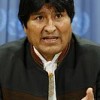
BOLIVIA: Morales Cites "Evidence" of U.S. Meddling
Bolivian President Evo Morales reiterated the charge Tuesday that the U.S. government was plotting to overthrow his government and that Washington had a hand in the recent episodes of violence in which a number of his supporters were killed and wounded by opposition gangs.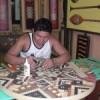
BRAZIL: Amazon Art Institute Helps Recover Indigenous Roots
Dhiani Pa'saro came to Manaus, the bustling city of 1.7 million people in the heart of Brazil’s Amazon rainforest, eight years ago, after wandering from one village or town to another. At the time he planned to become a dentist, but at 33 he is now a renowned artist.LATIN AMERICA: Native Groups Express Solidarity with Bolivian Leader
Indigenous organisations from several countries in Latin America declared their solidarity with Bolivian President Evo Morales with respect to the crisis in his country, and are preparing a major gathering in La Paz, Bolivia within the next few weeks.POLITICS: U.S. Ties to Bolivian Opposition "Shrouded in Secrecy"
Who in Bolivia is receiving millions of U.S. taxpayer dollars? That is what many Latin America policy analysts in Washington want to know.BOLIVIA: Opposition Accepts Morales’s Call for Talks
Opposition governors in Bolivia accepted President Evo Morales’s call for talks aimed at pulling the country out of the current crisis, in which at least 15 supporters of the leftwing government have been killed.BOLIVIA: Governor Arrested for “Porvenir Massacre”
The governor of the northern Bolivian province of Pando was detained by the military Tuesday and is being flown to the capital to face prosecution for allegedly instigating the killings of at least 15 local indigenous people.SOUTH AMERICA: Leaders Express Full Support for Bolivia’s Morales
After an emergency summit in the Chilean capital, the presidents of the Union of South American Nations (UNASUR) expressed their resounding support for the government of Bolivia and decided to set up commissions to support talks and to investigate recent killings in that country, which is caught in a wave of political unrest.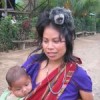
PERU: Birthing Houses Combine Native Traditions, Modern Medicine
"Ashaninka women give birth at home, in accordance with tradition," declares José Ponce, the head of the health committee in Puerto Ocopa, a village of 253 Ashaninka indigenous families deep in the central Peruvian jungle.BOLIVIA: Deaths in the Amazon
The Bolivian government declared martial law in the northern province of Pando after as many as 15 indigenous supporters of President Evo Morales were killed by rightwing protesters near the town of Cobija.POLITICS-CAUCASUS: Media Guilty as 'Fog of War' Clears
As the ‘fog of war’ clears over the Caucasus and the United Nations prepares to set up peace missions in Abhkazia and South Ossetia, what stands out is the apparently partisan role played by Western media in last month’s five-day armed conflict.BOLIVIA: “Twenty Families Are Obstructing Governability” – Expert
The Bolivian government's determination to hold a referendum, by presidential decree, on a new constitution that it hopes will "re-found" the nation as a "plurinational state," has ceded to pressure from the rightwing opposition. The vote has been postponed several weeks, and Congress will be setting the rules.
OIL-PERU: “The Ashaninka People Will Not Allow These Abuses”
"We will not allow the oil company to come in because it will bring pollution and we will suffer," said Medaly Pancho, a member of the Ashaninka community in the central Peruvian province of Junín. "We hunt and fish, we live our peaceful lives, and we don't want that to change."NICARAGUA: Name and Identity for Thousands of Indigenous Children
Some 250,000 indigenous children and adolescents who had no legal identity in Nicaragua are in the process of being registered - an essential step towards achieving recognition of their basic human rights.
MEDIA-PHILIPPINES: Community Radio – Balm in Troubled Areas
Amidst the raging conflict between government forces and Muslim rebels on the island of Mindanao, the religiously mixed population in the North Cotabato region looks to a community radio station as a beacon of peace.POLITICS: Shanghai Cooperation Organisation Split on Georgia
Moscow’s decision to recognise the two separatist regions of Georgia as independent states has exposed the divergence of geopolitical interests within the six-nation Shanghai Cooperation Organisation (SCO).CHILE: Keeping Indigenous Languages Alive
"Mari, mari!" shout the excited group of 20 Chilean, Peruvian and Ecuadorean three- and four-year-olds, using the Mapuche language greeting to welcome a visitor to their intercultural day care centre in Santiago.MEXICO: Native Women Mobilise for Their Rights
If the Mexican government has not addressed the demands of indigenous women in the southern state of Oaxaca by the end of the first week of September, 10,000 native women will travel to the capital to directly pressure President Felipe Calderón. "We are fed up," said one of the leading activists.VENEZUELA: Yukpa Indians Clash with Ranchers and Soldiers
"The army's rifles should be used to protect Venezuela or its people, not to fire over our heads," Sabino Romero, the young deputy "cacique" (chief) of the Yukpa community of Chaktapa, complained to reporters, describing the behaviour of the armed forces in the northwestern mountains of Perijá, near the Colombian border.BRAZIL: Start of Landmark Case Bodes Well for Indigenous People
A Brazilian Supreme Court hearing on a landmark case got off on a positive footing for the indigenous people who live in the Raposa Serra do Sol reservation in northern Brazil.« Previous Page — Next Page »


The planet's roughly 350 million indigenous peoples took notable steps on the international stage in the last decade. They got the world's governments to agree to create a body to represent them at the United Nations, the Permanent Forum on Indigenous Issues, and to appoint a special rapporteur responsible for their human rights. In 2007 a Universal Declaration on the Rights of Indigenous Peoples was approved by the UN. Yet the living conditions of most "tribal", "aboriginal", "native" or "first" peoples remain precarious. IPS, with its network of contributors at the UN and linked to indigenous communities worldwide, is committed to tracking the world community's efforts to do justice to the rights and aspirations of these peoples, with a special current focus on Latin America's 40 million rural indigenous peoples.

The Week with IPS

Tracking global progress towards a sustainable world
