Languages
Saturday, October 17, 2026



News and Views from the Global South
Labour

Africa Needs a Radical Plan to Tackle 15M Youth Job Crisis
Africa has no problem with ideas, but the struggle is in how to implement them, leaders said at an inaugural forum convened to promote action on development.
Ocean Economy Reaches $2.5 Trillion as Services Become the Largest Share of Ocean Trade
The global ocean economy continues its expansion, with ocean-related trade reaching USD 2.5 trillion as of 2025. Ocean services now make up the majority of the ocean trade, accounting for 58.9 percent of the composition, up from 47.8 percent in 2020.
UN Urgently Calls for Increased Aid in Yemen Following IPC Warnings of Food Insecurity
In Yemen, increasing funding constraints on humanitarian operations have put millions of civilians in dire need of life-saving assistance amid overlapping crises. Acute food insecurity is a persistent issue, as recent reports from the Integrated Food Security Phase Classification (IPC) give a stark warning of conditions without urgent intervention.
As Global Demand for Gold Grows, UN Mercury Head Warns Toxic Fumes Put Women in a Motherhood Dilemma
Ask any woman miner in the Katoro goldfield in Tanzania’s northern Geita region, and she will tell you that she touches toxic mercury with her bare hands when extracting gold from crushed ore.
Iran War Deepens Activist Dangers
Narges Mohammadi, awarded the Nobel Peace Prize for her human rights activism in Iran, has been allowed to go home. After guards found her unconscious in her cell, the apparent victim of a heart attack, she was granted temporary release from prison and transferred to a hospital. However, she still faces the threat of being taken back to jail once her condition has improved.
Socialism Is Slow to Mature
In 1921, a few years into the Soviet experiment, V. I. Lenin published an essay with the revealing title ‘New Times and Old Mistakes in a New Guise’. The essay opened a line of inquiry that would remain with Lenin until the end of his life three years later. What captivated him was the issue of how to build socialism in a country ravaged by war, with minimal capital at its disposal, a largely peasant society with high rates of illiteracy (around 70%), and no public administration capable of running a socialist-oriented state. In the essay, Lenin reflected:
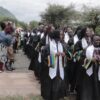
Breaking Cultural Barriers to Equip Marginalised Kenyan Girls With Entrepreneurial Skills
For generations, communities in Kenya’s arid and semi-arid lands (ASAL) have viewed girls through the lens of marriage, with some being married at 11 in exchange for livestock or soon after secondary school, denying them opportunity for further education and skills training.
PHILIPPINES: ‘A Protest Is One Day, but Organising Is the Thousands of Conversations That Make That Day Possible’
CIVICUS discusses Gen Z-led protests in the Philippines with Charles Zander, a 17-year-old climate justice activist from Bohol and youth campaigner for Greenpeace Philippines.
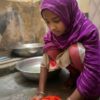
Before the Flood, Jannat Carried Books. After the Flood, She Carried Dirty Dishes
When catastrophic floods swept through the Haor wetlands of Sunamganj in 2022, they destroyed far more than homes and crops. They shattered childhoods.
VENEZUELA: ‘The Credit Goes to Detainees’ Families, Human Rights Organisations and the International Community’
CIVICUS discusses the status of political prisoners in Venezuela with Manuel Virgüez, director of Movimiento Vinotinto, a Venezuelan human rights organisation that works for citizen empowerment, democracy and justice.
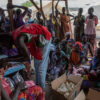
Famine in South Sudan Projected to Worsen Without Humanitarian Intervention
In 2026, the humanitarian situation in South Sudan has taken a considerable turn for the worse, with widespread food shortages, ongoing disruptions to food production systems, and rising rates of malnutrition affecting over half of the population. Compounded by the vast scale of needs and an overwhelming lack of access to basic services, humanitarian experts warn that nationwide levels of hunger are projected to worsen to catastrophic levels if urgent intervention is not secured.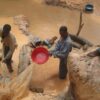
Clean Energy, Digital Technologies Are Coming at a Human Cost, UN Report Warns
A newly released United Nations report has raised urgent concerns that the world’s push toward clean energy and digital technologies is driving a hidden crisis in some of the planet’s most vulnerable regions, where mining for critical minerals is depleting water supplies, damaging health, and deepening inequality.
“War-Shock Inflation” and Inflation Phobia: Lessons of History for Central Bankers
The global economy, is at the precipice of “stagflation” – growth slowdown and higher inflation – due to the energy price shock following the illegal US-Israel war on Iran. The International Monetary Fund (IMF) has recently termed this as a “textbook negative supply shock”. For the first time since the 1970s, the prospect of stagflation seems real.
Trump Rips off Velvet Glove from Mailed Fist
Trump 2.0 has been marked by the blatantly aggressive exercise of power to secure US interests as defined by him. While many recent trends even predate his first term, his reduced use of ‘soft power’ has exposed his bullying, extortionary use of US power.
ARGENTINA: ‘Under the New Law, Workers Have No Real Scope to Defend Their Rights’
CIVICUS discusses recent regressive changes to Argentina’s labour laws with Facundo Merlán Rey, an activist with the Coordination Against Police and Institutional Repression (CORREPI), an organisation that defends workers’ rights and resists state repression.
The Political Economy of Bangladesh’s LDC Graduation
Bangladesh is scheduled to graduate from the least developed country (LDC) status in November this year after more than half a century. Bangladesh joined the UN club of LDCs in 1975 and consistently met all three graduation criteria – per capita Gross National Income (GNI), human asset and economic vulnerability – since 2018.
Post-Protest Bangladesh: Restoration More than Renewal
Bangladesh’s first credible election in nearly two decades delivered a landslide win for the Bangladesh Nationalist Party (BNP) and its leader Tarique Rahman, son of a former prime minister, just back from 17 years of self-imposed exile.
Escalating Violence and Influx of Returnees in DRC Fuel Regional Instability
In the month following the reopening of the Burundi-Democratic Republic of Congo (DRC) border, the humanitarian crisis in the DRC has deteriorated considerably, recently marked by an influx of Congolese refugees returning home, where they face overcrowded conditions and a severe shortage of essential services. This comes in the midst of escalating clashes between rebel groups AFC and M23, and forces affiliated with the Kinshasa government, with drone strikes causing widespread destruction and pushing violence closer to Burundi’s borders, where conditions are most dire.
PORTUGAL: ‘The Far Right’s Electoral Legitimacy Can Eventually Become Governmental Power’
CIVICUS discusses Portugal’s presidential runoff election and the rise of the far-right Chega (Enough) party with Jonni Lopes, Executive Director of Academia Cidadã (Citizen Academy) and a Steering Committee member of the European Civic Forum, an organisation working on civic engagement, democratic participation and the protection of civic space at national, regional and international levels.

‘The Political System Only Moves When Threatened Directly’
CIVICUS discusses Nepal’s upcoming election with youth activist Anusha Khanal of the Gen Z Movement Alliance, a youth-led civil society coalition mobilising for democratic accountability and governance reform in Nepal.

80 Percent of Rural Households Without Direct Water Access – World Water Report
A new United Nations report has warned that global water inequality remains one of the most pressing development challenges of the decade, with billions still lacking safe drinking water and sanitation – while women and girls continue to bear the heaviest burden of water insecurity.
« Previous Page — Next Page »





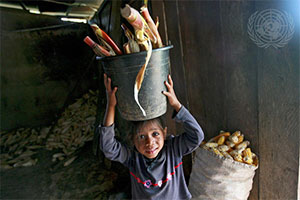 Timorese Girl with Fresh-Picked Corn. Credit: UN Photo/Martine Perret
A global common denominator is the need for a decent job. The economic realities of each country determine just how difficult it is to find one. Despite the labour movement's achievements, serious challenges persist: gender discrimination, child labour, worker migration, the digital divide and AI automation, evaporating pensions, unsafe workplaces, corporate pressure against union organising, negative impacts of trade agreements, and the precariousness of informal employment. The 2025 UN SDG Report identifies jobs and social protections as one of the six priority areas requiring urgent action, with progress either stalled or reversing in many developing nations.
In recent years, the fight to protect labour equality has taken on new dimensions with the rise of Environmental, Social and Governance standards. With the Social aspect aiming to promote equality and human rights, ESG principles have strengthened labour advocacy within corporate and governmental regulatory landscapes. In particular, ESG has become much more institutionalized in emerging economies such as Brazil and China. IPS follows the world’s workers as they confront these challenges - their setbacks and their successes.

The Week with IPS

NEXT STOP - SDGs
Tracking global progress towards a sustainable world
Tracking global progress towards a sustainable world
