Languages
Sunday, November 8, 2026



News and Views from the Global South
Human Rights

World Leaders Offered “15 Minutes of Fame” at UN’s High-Level Meeting
Everyone in this world is entitled to 15 minutes of fame-- is a legendary quote mis-attributed to the American pop icon Andy Warhol. Over the years, the United Nations has laid down its own 15-minute rule for world leaders addressing the UN General Assembly.
ECW’s New Report Shows Successful Education Funding Model for Crises-Impacted Children
In a world set on fire by climate change and brutal conflict, millions of children in emergencies and protracted crises need educational support. Children in 48 out of 49 African countries are at high or extremely high risk of the impacts of climate change, particularly in the Central African Republic, Chad, Nigeria, Guinea, Somalia, and Guinea Bissau.
Safe, Regular & Orderly Migration for Inclusion and Sustainability
In Asia and the Pacific, migration is again on the rise. In 2020, almost 109 million people lived in a country other than that of their birth. They represented 2.3 per cent of the region’s population in 2020 and almost 38 per cent of the world’s international migrants.
Twenty Years on from the UN Bombing in Baghdad, What’s Changed?
Twenty years ago this month, a colleague saved me from a likely gruesome death. He insisted I stay in his Baghdad office of the World Food Programme (WFP) for a hot drink. “You can't leave us without trying the tea I made for you! The best in Iraq.”
Kazakhstan’s Transition: From a Nuclear Test Site to Leader in Disarmament
Exactly 32 years ago, on August 29, 1991, Kazakhstan, then part of the Soviet Union, made a historic decision that would alter its fate. On that day, Kazakhstan permanently closed the Semipalatinsk Nuclear Test Site, defying the central government in Moscow. This marked the start of Kazakhstan's transformation from a nuclear-armed state, possessing the fourth-largest nuclear arsenal at the time, to a non-nuclear-weapon state. Kazakhstan's audacious move to eliminate its nuclear weapons was rooted in a profound commitment to global disarmament, setting an inspiring precedent.
The UN’s Own Relevance Is at Stake at This Year’s General Assembly
This September, world leaders and public policy advocates from around the world will descend on New York for the UN General Assembly. Alongside conversations on peace and security, global development and climate change, progress – or the lack of it – on the Sustainable Development Goals (SDGs) is expected to take centre-stage. A major SDG Summit will be held on 18 and 19 September. The UN hopes that it will serve as a ‘rallying cry to recharge momentum for world leaders to come together to reflect on where we stand and resolve to do more’. But are the world’s leaders in a mood to uphold the UN’s purpose, and can the UN’s leadership rise to the occasion by resolutely addressing destructive behaviours?
A New Center In The Time of The Brave
In the years when Mexico did not have a general law against human trafficking, there existed an evil man known as "El Osito" (“The Little Bear”). His alias could mislead those who heard of his criminal record: he was a ruthless pimp, devoid of any trace of kindness in his body, who claimed to collect kidnapped women to exploit their bodies.
Lawmakers Call on G20 to Prioritise Spending on Youth, Gender, and Human Security
Legislators from around the world, this week, officially submitted to the Sherpa of the G20 meeting set for September in New Delhi a declaration calling on governments to prioritise spending on ageing, youth, gender, human security, and other burning population issues.
When the UN Came Under Attack— from a Mis-Guided Rocket Launcher
When 150+ world leaders, including Presidents and Prime Ministers, arrive in New York to address the high-level segment of the General Assembly beginning September 19, the UN neighborhood will be turned into a veritable war zone. The streets will be littered with scores of police officers, US secret service personnel, UN security officers, bomb-sniffing dogs, road closures-- and a stand-by ambulance in the UN campus ready to cope with any medical emergencies.
Civil Society Organizations Unite to Urge Public Development Banks to Change the Way Development Is Done
In the midst of a complex web of crises, spanning climate change, biodiversity depletion, constraints on civic space and mounting debt burdens, civil society organizations and human rights defenders from over 50 countries have united their voices to call for immediate and impactful action from Public Development Banks (PDBs).
Education Cannot Wait Interviews High-Level Steering Group Youth Representative Mutesi Hadijah and Executive Committee Youth Representative Hector Ulloa
Youth offer a powerful voice in ECW’s global movement to ensure crisis-impacted children worldwide are offered the safety, hope and opportunity of a quality education. As a global multilateral fund, ECW offers a rare opportunity for youth to participate in its governance structure. In this sweeping two-part interview, ECW connects with Mutesi Hadijah and Hector Ulloa who were recently elected to represent the youth constituency on ECW’s High-Level Steering Group and Executive Committee, respectively.

What Niger’s Coup Says About US Security Assistance in the Sahel
In what has become an all too familiar phenomenon, U.S.-trained security personnel have been implicated in the July 26th coup that deposed Niger’s democratically elected president, Mohamed Bazoum.
Mushroom Workers Want a Union
The Yakima River runs southeast from the Cascade Mountains through central Washington state to merge with the Columbia a little north of Oregon. From the small city of Yakima on down, its course broadens from a winding canyon into a wide valley bounded by austere low ridges of gray-green sagebrush and tawny grasses. In mid-April, the new leaves of the willows and cottonwoods light up the riverbanks with luminous chartreuse.
‘Investing’ Key to the Prevention of Military Coups – UN
The United Nations says increased investment in the Sahel region will assist in preventing military coups. This after military officers in Gabon announced a seizure of power from long-time President Ali Bongo Ondimba following the results of a disputed election in Gabon on Wednesday.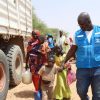
Want to Prevent Atrocities? Think Locally. Act Locally
When I first travelled to the Middle Belt of Nigeria, I listened to harrowing tales of murdered family members, physical injury, sexual violence, displacement, and hopelessness. In the years that have passed, these stories have only continued to stack up.
General Assembly President Calls for a ‘Human-Centered Approach to Disarmament’
The President of the UN General Assembly, Csaba Kőrösi, struggled to find a reason to celebrate the 13th International Day against Nuclear Tests. There have only been five nuclear tests, all conducted by North Korea since the day was declared in 2010. Still, Kőrösi said he sees a world plagued by more distrust, geopolitical competition, and conflict than before.
Guatemala: Change Within Reach
On 20 August, Guatemala witnessed a rare event: despite numerous attempts to stop it, the will of the majority prevailed. Democracy was at a dramatic crossroads, but voters got their say, and said it clearly: the country needs dramatic change and needs it now.
Digging Africa Deeper into Hunger
Annual Green Revolution Forum ignores widespread failure of its push for industrialized agriculture
As the adage goes, when you find yourself stuck in a hole, stop digging. As African leaders and their philanthropic and bilateral sponsors prepare for another glitzy African Green Revolution Forum, convening September 5-8 in Dar es Salaam, Tanzania, they are instead handing out new shovels to dig the continent deeper into a hunger crisis caused in part by their failing obsession with corporate-led industrialized agriculture.

Regaining Momentum for a Leprosy Free World
This year marks the 150th anniversary of the discovery of the leprosy bacillus by Dr. Gerhard Armauer Hansen in Bergen, Norway. To prompt reflection on the past and build momentum for a zero leprosy future, the Sasakawa Leprosy (Hansen’s Disease) Initiative and the University of Bergen co-hosted an international conference on June 21–22. The conference was attended by 200 people from 27 countries and opened with video messages from Dr. Tedros Adhanom Ghebreyesus, Director-General of the World Health Organization, and Mr. Volker Türk, United Nations High Commissioner for Human Rights.
Two Years after the Taliban Took over, More Should Be Done to Rescue Afghanistan
His name is Matiullah Wesa, a girls education campaigner who now symbolises the “war” waged by the Taliban against the education and empowerment of women and girls. Exactly two years since the Taliban took over, Afghanistan is on a downward trajectory and unfortunately, global attention that was drawn by families chasing planes to flee a few days after the Taliban assumed control of the government has waned over the last two years.
Debt & Crisis of Survival in Sri Lanka & the World
Sri Lanka has been faced with an unprecedented political and economic crisis since the beginning of 2022. The dominant narrative attributes the crisis to the confluence of the COVID-19 pandemic, the Ukraine conflict, China’s ‘debt trap diplomacy’ and – most importantly – the corruption and mismanagement of the ruling Rajapaksa family.« Previous Page — Next Page »





One world, one humanity, now one court to defend its rights. Another step towards universal human rights, but not remotely a step far enough. The United Nations adopted the Universal Declaration of Human Rights more than half a century ago, but that has done little to stop violations the world over, just as the Geneva Convention has not protected prisoners of war enough. Democracy itself and the freedom it presupposes has not been protective enough. This is the century to move from politicisation of human rights towards humanising political ways. IPS keeps an eye on that difficult path.

The Week with IPS

NEXT STOP - SDGs
Tracking global progress towards a sustainable world
Tracking global progress towards a sustainable world
