Languages
Friday, November 13, 2026



News and Views from the Global South
Human Rights
Safety of Children an Afterthought for Tech Companies
Global upheaval caused by the COVID-19 pandemic has left society’s most vulnerable exposed. Instances of child sexual exploitation material (CSEM) found online have increased at an alarming rate over past months.
Sudan’s Partners Pledge almost $2Bn but Is it Enough?
This week, when Sudan's Minister of Energy and Mining Adil Ibrahim addressed the country, stating that households will face power-cuts for up to seven hours a day, people had already been sitting on plastic chairs outside their homes, scouring the internet to purchase battery-operated fans. This Northeast African nation has seen temperature highs of up to 41 degrees Celsius recently.
What still needs to happen to win the fight against human trafficking
In late 2019, we learned of the harrowing plight of Suma Akter, a Bangladeshi woman in Saudi Arabia who secretly recorded and shared on social media her story of abuse and exploitation abroad. In Saudi Arabia, Akter said, her employer beat her and at one point poured hot oil on her hand. Later on, when she fell ill, Akter said her employer sold her to another person for 22,000 riyals (almost Tk 5 lakh).
African Governments Failing Survivors of Child Sexual Exploitation
In Malawi, Mary* was only 14 years old when she was recruited and trafficked to the city of Blantyre and sold for sex in a bar. A man had arrived in her village looking for girls to work as domestic helpers for families.
Looking Beyond the Lowest-common Denominator? DFID/FCO Merger
Nazia has a herd of 5 cows. She has two daughters in secondary education, a seat on the Village Council, a savings account and a permanent home. Nazia has dignity, security and prospects beyond poverty. This is Nazia’s story because alongside her commitment and conviction to create a better life, she benefited directly from the UK government, and its global leadership in the drive to end extreme poverty.
COVID-19 Increases Suffering of Children in Conflict
The current coronavirus pandemic is having a profound affect on children in conflict zones -- with girls especially being at higher risk of violence and sexual health concerns.
The US & the UN — A Looming Confrontation
The recent approach of the US to the UN and its agencies has left many shaking their heads. The US, under President Roosevelt, played a seminal role in creating the UN and its key agencies after World War II and subsequently nurturing them.
The UN’s Failure to Act on Race
Racism is not only an American problem but a plague that people of African descent have had to endure since time immemorial. Rather than seizing this historic moment to act decisively, the United Nations, the world’s highest platform for human rights, dithered on the issue when it was called on to establish a full commission of inquiry on race following the outrageous killing of George Floyd on May 25 2020.
Unlawful Use of Force by Police at Protests Across the US
Police forces across the United States have committed widespread and egregious human rights violations in response to largely peaceful assemblies protesting systemic racism and police violence, including the killing of Black people.
Racism, Shitholes and Re-election
Over the course of his presidency, US President Donald Trump’s racism has become more evident with more leaks of his private remarks, which he has been generally quick to deny, qualify and explain away.
Message to Ostracized World Leaders: You Don’t Need a US Visa to Address the UN
The coronavirus pandemic is beginning to transform the United Nations into an institution far beyond recognition. The Secretariat building has been shut down since mid-March, and the UN campus will continue to remain a ghost town through end July-- and perhaps beyond-- with nearly 3,000 staffers, delegates and journalists working, mostly from home.A look into the lives of Cambodia’s gentle giants
For generations, elephants have been inextricably tied to the lands of Mondulkiri in Cambodia. The people who call this place their home -- the indigenous Bunong community -- share a unique bond with the gentle giants of the land.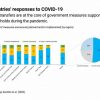
You’ve Got Money: Mobile Payments Help People During the Pandemic
The practical challenge of quickly getting financial support in the hands of people who lost jobs amid the COVID-19 economic crisis has baffled advanced and developing economies alike. Economic lockdowns, physical distancing measures, patchy social protection systems and, especially for low-income countries, the high level of informality, complicate the task. Many governments are leveraging mobile technology to help their citizens.
Agriculture: Rooted in Racism
There has been far less social progress in the United States in the last 155 years than many people would like to believe. In 2020, racism still seeps its way into every aspect of life; from unconscious bias and micro-aggressions in everyday interactions to domestic and international policy and enforcement.
The Foundation to Build Back Better: Education
To realize the concept of ‘build back better,’ we need a foundation. That foundation is education. This is an incontestable truth.
Q&A: Sexual Violence Survivors and their Access to Care Should not Be Forgotten
While the coronavirus does not discriminate, its impact does. And the needs of survivors of sexual violence in conflict "cannot be put on pause, and neither can the response” during the current COVID-19 pandemic.
The price of a migrant worker’s dream
May 27, 2020 marked another dark chapter in the history of global migration. On that day, 26 sons of Bangladesh were brutally murdered in Libya. The crime for which they paid this ultimate price was that they dared to dream! They dreamt of having a better life. They had the audacity to reject the rigid class-based society of theirs, which offers little scope to make an upward transition in life. Had fate been kind to them, they would have made it to Italy, or Spain, or some other European nation. They gambled with their life and lost the game. How long can such gambling continue?
Scourge of Racism Violates UN Charter
I welcome this opportunity to speak to this urgent and necessary debate of the Human Rights Council. I bring you warm greetings from Secretary-General António Guterres, who shares your abhorrence of racism and is committed to fighting it with every tool we have.
Social Movement Through Social Media
Last week, Kathmandu erupted with protests organised collectively through the social web by Nepal’s urban young fed up with the shenanigans of the country’s septuagenarian rulers.
Women Leadership Is Key to Successful Post-COVID-19 Era, Says Cherie Blair
The impact of COVID-19 lockdowns falls heavily on the shoulders of women even in the global north. Women take the brunt of housework and caretaking duties, homes schooling, working from home and perhaps looking after elderly parents, says Cherie Blair.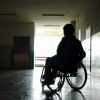
COVID-19 has Further Marginalised Persons with Disabilities
Since the beginning of the year, more than 200 nations across the globe have been affected by COVID-19. Many are still reeling under the devastating effects of the pandemic, with both public health and the global economy having taken a major blow.« Previous Page — Next Page »


One world, one humanity, now one court to defend its rights. Another step towards universal human rights, but not remotely a step far enough. The United Nations adopted the Universal Declaration of Human Rights more than half a century ago, but that has done little to stop violations the world over, just as the Geneva Convention has not protected prisoners of war enough. Democracy itself and the freedom it presupposes has not been protective enough. This is the century to move from politicisation of human rights towards humanising political ways. IPS keeps an eye on that difficult path.

The Week with IPS

NEXT STOP - SDGs
Tracking global progress towards a sustainable world
Tracking global progress towards a sustainable world
