Languages
Friday, November 13, 2026



News and Views from the Global South
Human Rights

Miracle or Mirage? Gangs and Plunging Violence in El Salvador
After decades of harrowing gang crime, homicides have plunged in El Salvador on the watch of the new president, Nayib Bukele. Faced with the growth of the MS-13 and 18th Street gangs, previous governments resorted to “iron fist” policies to crush them, only to find these fuelled a backlash.
On World Youth Skills Day, Don’t Forget the Importance of Soft Skills
It’s no secret that under pandemic lockdown for so many months, young people around the world have coped in tremendous ways. They have found new outlets for learning and creative channels for developing and using their skills.
Q&A: How Kazakhstan’s Transgender and Lesbian Women are Being Impacted by COVID-19
The coronavirus lockdown in Kazakhstan, and the resultant limited public oversight and limited publication engagement, has paved the way for the government to propose amendments to the country's laws around gender that could see the exclusion of the rights of the Lesbian, Gay, Bisexual, Transgender, and Queer (LGBTQ) community.
Lebanese Financial Crisis Validates Importance of Abolishing ‘Kafala’
They were promised the world but ended up in a Lebanese household. This is the story of many domestic workers in Lebanon. With a 70-year-old sponsor system still in place, domestic workers are tied to their employers with little or no basic rights. The ‘Kafala’ system is the major problem behind what we have been seeing in Beirut in the last months.
The Return
"As we were saying yesterday." When, after an abnormal interruption of the school calendar, as happened recently with the extension of spring break (which does not coincide with "Easter"), I return to teach a class surprising my students with this phrase: "as we were saying yesterday. "
Human trafficking for ORGANS REMOVAL: an unseen form of exploitation
Two-day online expert meeting to discuss recent developments and policy gaps in combating trafficking in human beings for the removal of organs concluded yesterday evening. The event was co-organized by the Office of the OSCE Special Representative for Combating Trafficking in Human Beings (OSR/CTHB), the Office of the UN High Commissioner for Human Rights (OHCHR) and co-sponsored by the World Health Organization (WHO).
Beware the ‘Hunger’ to Access Indigenous Peoples’ Land and Resources for Post-COVID-19 Recovery
When governments and states begin their recovery journey from the economic downturn caused by the coronavirus pandemic, there might be a heightened threat to indigenous peoples, their land and resources. “The fear is [that] the economic recovery is based on access to land and natural resources,” Lola García-Alix, senior advisor on Global Governance at the International Work Group for Indigenous Affairs (IWGIA), told IPS.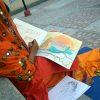
In India, Climate Change is Increasing Refugees & Human Trafficking
In India the impacts of climate change induced extreme weather events on the lives and livelihood of people, particularly belonging to the poor and vulnerable sections of the society, are increasing alarmingly with each passing year.
The Quiet Survivors of a Global Pandemic
The issue of women’s rights, feminism and gender is complex and ongoing in most countries including Bangladesh. When I was asked to write about impact of COVID-19 on women and girls, I found myself drawn towards writing about women’s situation in general as that automatically impacts COVID-19 response as well. Since I am a woman who has been a part of many different cultures, yet a Bangali at heart, I am not only a survivor within its ranks but also responsible for being a part of the solution to the problems we face.
UN Chief Warns of Deadly Germs as Potential Bioterrorist Weapons
The coronavirus—which has claimed the lives of over 538,000 people and infected more than 11.6 million worldwide—has destabilized virtually every facet of human life ever since its outbreak in late December.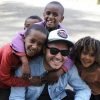
Building Back Greener in Africa
COVID-19 continues to race across the African continent. People are dying, and even more are being pushed into hunger and poverty, in many cases risking to overturn years of development gains.
Non-formal Education Helps Senegalese Women Combat FGM and Harmful Practices
Growing up in Senegal’s southern Casamence region — a conflict zone — Fatou Ndiaye, now 43, often heard gunfire and watched fearfully as she saw people flee their villages. But what she dreaded more than a flying bullet was Female Genital Mutilation (FGM).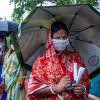
Security Council’s Overdue COVID-19 Ceasefire Resolution Must Put Women & Youth at Center
More than three months after UN Secretary General Antonio Guterres made an urgent appeal for a global ceasefire in response to the COVID-19 pandemic, the UN Security Council has finally passed a resolution supporting his call.
Why Does Racism Prevail? Leading Scholars Apply their Minds
All people belong to one biological species and there are no human “races”. So why does belief in race persist? It may be a scientific misconception, but it is real. It defines the lived experience of many people and determines how governments act and how people treat one another. How did race come to have this power and this durability?
Nuclear Testing, Never Again
Seventy-five years ago, on July 16, the United States detonated the world’s first nuclear weapons test explosion in the New Mexican desert. Just three weeks later, U.S. Air Force B-29 bombers executed surprise atomic bomb attacks on the cities of Hiroshima and Nagasaki, killing at least 214,000 people by the end of 1945, and injuring untold thousands more who died in the years afterward.
”Murder Most Foul” – the Death of Olof Palme
Just as the U.S. is haunted by the 1963 murder of John F. Kennedy, Sweden is troubled by the 1986 murder of its Prime Minister Olof Palme. The American feelings were aired on Bob Dylan´s latest album, Rough and Rowdy Ways, containing a 16 minutes long song with lines like:
India’s Test along the Line of Actual Control
Being the sole candidate from the Asia Pacific region for the non-permanent seat of the United Nations Security Council (UNSC), India was elected by 184 votes in the 193-member United Nations’ General Assembly. on June 17, 2020.
Are We Going from San Francisco?
Seventy-five years ago, on 26 June 1945, before the Japanese surrender ending the Second World War, fifty nations gathered at San Francisco’s Opera House to sign the United Nations (UN) Charter.
White House Fenced In: Trump, Within, Ploughs a Lonely Furrow
President Donald Trump has got himself a wall. But it is not the one of his choosing, as one on the Mexican border. It is on Pennsylvania Avenue, Washington DC, a high fence that now separates him from his people. But as polls for him keep dipping, and the prognosis for a victory in the upcoming November elections keep worsening, a prediction from an unlikely person should bring him cheer. The source is none other than the Foreign Minister of a country that Trump considers to be in the forefront of his list of foes: Javad Zareef of Iran. I have known Zareef and worked with him as a fellow diplomat for years and would rate him as a person of extraordinary intellect. Speaking at an interview on Instagram with an Iranian journalist Farid Modaressi, Zareef stated that despite all that is happening, Trump’s support base of 30 to 35 percent has not moved , and till that occurs, he still has over 50 percent chances of re-election. Zareef did not elaborate if he himself would prefer such an outcome, calculating that four more years of America with Trump at its helm , might eliminate that nation totally from the global power scene, which for Zareef and Iran, ought to be a consummation devoutly to be wished!
Put Climate at the Heart of COVID-19 Economic Recovery Plans
Cast your mind back. Six months ago—it seems like a lifetime—the world’s attention was on Madrid. The United Nations was meeting to take stock of international progress in fighting climate change. Headlines were dominated by young people pointing out—rightly—that governments were still not doing enough. They demanded urgent and ambitious action to cut emissions and help the most vulnerable.Racism in America: Police Chokehold is Not the Issue
The American project was founded on rank hypocrisies. On the one hand, President Thomas Jefferson, who wrote the stirring words in the Declaration of Independence that upheld "these truths to be self-evident that all men are created equal", did not free his own slaves (not even Sally Hemings, who bore him six children).« Previous Page — Next Page »


One world, one humanity, now one court to defend its rights. Another step towards universal human rights, but not remotely a step far enough. The United Nations adopted the Universal Declaration of Human Rights more than half a century ago, but that has done little to stop violations the world over, just as the Geneva Convention has not protected prisoners of war enough. Democracy itself and the freedom it presupposes has not been protective enough. This is the century to move from politicisation of human rights towards humanising political ways. IPS keeps an eye on that difficult path.

The Week with IPS

NEXT STOP - SDGs
Tracking global progress towards a sustainable world
Tracking global progress towards a sustainable world
