Languages
Friday, November 13, 2026



News and Views from the Global South
Human Rights

Statue Smashing – Heroes, Values and Racism
On Friday the 24th of June, President Trump announced he was skipping a weekend at his New Jersey golf resort to ”ensure law and order in Washington”, tweeting:- I just had the privilege of signing a very strong Executive Order protecting American Monuments, Memorials, and Statues – and combatting recent Criminal Violence. Long prison terms for these lawless acts against our Great Country!

Reflections on the Charter of the United Nations on its 75th Anniversary
This year we celebrate the 75th anniversary of the Charter of the United Nations, written and signed during a period of great global change. Today, the world is again shifting beneath our feet. Yet, the Charter remains a firm foundation for our joint efforts.
Neglected, Sacrificed: Older Persons During the COVID19 Pandemic
Failing to help those in most need COVID19 is devastating on older persons. The numbers are staggering, more than 80 percent of the fatalities due to coronavirus in the US and East Asia occurred among adults aged 65 and over. In Europe and Australia, the figures are even higher, 94 and 97 per cent of the deaths were persons aged 60 and over.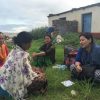
Include Indigenous People in COVID-19 Response
In Nepal the COVID-19 crisis has been especially hard on indigenous peoples. We had to learn a new vocabulary and use words like quarantine, self-isolation, hand sanitizers and social distancing.
Myanmar’s Protection Bill falls Short of Addressing Violence against Women
A legislation that aims to protect women against violence in Myanmar, while long overdue, is raising concern among human rights advocates about its inadequate definition of rape, vague definition for “consent”, and anti-lesbian, gay, bisexual, and transgender rhetoric.
The Charter of the United Nations After 75 Years: Personal Reflections
The Charter of the United Nations is not only the constituent instrument of the United Nations as an organization. It is a multilateral legal manifesto encompassing a set of basic principles and norms aimed at ensuring peace, freedom, development, equality and human rights throughout the world. These principles and norms reflect the shared values proclaimed in the preamble on behalf of the “Peoples of the United Nations”. As such, it is the most innovative and trailblazing multilateral treaty ever concluded among States. Today, it is a universal instrument by which all States have solemnly accepted to be bound in their international relations.
A Determined Path to the SDGs in 2030 Despite the COVID-19 Pandemic
As lockdowns ease in countries across Asia and the Pacific in the wake of the COVID-19 pandemic, one thing is clear—a return to business as usual is unimaginable in a region that was already off track to meet the Sustainable Development Goals (SDGs). The virtual High-Level Political Forum on Sustainable Development recently convened governments and stakeholders across the globe to focus on the imperative to build back better while keeping an eye on the Global Goals.
Gender Inequality and Oppression of Women: A Survivor’s Story
“What do you think happens to kerosene when it is poured on your head?” Surya stumbles as she speaks to IPS. “It goes down, it goes trickling down.” When someone speaks to a burn victim, one naturally feels shocked, sad, and sympathetic. But in talking to Surya, who has the major part of her body burned, the feelings were of hope and inspiration. How is it possible to survive this trauma and still have so much love and joy to share?
Rohingya Women Take a Seat at the Table & Share Stories in a Growing Rights Movement
Rohingya women are coming together to feature their own work, plight and stories in mainstream conversations about their community — a space they say they’ve been left out of. “If we think of revolutions or liberty or think of any ways to liberate ourselves from the shackle of suffering and being dubbed as 'the most persecuted minority on earth', women have to be part of it,” Yasmin Ullah, president of the Rohingya Human Rights Network, told IPS.
Sino-Indian Disengagement at Galwan: Two Steps Back and One Step Forward?
On the first Sunday of July, there was an important telephone call between the Chinese Foreign Minister and State Councillor Wang Yi and the Indian National Security Adviser Ajit Duval. Some important decisions were announced thereafter. This is not to say that these were the outcome of that interaction only. For weeks the militaries of both China and India and their diplomats had been negotiating on the grounds of the disputed territory along the Line of actual Control at the Galwan Valley, as well as through other channels to end the bloodiest border stand-off between the two Asian powers that had lasted two months. True, while not a bullet was fired in anger, troops had battled with sticks and stones that left twenty Indian soldiers dead and, reportedly, an unknown number of Chinese casualties. Indeed, it appeared that the two sides, who had fought a war in the Himalayas in 1962, was yet again on the brink of a possible war.
Marking 75 Years of the Charter of the United Nations
The Charter of the United Nations has been a constant presence in my life. My awareness of it started with the usual brief introduction to the basics of the United Nations as an organization that many young people receive in school. Later, as my political awareness took shape against the backdrop of military rule in Portugal and my country’s status as a colonial power, the Charter’s calls for self-determination and other freedoms registered with urgency. During the time I spent as a volunteer in the poor neighbourhoods of Lisbon, the Charter’s vision of social justice was equally resonant. In subsequent service as a parliamentarian and then as Prime Minister, I was privileged to have an opportunity to advance not only national progress but one of the Charter’s other main objectives: international cooperation. Across a decade as High Commissioner for Refugees and now in my current role, the Charter’s power inspires me onward every day in serving “we the peoples”, including the most vulnerable members of the human family, who have a special claim on that landmark document’s provisions and protections.
South China Sea Provocations & Meeting China Halfway
In the words of (ret.) Colonel Lawrence Wilkerson, Secretary of Defense Colin Powell’s Chief of Staff, the Trump Administration has been dangerously “poking China in the eye.”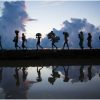
The Great Migration Clash
The world is in the midst of the Great Migration Clash, a bitter struggle between those who “want out” of their countries and those who want others to “keep out” of their countries. More than a billion people would like to move permanently to another country and no less than a billion people say fewer or no immigrants should be allowed to move into their countries.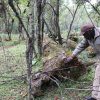
How Kenya’s Indigenous Ogiek are Using Modern Technology to Validate their Land Rights
The Ogiek community, indigenous peoples from Kenya’s Chepkitale National Reserve, are in the process of implementing a modern tool to inform and guide the conservation and management of the natural forest. The community has inhabited this area for many generations, long before Kenya was a republic. Through this process, they hope to get the government to formally recognise their customary tenure in line with the Community Land Act.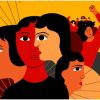
Challenging Cultural Norms and Removing Stigma is Key to Confronting Lesotho’s Rape Culture
The Covid-19 pandemic has exposed and given rise to a new, deeply concerning wave of rape culture in Lesotho. Although the true extent is not known yet, we have noticed concerning reports that the onset of the pandemic has worsened sexual violence with more women and girls being confined to small living places whilst social tensions are exacerbated.
The World Needs You. Now.
“We may all come on different ships, but we are in the same boat now,” Martin Luther King Jr once said. His timeless wisdom rings truer than ever today for the many challenges the world is facing. COVID-19, continued armed conflicts and forced displacement, climate-change induced disasters, deep divides and widespread discrimination mark the human family in the 21st century.
The United Nations At 75 Remains The World’s Moral Compass
“The vision and promise of the United Nations is that food, healthcare, water and sanitation, education, decent work and social security are not commodities for sale to those who can afford them, but basic human rights to which we are all entitled.” Those were the poignant words of the UN Secretary-General, Antonio Guterres, in a hard hitting speech on 18 July 2020 to mark Mandela Day.
US, UK, Interpol Give Ghana Phone Hacking Tools, Raising Journalist Concerns on Safety & Confidentiality
In May 2019, senior members of Ghana’s law enforcement posed for photos with the U.S. ambassador to their country at a ceremony in the capital, Accra. Between them they held boxes and bags, gifts from the U.S. government to Ghana which, according to one of the recipients, contained Israeli phone hacking technology.
With Poverty & Hunger Skyrocketing, is a Global Economic Rescue Package the Answer?
The United Nations has been relentlessly pursuing a highly-ambitious blueprint for the sustainable future of humanity –harking back to the adoption of a new global economic agenda by the General Assembly back in 2015.
UNESCO, UNHCR & EDUCATION CANNOT WAIT Call for the Inclusion of Refugees in the Post-Covid-19 Education Effort
We must not leave young refugees by the wayside, urged UNESCO, the Office of the United Nations High Commissioner for Refugees (UNHCR) and Education Cannot Wait as they urged more support in favour of young refugees’ education during an online debate today, moderated by UNHCR Special Envoy Angelina Jolie, on how best to provide them with improved learning during and after the pandemic.
Re-Conversion of Hagia Sophia into a Mosque a Very Trumpian Move
President Erdogan’s “reconversion” of the Hagia Sophia, into a mosque is a very Trumpian move, making a populist gesture to his base evoking shared misconceptions of history, reckless of its actual diplomatic and economic cost.« Previous Page — Next Page »


One world, one humanity, now one court to defend its rights. Another step towards universal human rights, but not remotely a step far enough. The United Nations adopted the Universal Declaration of Human Rights more than half a century ago, but that has done little to stop violations the world over, just as the Geneva Convention has not protected prisoners of war enough. Democracy itself and the freedom it presupposes has not been protective enough. This is the century to move from politicisation of human rights towards humanising political ways. IPS keeps an eye on that difficult path.

The Week with IPS

NEXT STOP - SDGs
Tracking global progress towards a sustainable world
Tracking global progress towards a sustainable world
