Languages
Tuesday, August 4, 2026



News and Views from the Global South
Human Rights

School Days Lost, but Non-Economic Loss and Damage Not Part of Global Talks
Jyoti Kumari missed her online classes again today. Her father, a vegetable seller in West Delhi’s vegetable market, had to go to work, taking with him the only smartphone the family uses. Kumari has been taking online classes since November 11, when the state government declared a shutdown of all elementary schools due to air pollution hitting the “severe” category.
Sidelined—Quilombos Fight on for Health of World’s Largest Rainforest
Just 30 minutes from where the UN climate negotiations are unfolding in the port city of Belém, Afro-descendant communities are engaged in a fierce struggle for the full recognition and legal titling of their ancestral territories—critical as their security and livelihoods are compromised by businesses wanting to set up contaminating landfill sites and drug cartels.
From COP28 to Belém – Climate Security is Health Security
Around the world, the climate crisis is fast becoming the biggest public-health threat of the century. Extreme heat now kills more Europeans than any other natural disaster. Floods in Asia displace millions and contaminate water supplies. Mosquito-borne diseases once confined to the tropics are appearing in southern Europe and the United States.
Civil Society Warns of New Land Grabs as World Bank Pushes for Tenure Reforms in Africa
As the COP30 negotiations intensify in Belém, Brazil, civil society organizations and research experts have called out major financial institutions for promoting foreign interests in controlling Africa's land by formalizing land tenure and seeking to convert Africa's land into industrial farms or carbon markets.
Explainer: Inside COP30’s 11th Hour Negotiations for Legacy-Building Belém Climate Deal
At a Conference of the Parties, where science intersects with politics, reaching agreements is often a tricky business. What is inside the last-minute negotiations as the COP presidency tries to get the parties to agreement at the final plenary?
The U.S. President Doth Protest Too Much, Methinks
With the longest shutdown of the U.S. government now over, the White House, Congress, the media, and the public have shifted their attention to the contentious and highly political issue of releasing the files related to Jeffrey Epstein. The White House’s resistance to releasing Epstein-related documents brings to mind the famous line from Shakespeare’s Hamlet that the U.S. president “doth protest too much, methinks.”
Faith Leaders Endorse Fossil Fuel Non-Proliferation Treaty at COP30
Decades ago, a little girl was born in a place called Cleveland, Ohio, in the heart of the United States of America. Born to a woman from the deep South, the place of Martin Luther King, her mother left her ancestral lands for the economic opportunities in the north.
Pope Leo XIV Greetings to the Churches of the Global South Gathered at the Amazonian Museum of Belém

I greet the particular Churches of the Global South gathered at the Amazonian Museum of Belém, joining the prophetic voice of my brother Cardinals who have taken part in COP 30, telling the world with words and gestures that the Amazon region remains a living symbol of creation with an urgent need for care.
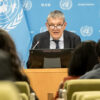
UNRWA Continues Operations in Gaza Amid Ongoing Insecurity and Shortages of Essential Services
After nearly two years of conflict between Hamas and Israel, displaced Palestinians in Gaza have begun returning home as humanitarian organizations work to restore essential, life-saving services. Despite recent progress, the United Nations (UN) and its partners continue to face major obstacles in reaching the most vulnerable populations due to ongoing insecurity and heightened restrictions. With winter fast approaching—and expected to further worsen living conditions—sustained aid operations remain critical.
Five Breakthroughs for Women’s Rights Amidst Conflict and Crisis
Even as their rights face growing threats, women across the globe are driving progress. From courtrooms to communities, women’s leadership is shaping peace, justice and development—often against the odds. In the face of conflict, exclusion and inequality, we continue to see powerful stories of hope, resilience and change. We are inspired by women who mediate local disputes, push for new laws and champion the rights of survivors, holding communities together.
‘No Land Rights, No Climate Justice,’ Say Activists at Peoples’ Summit
Brazilian Indigenous leader and environmentalist Cacique Raoni Metuktire appealed for support for Indigenous peoples and their land. From the podium of the Peoples’ Summit, Cacique Raoni warned negotiators at the UN climate conference in Belém that without recognizing Indigenous peoples’ land rights, there will be no climate justice.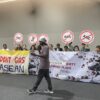
Africa Wants Health to Be at the Center of Adaptation Finance
With the COP30 Presidency prioritizing health at the United Nations climate summit in Belém, African leaders are calling for finance to be channeled towards improving the health systems of developing countries.
You Cannot Make Decisions About Our Lives—A Perspective on Global Climate Change Negotiations
Immaculata Casimero, a leader of the Wapichan Women’s Movement, remembers the beauty of the mountains that are cultural sites to her indigenous community in Guyana.
Kashmir’s Small Farmers Endless Wait for Climate Justice
In the fertile fields of Jammu's R.S. Pura, rice farmer Mohd Yaseen Khan stares at a cracked irrigation canal, battered by erratic rainfall. “One day heavy rain, next week a dry spell,” he says, dusting his palms. “Our crop suffers. Our costs rise.”
‘This People’s March for Climate is For My Son’s Future’
In the scorching heat and humidity, Canru Pataxo marched with his one-year-old son firmly held in his arms.
‘Just Transition Must Make Climate Work for People Living its Consequences’
An open letter by more than 1,000 organizations from 106 countries, including trade unions, Indigenous leaders, feminist and youth movements, Afro-descendants, peasant groups, environmental advocates, disability networks and community organizations, to all States Parties to the United Nations Framework Convention on Climate Change is calling for a people-centered Just Transition.
Latin America: a Test Case for Aligning Climate Action, Food Security and Social Sustainability
The urgency of linking climate action with social and wider environmental priorities is clear. Climate change, environmental degradation and violent conflict are often deeply connected and even mutually reinforcing. At the same time, climate action can either support or undermine efforts to improve social justice and halt environmental degradation.
Forcefully Deported Afghan Women Return to a Life of Fear and Anxiety
When Roya, a former police officer under Afghanistan’s Republic government, left the country with her family, she felt a great sense of relief, having escaped from the horrors of Taliban rule. She never imagined that less than three years later she would be forced back into the same conditions, only worse.
We’re All in the Same Storm, Different Boats, Says Young Activist With Disability
At the UN Climate Conference venue in Belém, young activist João Victor da Costa da Silva is trying to make his case heard by negotiators. The 16-year-old Da Silva has a specific request for the parties: the needs of young people with disabilities should be addressed through the lens of climate justice.
Brazil is Breathing Life into Climate Commitments—Human Rights Lawyer
Binaifer Nowrojee, a human rights lawyer and the president of the Open Society Foundations (OSF), has lauded the Brazilian government “for significant steps taken to breathe life into the climate commitments.”
Poor Countries Welcome Loss and Damage Fund’s Call for Requests, Warn It Falls Short of Needs
Least Developed Countries have hailed the debut call for proposals for the Loss and Damage Fund, which was launched on 11 November at the United Nations climate summit known as COP30 in Belem, Brazil.« Previous Page — Next Page »


One world, one humanity, now one court to defend its rights. Another step towards universal human rights, but not remotely a step far enough. The United Nations adopted the Universal Declaration of Human Rights more than half a century ago, but that has done little to stop violations the world over, just as the Geneva Convention has not protected prisoners of war enough. Democracy itself and the freedom it presupposes has not been protective enough. This is the century to move from politicisation of human rights towards humanising political ways. IPS keeps an eye on that difficult path.

The Week with IPS

NEXT STOP - SDGs
Tracking global progress towards a sustainable world
Tracking global progress towards a sustainable world
