Languages
Monday, September 14, 2026



News and Views from the Global South
Human Rights

U.S. Deported Bhutanese Refugees Cry–‘No Country To Call Home’
Sitting in his small hut in the Beldangi refugee camp in Jhapa district, Nepal, Narayan Kumar Subedi feels relieved that his son, Aasis Subedi, is safe. Aasis is one of four United States deportees who were the subject of Nepal's Supreme Court landmark ruling on April 24, which directed the government not to deport four Bhutanese refugees who entered Nepal in March of this year after being disowned by Bhutan. U.S. Immigration and Customs Enforcement (ICE) deported the four after they had lived in various parts of the United States for nearly a decade.
From Grief to Action: Demands for Democratic Renewal in the Balkans
Three catastrophic events in the Balkans have sparked powerful movements for systemic change. A train collision that killed 57 people in Greece, a nightclub fire that claimed 59 young lives in North Macedonia and a collapsed railway station roof that left 15 dead in Serbia have ignited sustained anti-corruption protests in all three countries. These weren’t random tragedies but the culmination of systemic failure – neglected safety regulations, illegally issued permits and compromised oversight – with corruption the common denominator.
Young Africans Priced Out of Cities as Urban Housing Crisis Deepens
After graduating in 2019, Jeremiah Achimugu left Sokoto State in northwestern Nigeria for Abuja, the nation’s capital, in search of better opportunities. But life in the city brought unexpected challenges, especially the high cost of housing.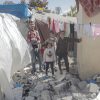
UN Warns of Exacerbated Famine and Malnutrition in Gaza
Since the dissolution of the ceasefire agreement between Israel and Hamas in March, roughly 2 million Palestinians residing within the Gaza Strip have struggled to survive amid constant barrages of airstrikes from the Israeli Defense Forces (IDF) and a persisting blockade on humanitarian aid. With essential border crossings in Gaza remaining closed, humanitarian organizations have expressed fear that the Palestinians within the enclave could experience exacerbated rates of famine and malnutrition.
‘Our Weak and Corrupt Institutions Acted Too Late to Address Manipulation That Destabilised Democracy’
CIVICUS discusses Romania’s presidential election with Anda Serban, Executive Director of Resource Center for Public Participation (CERE), a civil society organisation (CSO) that focuses on public participation and transparency in decision-making processes.
Education Cannot Wait Interviews Tom Fletcher, Under-Secretary-General for Humanitarian Affairs and Emergency Relief Coordinator
Tom Fletcher is the United Nations Under-Secretary-General for Humanitarian Affairs and Emergency Relief Coordinator, OCHA. He started his official duties on 18 November 2024.
A Natural Disaster that Has Affected More People Worldwide Than Any Other
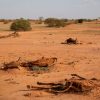
Here’s a question: Over the past 40 years, what natural disaster has affected more people around the globe than any other?
Hungary’s LGBTQI Amendment an Affront to Human Rights, Say Activists
A controversial amendment to Hungary’s constitution has left the country’s LGBTQI community both defiant and fearful, rights groups have said.
UN80 Initiative: Equipping the Organization in an Era of Extraordinary Uncertainty
Next month marks the 80th anniversary of the United Nations Charter. The Charter is our roadmap to a better world – our owner’s manual setting out purposes and principles – and our practical guide to advancing the three pillars of our work: peace and security, development and human rights.
UN’s Proposed Structural Changes Laid Out in a “Strictly Confidential” Internal Document
A six-page internal document, marked “STRICTLY CONFIDENTIAL” on every single page – indicating restricted access to protect sensitive information-- is one of the most comprehensive “compilation of non-attributable suggestions by the UN80 Task Force” on the proposed restructuring of the world body.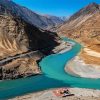
The Indus Water Treaty Suspension: A Wake-Up Call for Asia–Pacific Unity ?
On April 23, India suspended the Indus Water Treaty (IWT), a 65-year-old agreement that had been a rare symbol of cooperation between India and Pakistan despite decades of hostility. The suspension came a day after militants attacked civilians in Jammu and Kashmir, a disputed region, killing 26 people, most of them Indian tourists. India accused Pakistan of supporting “cross-border terrorism” and responded by halting the treaty. Pakistan denied involvement in the attack and called India’s move an “act of war.”
Staff Union Demands Full & Active Participation in Ongoing Negotiations on UN Reforms
As discussions on the restructuring of the United Nations-- including a possible merger of UN agencies and staff lay-offs system-wide -- continue at the highest levels of the Secretariat—the Staff Union (UNSU) is demanding an active presence in the ongoing talks. A proposed resolution, which is expected to be adopted at the UNSU general meeting on May 14, is very specific in its demands.
Rights with No Age Limit: Hopes for a Convention on the Rights of Older People
The world’s population is ageing. Global life expectancy has leapt to 73.3 years, up from under 65 in 1995. Around the world, there are now 1.1 billion people aged 60-plus, expected to rise to 1.4 billion by 2030 and 2.1 billion by 2050. This demographic shift is a triumph, reflecting public health successes, medical advances and better nutrition. But it brings human rights challenges.
Armed Gangs Expand Their Control in the Centre Department of Haiti
Following a series of brutal altercations in the communes of Mirebalais and Saut d’Eau in Haiti back in late March, local gangs have taken over both communes, spurring heightened displacement and insecurity. This is indicative of the continuing deterioration of the humanitarian situation in Haiti as these armed gangs expand their control beyond Port-au-Prince.
The Taliban Took Everything – Even My Hope
Rukhsar (pseudonym), 27, is a widow and sole breadwinner for a family of five. She recounts her life story under Taliban rule, a reality faced by thousands of women in Afghanistan.
India-Pakistan: On the Brink—But Is There a Way Back?
Just after the young couple arrived at Al-Sayyed Shabistan, a quaint guesthouse in Taobat, on April 30, soldiers showed up, urging them to leave—war, they warned, could break out any moment. Yahya Shah, guest-house owner and head of Taobat’s hotel association, told IPS over the phone, “Tourist season just began, but for two weeks the village feels like a ghost town—everyone’s hit: shopkeepers, eateries, drivers.”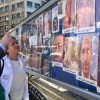
UN Needs to Protect its Vital, Yet Underfunded, Human Rights Work
Major-power cutbacks and delayed payments amidst conflict and insecurity are testing the very principles and frameworks upon which the international human rights infrastructure was built nearly 80 years ago.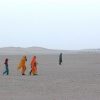
Underfunding Threatens Sahrawi Refugees in Algeria
Since the Western Sahara War in 1975, Sahrawi refugees have resided in a collection of refugee shelters in the Tindouf province of Algeria. For over 50 years, these communities have struggled to develop self-sufficiency and have been solely dependent on humanitarian aid for survival, marking one of the most protracted refugee crises in the world.
‘Trump Is Advancing a 21st-century US Variant of Fascism, Backed by a White Nationalist Ideology’
CIVICUS speaks about democratic decline in the USA with humanitarian and civil society activist Samuel Worthington, former president of the US civil society alliance InterAction and author of a new book, Prisoners of Hope: Global Action and the Evolving Roles of US NGOs.

World Press Freedom Day 2025
Call to Protect Elections from AI ‘Information Pollution’
The prevalence of artificial intelligence (AI) is changing the flow and access of information, which has a wider influence on how freedom of expression is affected. National and local elections can demonstrate the particular strengths and vulnerabilities that can be exploited as AI is used to influence voters and political campaigns. As people grow more critical of institutions and the information they receive, governments and tech companies must exercise their responsibility to protect freedom of expression during elections. 
New Forms of Power-Sharing are Needed to Uphold Rights of Indigenous Peoples
A UN groundbreaking report published in 1982 laid the legal ground for defining the inalienable rights of Indigenous Peoples. The document, written by José Martínez Cobo, a United Nations Special Rapporteur, analyzed the complex discrimination patterns faced by Indigenous Peoples.« Previous Page — Next Page »


One world, one humanity, now one court to defend its rights. Another step towards universal human rights, but not remotely a step far enough. The United Nations adopted the Universal Declaration of Human Rights more than half a century ago, but that has done little to stop violations the world over, just as the Geneva Convention has not protected prisoners of war enough. Democracy itself and the freedom it presupposes has not been protective enough. This is the century to move from politicisation of human rights towards humanising political ways. IPS keeps an eye on that difficult path.

The Week with IPS

NEXT STOP - SDGs
Tracking global progress towards a sustainable world
Tracking global progress towards a sustainable world
