Languages
Sunday, September 20, 2026



News and Views from the Global South
Human Rights

US Tariffs Threaten to Undermine World Trade Organization
As the Trump administration’s hostility towards the United Nations and other international organizations keeps growing, a New York Times columnist last week proposed what he frivolously described as “something a little incendiary”.
Insight to Impact: CGIAR Inaugural Flagship Report for Decision Makers Navigating Food System Science
"To have impact, it was crucial to understand what impact was wanted," CGIAR's Executive Managing Director Dr. Ismahane Elouafi said at the launch of the organization's flagship report, Insight to Impact: A decision-maker’s guide to navigating food system science.
Rohingya Refugees Are Not Safe in Bangladesh or Myanmar
On April 4, it was confirmed by Myanmar authorities that there were approximately 180,000 Rohingya refugees residing in Bangladesh that are eligible to return. Following numerous cuts in funding as a result of President Donald Trump’s reduction of USAID, as well as the increasingly volatile humanitarian crisis in Myanmar, it is uncertain if repatriation will best serve Rohingya refugee communities.
‘Act Before It Gets Worse’ – Experts Warn as Agrifood Problems in Global South Intensify
As agrifood systems in the Global South buckle under the weight of climate change, biodiversity, and even pollution, experts such as Dr. Himanshu Pathak call for urgent innovative solutions, as, at the current pace, the problems of the Global South are going to intensify with escalating climate change.
CGIAR Gender Impact Platform Needs a ‘Bold Approach’ in Agriculture Research
Women farmers face structural issues that prevent them from realizing their full potential, from societal perceptions that dictate their limitations to poor land. However, CGIAR's Gender Impact Platform Director, Nicoline de Haan, argues that leaning into a "victim" narrative does not serve them, especially when women are demonstrably more involved in agriculture.
Lessons from the Global South on Transforming AgriFood Systems
The state of food and nutrition security in the Global South masks the great strides and investments made to increase agricultural yields to feed a rapidly growing population. As discussions deepen at the ongoing CGIAR Science Week, plenary discussions on Wednesday (April 9) explored transformative strategies and innovations driving agricultural resilience across Africa, the Caribbean, and Latin America.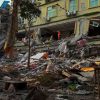
Myanmar Reels From Its Strongest Earthquake in Over a Century
The 7.7 magnitude earthquake that struck central Myanmar on March 28, marked the strongest earthquake the nation has experienced in over a century and the second deadliest in it’s history. The earthquake caused extensive damage in Myanmar and Thailand, with infrastructures in southern China and Vietnam also having been affected.
A Make-or-Break Moment for Global Development Finance—& the Role Philanthropy Must Play
This June, world leaders will gather in Seville for the Fourth International Conference on Financing for Development (FfD4), a milestone opportunity to reimagine how the global economy delivers for people and the planet. But the real question isn’t whether this historic convening will happen. It’s whether it will matter.
The Current Plight of Haitians: Interview with a Mason in the Dominican Republic
On March 18, the first plane with deportees from the US landed in Cap-Haïtien. Of the 46 passengers, 25 were convicted felons. Taking effect on April 24 the US Department of Homeland Security will revoke the temporary legal status of more than 210,000 Haitians. They had by the Biden administration been granted a safe haven, but all these Haitians are now expected to be deported back to a country immersed in a humanitarian crisis.
Behind the Feeding of the 5,000 (or Should That Be 10,000) at CGIAR Science Week
Good Food for All is the motto of The Chef's Manifesto, a project that brings together more than 1,500 chefs from around the world to explore how to ensure the food they prepare is planet-friendly and sustainable.
Taliban View Even Women’s Cosmetics as a Threat to Their Rule
Women in Afghanistan have borne the brunt of the Taliban’s extremist Islamist rule. Four years on, there appears to be no end in sight.
Welcoming Science: CGIAR Week-Long Focus on Innovation for Food, Climate-Secure Future
The world’s leading scientists and decision-makers in agriculture, climate, and health are meeting in Nairobi this week to promote innovation and partnerships towards a food, nutrition, and climate-secure future. As current agrifood systems buckle under multiple challenges, nearly one in 11 people globally and one in five people in Africa go hungry every day.
Digital Democracy at a Crossroads. Key Takeaways from RigthsCon2025
In an increasingly digital world, democratic practices are evolving to encompass new forms of participation. Digital democracy – the use of technology to enhance civic action, movement building and access to information – has become a crucial force in shaping local and global political landscapes.
How to Agree an Armistice in Ukraine: Lessons from Korea
The armistice agreement that ended the Korean War in 1953 has been mentioned as a possible model for how to end the fighting in Ukraine. This makes sense. The Trump administration, however, seems to opt for a quick deal like the 1973 Paris agreement on Vietnam or the Minsk agreements of 2014–15, combining “ceasefires in place” with vain prospects of subsequently reaching a genuine peace agreement.

CGIAR Science Week Seeks Solutions for a Food-Secure, Climate Resilient Future
CGIAR and the Kenyan Agricultural and Livestock Research Organization (KALRO) are bringing together the world’s leading scientists and decision-makers in agriculture, climate, and health for the first CGIAR Science Week. This gathering will be a key moment to advance research and innovation, inspire action, and establish critical partnerships that can secure investment in sustainable food systems for people and the planet.
Challenging the Taliban’s Violations of Afghan Women’s Rights
The Taliban’s egregious violations of women's rights in Afghanistan, especially banning women from education and even from speaking in public, are beyond the pale. Imposing economic sanctions alone, however, has not changed in any significant way the Taliban’s treatment of women.
Trapped by Tradition: The Widows of Ukerewe and the Ritual They Cannot Escape
The night after her husband was laid to rest, 24-year-old Vivian Magesa sat in the dimly lit brick-walled house, surrounded by women from her late husband’s family. She had spent the past few days in mourning, wrapped in a white shroud, her head shaved as custom dictated. But as the hushed voices of her in-laws filled the room, Magesa realized her grief was far from over.
‘Energy Transfer’s Lawsuit Against Greenpeace Is an Attempt to Drain Our Resources and Silence Dissent’
CIVICUS speaks with Daniel Simons, Senior Legal Counsel Strategic Defence for Greenpeace International, about the lawsuit brought by an oil and gas company against Greenpeace and its broader implications for civil society. Greenpeace is a global network of environmental organisations campaigning on issues such as climate change, disarmament, forests, organic farming and peace.
Global Disability Summit Galvanizes Education Support for Crisis-Impacted Children with Disabilities
Of the nearly 234 million children and adolescents of school age affected by crises, 85 million are already out of school. At least 20 percent of them—or 17 million—are children living with disabilities.
World Autism Awareness Day 2025: Sustainable Development Must Include Neurodivergent Perspectives
In 2007, the United Nations (UN) General Assembly designated April 2 as World Autism Awareness Day (WAAD), in an effort to promote inclusion and human rights for autistic individuals. Much work has been done and pushed forward by autistic advocates to bring lived experiences to global discussions.
Education Cannot Wait Interviews Sigrid Kaag, Chair of the ECW High-Level Steering Group
Sigrid Kaag is the new Chair of Education Cannot Wait’s High-Level Steering Group. Kaag brings a wealth of experience in political, humanitarian and development affairs, as well as in diplomacy. In 2025, she was appointed by United Nations Secretary-General António Guterres as the UN Special Coordinator for the Middle East Peace Process, a.i. Kaag has just concluded her mandate as Senior Humanitarian and Reconstruction Coordinator for Gaza, a role she held since 2024. She served as the first Deputy Prime Minister and first female Minister of Finance in the Dutch government starting in January 2022. Prior to this, she was Dutch Minister for Trade and Development Cooperation from October 2017 until May 2021, and Minister for Foreign Affairs until September 2021.[related_articles]
« Previous Page — Next Page »


One world, one humanity, now one court to defend its rights. Another step towards universal human rights, but not remotely a step far enough. The United Nations adopted the Universal Declaration of Human Rights more than half a century ago, but that has done little to stop violations the world over, just as the Geneva Convention has not protected prisoners of war enough. Democracy itself and the freedom it presupposes has not been protective enough. This is the century to move from politicisation of human rights towards humanising political ways. IPS keeps an eye on that difficult path.

The Week with IPS

NEXT STOP - SDGs
Tracking global progress towards a sustainable world
Tracking global progress towards a sustainable world
