Languages
Tuesday, October 20, 2026



News and Views from the Global South
Human Rights
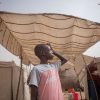
Sudan Faces Esclations in Famine, Humanitarian Law Violations
After 19 months of conflict, the ongoing Sudanese Civil War continues to deteriorate living conditions for millions of Sudanese people. Intensive conflicts between the Rapid Support Forces (RSF) and the Sudanese Armed Forces (SAF) have greatly exacerbated nationwide levels of famine. Numerous civilians have been caught in the crossfire, leading to a rising death toll. Sexual violence and rape have been used as weapons of war, with thousands of cases going unreported due to a pervasive state of fear. Sudan has seen record numbers in displacement, becoming one of the biggest displacement crises in the world.
Middle East: Ceasefires are the Only Answer
“The shockwaves from Israel’s ongoing and indiscriminate warfare on Gaza and Lebanon are reverberating across this entire region. Neither the horrific assault on Israeli civilians on 7 October 2023, nor the indiscriminate missiles launched by militant groups from Lebanon, can justify the degree of destruction on civilian lives and infrastructure in the region that I have witnessed in recent days.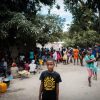
Haiti’s Transition of Power Predicted to Worsen Gang Violence
Gang violence has ravaged Haiti, causing thousands of civilian deaths, displacements, and violations of international humanitarian law. Turmoil is expected to escalate following the removal of Haitian Prime Minister Garry Conille from office on November 11.
COP29: Making Space Applications Work for Women in Agriculture
When the first woman in space, Valentina Tereshkova, orbited the Earth in 1963, there were only three active Earth observation satellites. Today, the number is 114 times greater.
Cryosphere Crisis: Scientists Warn of Devastating Global Impacts Without Urgent Climate Action
Scientists warn of vastly higher impacts on billions of people’s livelihood and cost to the global economy by the accelerating losses in the world’s snow and ice regions, aka the cryosphere. Over 50 leading cryosphere scientists released an annual report on the status of the world’s ice stores on Tuesday (November 12) at the UN Climate Conference (COP29) in Baku. An updated report on the world's ice warns of “drastically higher costs without immediate emissions reductions.”
Israel Alienating Allies and Acquiring Adversaries
As a result of its policies and actions in response to the 7 October attack, the Israeli government has not only alienated its allies and acquired adversaries but also found itself isolated diplomatically. The consequences of those developments and realignments have occurred across countries, organizations and groups worldwide.
Farming in Crisis: Suicides and Climate Change Threaten India’s Agrarian Future
"Farming is in my blood, and I can’t imagine doing anything else," said Mahim Mazumder, a farmer from Assam. "Even though the past three to five years have seen drastic changes—with temperatures rising so much that even sitting under a tree no longer offers relief—I will keep farming, even if it only yields a small harvest. I've spent my entire life farming, and despite all the challenges, I’ll continue."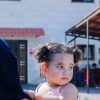
Growing Death and Displacement Devastate Lebanon
The ongoing, escalating violence in Lebanon forces millions of Lebanese civilians to face daily bombardment, repeated orders of evacuation, routine destruction of critical infrastructure, and limited access to basic services. With the death toll and rates of displacement on the rise, humanitarian organizations fear that the upcoming winter season is expected to exacerbate these harsh conditions, making Lebanon almost uninhabitable.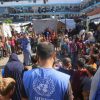
Scorched Earth Colonizing of Gaza is a Horrible Idea
For religious, humanitarian, and scientific reasons, Israel’s increasingly apparent plan for the de facto colonization of the Northern Gaza Strip is a bad idea. When that program was rejected recently by Israel’s own Defense Minister Yoav Galant, he was summarily fired by Prime Minister Netanyahu.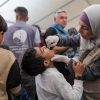
Polio Vaccination Campaign in Gaza Misses Thousands of Children
On November 6, the World Health Organization (WHO) announced that the second round of polio vaccinations in the Gaza Strip has been completed. A total of 556,744 children under ten years of age received the mOPV2 vaccine along with a dose of vitamin A to ensure immunization. However, due to rampant hostilities from the Israeli Defense Forces (IDF), the campaign has not been entirely successful, leading to humanitarian organizations fearing that herd immunity has not been achieved.
When the truth becomes a lie: What Trump’s election means for the world as we know it
On the day following the US election, UN Secretary General, Antonio Guterres issued a brief statement commending the people of the United States for their active participation in the democratic process. He wisely omitted mention that the election of Donald J. Trump – who attempted to overturn the people’s mandate by inciting an insurrection in 2021 - is a major setback for the UN’s worldwide quest to advance human rights and the rule of law. Trump is a self-avowed admirer of authoritarian strongmen like Russia’s Vladimir Putin and Hungary’s Viktor Orban who disdain international norms that the UN seeks to uphold.
UN Climate Summit Needs Action – not a COP-Out
The Paris Agreement on climate change is a decade old this month. While there has been progress - with new net zero pledges and new technological solutions, we are still grappling with the reality that global temperatures continue to soar. 2023 was the hottest year ever on record.
UN Arms Embargo on Israel: Dead on Arrival
When the United Nations imposes sanctions or penalizes a member state – be it the General Assembly or the Human Rights Council – the resolutions are “non-binding” and often remain unimplemented. But the Security Council resolutions are “binding” – and still openly violated by countries such as North Korea—because all these UN bodies have no means of implementing these resolutions, nor a standing army to forcibly enforce them. But they only carry moral weight.
UNEP: Nations Must Step Up Adaptation—Starting with Bold Finance Action at COP 29
The United Nations Environment Programme’s (UNEP) 2024 Adaptation Gap Report has warned that adaptation actions are not keeping pace with the surging demands of a warming planet. Released ahead of the COP29 climate conference in Baku, Azerbaijan, the report—titled Come Hell and High Water—projected a bleak future where vulnerable communities bear the brunt of climate-induced hardships.
How Megatrends Affect Advancement of Gender Equality & Women’s Empowerment in Asia and the Pacific
The Beijing Declaration and Platform for Action, adopted in 1995 during the Fourth World Conference on Women, remains a cornerstone in the global pursuit of gender equality and women's empowerment. With the Asia-Pacific Ministerial Conference on the Beijing+30 Review fast approaching, now is the time to reflect on the progress made and the challenges that remain in Asia and the Pacific.
Arab Region Leaders, Experts Gather to Find Solutions to Water Scarcity, Sustainable Development
The Arab region is among the most water-scarce areas globally, as nearly 392 million people live in countries facing water scarcity or absolute water scarcity. So dire is the situation that, of the 22 Arab countries, 19 fall below the annual threshold for water scarcity in renewable resources, defined as 1,000 cubic meters per person.
How Blue Carbon Ecosystems are Saving the Philippines’ Sinking Islands
Imagine living with water up to your knees for half of the year, where homes are flooded, and people constantly fear that the sea might one day engulf the town and everyone in it.
Israel’s Moves to Ban UNRWA—Signals Uncertainty for Affected Palestinians
The decision of Israel’s parliament, the Knesset, to adopt two laws that would severely limit or outright ban UNRWA has the potential to set a dangerous precedent, where countries can simply implement their own justification to ban the activity of the United Nations, even if it violates their obligations under international humanitarian law. Even with the rest of the world condemning this course of action, for Israel, this has been a long time coming and they are unlikely to back down.
Mexican Cooperative Promotes Energy Transition on Indigenous Lands
What began as a search for fair prices for indigenous handicrafts in 1985 has evolved into a women's organisation in Mexico that promotes climate justice while advocating for land and environmental rights.
Voices from the Margins: Small-Scale Fishers Demand Rights, Recognition at COP16
Small-scale fishers play a fundamental role in feeding people—they use sustainable methods of catching and processing fish products and are a significant force in the employment and livelihoods of millions of people internationally—yet, until now, they have been excluded from climate and biodiversity conferences.
Armed Violence and Floods Aggravate Humanitarian Crisis in Chad
Chad is currently in the midst of a dire humanitarian crisis due to persisting armed conflict, mass displacement, widespread hunger, natural disasters, and an overall lack of essential services. Due to security challenges from the Boko Haram militant group, millions of Chadians have faced decreased mobility as well as human rights violations including imprisonment, beatings, kidnappings, and killings.« Previous Page — Next Page »





One world, one humanity, now one court to defend its rights. Another step towards universal human rights, but not remotely a step far enough. The United Nations adopted the Universal Declaration of Human Rights more than half a century ago, but that has done little to stop violations the world over, just as the Geneva Convention has not protected prisoners of war enough. Democracy itself and the freedom it presupposes has not been protective enough. This is the century to move from politicisation of human rights towards humanising political ways. IPS keeps an eye on that difficult path.

The Week with IPS

NEXT STOP - SDGs
Tracking global progress towards a sustainable world
Tracking global progress towards a sustainable world
