Languages
Friday, July 24, 2026



News and Views from the Global South
Human Rights
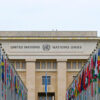
Trump’s Cuts are Pushing the UN out of Geneva. That may be a Win
The $1.2 billion renovation of the Palais des Nations was intended to reaffirm Geneva's centrality to the multilateral system. Instead, the city’s international quarter is emptying.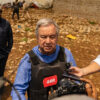
Faced with a Cash Crisis, UN is Urging Senior Staff to Forgo First Class & Business Class Travel
The United Nations has had a longstanding tradition, described by some as a “privilege”, where most senior staffers are entitled to highly-expensive First Class or Business Class seats on trips worldwide.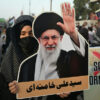
Iran War Deepens Activist Dangers
Narges Mohammadi, awarded the Nobel Peace Prize for her human rights activism in Iran, has been allowed to go home. After guards found her unconscious in her cell, the apparent victim of a heart attack, she was granted temporary release from prison and transferred to a hospital. However, she still faces the threat of being taken back to jail once her condition has improved.
Scarcity of Treatment Makes Syrians More Vulnerable to Mental Health Crisis
The protracted years of conflict in Syria have inflicted profound scars that transcend physical destruction, permeating the psychological well-being of millions.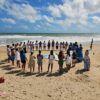
Brazil’s Indigenous Communities Receive $9M in GEF Funding to Protect Lands, Traditions Under Threat
On Brazil’s northeastern coast, the Indigenous community, Tremembé da Barra do Mundaú, lives on a preserved stretch of land shaped by mangroves, dunes, and deserted beaches. The group of around 160 families is led by women and depends on the 3,500-hectare territory for fishing and subsistence farming.
TRANSNATIONAL REPRESSION: ‘China Feels Emboldened to Globalise Its Political Red Lines’
CIVICUS discusses the cancellation of RightsCon 2026 with Barbora Bukovská, Senior Director for Law and Policy at ARTICLE 19, a human rights organisation that works on freedom of expression and information around the world.
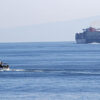
The Iran War Exposes the Fragility of Our Fuel-Dependent Food System
Sharp surges in energy, fertilizer, and food prices triggered by the ongoing conflict in the Persian Gulf strikingly illustrate the deep interconnections between geopolitical conflict, food insecurity, and the fragility of fossil fuel–dependent food systems.
The 3Ds for a Credible Post-2030 Development Agenda
Just four years of the Agenda 2030 for Sustainable Development remain. What comes after 2030 is already a political battleground.
Afghan Girl Disguised as Boy to Support Family Under Taliban Rule
Nooria is a young girl who, because of poverty and the absence of a man in her family, had to dress in boys’ clothes so she could work and feed her family. It was not a choice, it was survival. But she was eventually caught by the Taliban.
‘Do More With Less’: GEF CEO Claude Gascon on Speed, Scale and Reform
As governments prepare for the Eighth Assembly of the Global Environment Facility (GEF) – scheduled to be held from May 30 to June 6 in Samarkand, Uzbekistan – the stakes are unusually high.
Stop the Madness: Civil Society Cannot Thrive on Burnout
In an era when civil society funding is in decline, it’s time to rebel against a broken system.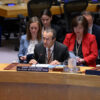
Civilian Casualties Grow Amid Russian and Ukrainian Drone Strikes
Four years after the start of the Russo-Ukrainian War, 2026 has marked a significant escalation in hostilities, with intensified bombardments from both sides causing immense destruction across the region, complicating humanitarian operations, and deepening an already severe humanitarian crisis. As exchanges of attacks have intensified in recent days, the United Nations (UN) warns that women and girls will be disproportionately impacted as violence disrupts access to basic, lifesaving services.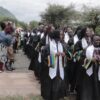
Breaking Cultural Barriers to Equip Marginalised Kenyan Girls With Entrepreneurial Skills
For generations, communities in Kenya’s arid and semi-arid lands (ASAL) have viewed girls through the lens of marriage, with some being married at 11 in exchange for livestock or soon after secondary school, denying them opportunity for further education and skills training.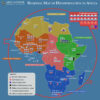
Media As Bedrock for Developing Russian-African Relations
Under the auspices of the Faculty of Journalism of Lomonosov Moscow State University, the Russian-African Club, in late April, held its IV International Forum of Journalists from Russia and Africa, which marked another historical milestone. According to an established annual tradition, discussions were focused on aspects of the media, its structure, current performance, information contents, and challenges as well as future perspectives.
DIGITAL RIGHTS: ‘The Priority Should Be Holding Tech Companies Accountable, Not Banning Children from the Digital World’
CIVICUS discusses the rising trend of social media bans for children with Marie-Ève Nadeau, Head of International Affairs of the 5Rights Foundation, an organisation that promotes children’s rights in the digital environment.
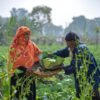
Building Resilient Food Systems in an Age of Disruption
The latest shock to global food systems, triggered by conflict in the Middle East and disruptions around the Strait of Hormuz, has once again exposed a fragile truth: the world’s food systems remain highly vulnerable to external shocks.
Lawmakers From Three Continents Demand Action, Not Pledges, on Population and Health
The word heard most often at a two-day parliamentary forum in Cairo last week was not "commitment"; it was “follow-up.” And the difference mattered.
What Hungary’s New Pro-Democracy Government Means For Rule of Law
Péter Magyar, leader of the pro-democratic centre-right Tisza Party, which recently swept into power on an unstoppable wave of hope for change, has now been sworn into office as Hungary’s new Prime Minister.
The Global Epidemic of Violence in an Age of Impunity
Violence has metastasized into humanity's baseline condition. Yet international institutions remain paralyzed by vetoes and rivalry, offering hollow declarations while dehumanization becomes normalized. Coordinated action, not gestures, is desperately needed.
Ambitious Great Green Wall Shows Slow, Steady Progress in Strengthening Landscapes, Improving Livelihoods
In 2021, Gadeja Shehu and about a hundred farmers in Garbadu village, Zamfara State in northwestern Nigeria, were invited by officials of the National Agency for the Great Green Wall to plant trees across a large stretch of land in their community.
The Iran War Is Costing Children’s Lives in Somalia
When war erupted in the Middle East in late February, the most visible consequences were playing out in the Persian Gulf, with smoke rising from Dubai's Jebel Ali port and shipping traffic across one of the world's most critical maritime routes grinding to a near halt.« Previous Page — Next Page »


One world, one humanity, now one court to defend its rights. Another step towards universal human rights, but not remotely a step far enough. The United Nations adopted the Universal Declaration of Human Rights more than half a century ago, but that has done little to stop violations the world over, just as the Geneva Convention has not protected prisoners of war enough. Democracy itself and the freedom it presupposes has not been protective enough. This is the century to move from politicisation of human rights towards humanising political ways. IPS keeps an eye on that difficult path.

The Week with IPS

NEXT STOP - SDGs
Tracking global progress towards a sustainable world
Tracking global progress towards a sustainable world
