Languages
Saturday, November 7, 2026



News and Views from the Global South
Human Rights

2023 Deadliest Year for Aid Workers– & 2024 Could be Even Worse, Predicts UN
Back in August 2003, the United Nations faced one of its violent tragedies when a terrorist attack on the UN headquarters in the Iraqi capital of Baghdad claimed the lives of 22 people. Among those killed was Sergio Vieira de Mello of Brazil, the UN envoy in Iraq and High Commissioner for Human Rights, who had a long and distinguished UN career stretching over 30 years.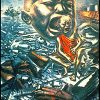
Origins of the Gaza Catastrophe – Part 1
During the first half of the 20th century, antisemitism was endemic in Europe and eventually burst out in full force when Nazi-Germany and its collaborators between 1941 and 1945 systematically (and well-documented) murdered six million Jews across German-occupied Europe. In an environment mined by hostile public opinion, the Zionist Nahum Sokolow popularized the Hebrew term Hasbara. The word has no real equivalent in English, but might be translated as “explaining”, indicating a strategy seeking to explain actions, regardless whether or not they are justified. As a skilled diplomat, Sokolow based his widely publicized opinions on in-depth research of actual events, though he presented his findings in a manner that favoured his cause.
Dealing with Bangladesh’s Odious Debt
Bangladesh has become increasingly indebted since 2009. The country’s external debt stock increased from US$23.3 billion in 2008 to US$100.6 billion in December 2023 (see figure below). Thanks to the country’s mega-projects led so-called development with borrowed money under the now deposed authoritarian regime of Sheikh Hasina.
Gender Equality Has Everything To Do with Climate Change
After years of reporting on the frontlines of climate change, I have witnessed the devastating impact extreme weather events have on women and girls. In Kenya’s pastoralist communities in far-flung areas of Northern Kenya, West Pokot, Samburu and Narok counties, droughts mean a resurgence in harmful cultural practices such as outlawed female genital mutilation (FGM), beading and child marriages.
Yemen Crisis Brings Small Reprieve for Entrepreneurial Women
Once upon a time, the Sheba (Seba’a) Kingdom (today’s Yemen) had a prominent queen. Women, in the presence of men, were held in a higher position, literally.
Freedom of Press in Jeopardy With Journalists in Crossfire in Kenyan Protests
In the heart of Nairobi, as tear gas clouded the streets, the line between journalists and protesters blurred in the eyes of Kenyan law enforcement. A wave of anti-government protests, ignited by opposition to a proposed finance bill, has spiraled into violence, with journalists increasingly caught in the crossfire between police and protesters.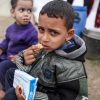
WFP in Gaza: ‘We Need a Long Ceasefire That Leads to Peace so We Can Operate’
Corinne Fleischer, WFP’s regional director for the Middle East, North Africa and Eastern Europe, describes Gaza as “a terrible situation getting worse.” Over the past two weeks, 21 United Nations World Food Programme (WFP) food distribution points have been closed under evacuation orders.
Education Cannot Wait Interviews UNRWA Commissioner-General Philippe Lazzarini
On 18 March 2020, Philippe Lazzarini was appointed Under-Secretary-General of the United Nations and Commissioner-General of the United Nations Relief and Works Agency for Palestine Refugees in the Near East (UNRWA) by United Nations Secretary-General António Guterres. He took up his post with UNRWA on 1 April 2020.

Rizwana Hasan Vows to Ensure Justice for Those Killed During Bangladesh’s Quota Reform Movement
Justice for all those who died and suffered injuries during the recent student-led quota reform movement in Bangladesh and reforms to the systems to ensure that this justice takes place are not negotiable, an adviser to the Bangladesh interim government, Syeda Rizwana Hasan, told IPS in an exclusive interview
The Plight of Women Three Years after Taliban Takeover in Afghanistan
I’ve just come back from the north of Afghanistan. I asked the women I met what they want the world to know about their lives. One woman, Nasima told me: “I was married at 16. I couldn’t finish school. My hope was that my daughter’s life would be better. Now I’m worried her life is going to be worse. To those who are still listening to our voices, please help us fight for our freedom.”
South Sudan: World’s Youngest Nation at a Crossroads
Thirteen years since becoming an independent state, South Sudan faces profound humanitarian challenges. South Sudan’s first Independence Day was imbued with a great sense of hope.
Power to the Youth
We live in a divided world of the haves and the have nots. The rich get richer, the poor get poorer. There is learning poverty, technology poverty, healthcare poverty, and food poverty. When you think about the dynamics of the world today, there is even empathy and humanity poverty.
Digital Trade & the Sustainable Development Goals: A Dynamic Agenda
The rapid growth of digitalization has fundamentally altered commerce, impacting production and facilitating the movement of goods. The 2023 Asia-Pacific Trade and Investment Report (APTIR), has pointed out that although digital trade revenues of Asia and the Pacific account for a significant share of global trade, this growth is uneven, with trade concentrated in a few areas, leading to disparities across the region.
Killings of Palestinian Journalists Continue –Aided by Uninterrupted Flow of US Arms
The growing number of killings of Palestinian journalists in Gaza has triggered a demand for a cut-off in US arms supplies to Israel. Sarah Leah Whitson, Executive Director, Democracy for the Arab World Now (DAWN), told IPS despite pleas of the international community to suspend arms to Israel in the face of its unprecedented atrocities against Palestinians in Gaza, including the killing of over 165 Palestinian journalists, it beggars the imagination that Biden is now seeking to sell Israel new weaponry to facilitate even more slaughter.
Indigenous Peoples — An Antidote in a World of Crisis
This year’s Equator Prize winners are the antidote we need in a world of crisis. Earlier this year, the World Economic Forum released its annual Risk Report. The key findings highlighted the inescapable trend over the past decade that we are facing a global polycrisis, in which problems of biodiversity loss, climate change, inequality, water scarcity and conflict are increasingly indivisible, simultaneous, and systemic.
Gaza Children’s Education, Mental Health Targeted With Emergency Response Grant
Since October 2023, 625,000 children enrolled in schools across Gaza have had no access to education, and more than 370 schools have sustained damage from attacks, according to the United Nations.
Pacific Community Photographic Winners Bring Impacts of Climate Change to Life
The Pacific Community’s photographic competition winners reflect the devastating climate impacts on beautiful and sensitive environments, documenting the most pressing issues the communities who live on the islands face today.
Will the New Cybercrime Treaty be Used as a Tool for Government Repression?
A new UN Cybercrime Treaty, which is expected to be adopted by the UN General Assembly later this year, is being denounced by over 100 human rights activists and civil society organizations (CSOs) as a potential tool for government repression. The treaty is expected to be adopted by a UN Ad Hoc Committee later this week and move to the 193-member General Assembly for final approval.
Explainer: Why Kenya is Considered a High Climate Risk for Development Banks
Kenya contributes less than 0.1 percent of global greenhouse gas emissions every year, yet development banks have flagged the East African nation as a high climate risk. This is due to extreme weather changes that are increasingly threatening the country’s development agenda, widening socio-economic inequalities, and deepening rural poverty and hunger.
Water Stories: The Well Seven Families and 400 Buffaloes Rely On
In the rural village of Khardariya in the Dang district of Nepal, access to clean water is a major issue. Villagers depend on one poorly managed well for drinking water, cleaning, and feeding livestock. Anjana Yadav stood near the well while a neighbor walked toward it to fetch a bucket of water.
ECUADOR: ‘We demand that the violation of the rights of nature be recognised and reversed’
CIVICUS speaks with Darío Iza Pilaquinga, president of the Kitu Kara People of the Kichwa nationality of Ecuador, about a historic court ruling that applied a constitutional provision recognising the rights of nature.« Previous Page — Next Page »





One world, one humanity, now one court to defend its rights. Another step towards universal human rights, but not remotely a step far enough. The United Nations adopted the Universal Declaration of Human Rights more than half a century ago, but that has done little to stop violations the world over, just as the Geneva Convention has not protected prisoners of war enough. Democracy itself and the freedom it presupposes has not been protective enough. This is the century to move from politicisation of human rights towards humanising political ways. IPS keeps an eye on that difficult path.

The Week with IPS

NEXT STOP - SDGs
Tracking global progress towards a sustainable world
Tracking global progress towards a sustainable world
