Languages
Saturday, November 7, 2026



News and Views from the Global South
Human Rights
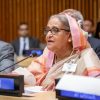
UN Calls for ‘Peaceful, Orderly and Democratic Transition’ Following Protests in Bangladesh
After weeks of violent clashes against protestors, Bangladesh Prime Minister Sheikh Hasina resigned from her position and fled the country on Monday. Preparations are underway for an interim government to take over with the backing of the military, political parties, student leaders of the protest movement and all other groups involved in the transition. A UN spokesperson has urged that all parties involved in the current transition should work together to ensure a peaceful and democratic transition.
Nigeria: Why #EndBadGovernanceInNigeria Protests Gained Traction
Thousands of Nigerians have taken to the streets to protest against bad governance, corruption, soaring inflation, and the rising cost of living, in what has been termed "10 Days of Rage" and believed to mirror Kenyan protests organized by the youth. Nigeria, Africa's most populous country and a major exporter of crude oil, citizens claim that the benefits of the country's resources do not trickle down to the masses but to a group of corrupt politicians.
The Demise of Democracy and Human Rights Violations in Bangladesh: International Financial Institutions’ Culpability
The International Monetary Fund (IMF), World Bank and Asian Development Bank (ADB) are complicit in the gross human rights violations and death of democracy in Bangladesh. They continued to supply financial blood line to the regime, well-documented for its corruptions, human rights violations – such as forced disappearances and tortures in custody – and riggings of votes, including politicization of state institutions in its slide into autocracy. This is despite their professed commitment to transparency, accountability and good governance (IMF, World Bank, ADB).
UN’s Summit of the Future
Preparations are ongoing for the upcoming Summit of the Future, probably the most consequential initiative of UN Secretary General Antonio Guterres so far.
How Women Volunteers Are Shaping India’s Water Future
“Daily squabbles at the lone water point in Bhubaneswar’s slums, where hundreds of households depended on this single non-potable water source, have now receded into the past,” says Aparna Khuntia, a member of a large cohort of water volunteers who have played an important enabling role in ensuring households in the eastern India city now have their own on-premises potable running tap water available all 24 hours.
Activists Challenge Pharma Company Gilead Over HIV Medication
Campaigners and experts have demanded a breakthrough HIV intervention hailed as “the closest thing to an HIV vaccine” must be made available as soon and as cheaply as possible to all who need it as its manufacturer faces protests over its pricing. Activists led a massive protest during the 25th International AIDS Conference (AIDS2024) in Munich last week as a study was presented showing lenacapavir—a drug currently sold by pharmaceutical firm Gilead for more than USD 40,000 per year as an HIV treatment—could be sold for USD 40 per year as a form of pre-exposure prophylaxis (PrEP) to help prevent HIV infection.
79 Years After Hiroshima & Nagasaki: A Grim Reminder of Nuclear Annihilation
The upcoming 79th anniversary of the atomic bombings of Hiroshima and Nagasaki, which took place on August 6 and 9, 1945, remains a grim reminder of the destructive consequences of nuclear weapons. The US bombings killed an estimated 90,000 to 210,000, with roughly half of the deaths occurring on the first day in Hiroshima.
Cambodia’s Young Environmental Activists Pay a Heavy Price
It’s risky to try to protect the environment in authoritarian Cambodia. Ten young activists from the Mother Nature environmental group have recently been given long jail sentences. Two were sentenced to eight years on charges of plotting and insulting the king. Another seven were sentenced to six years for plotting, while one, a Spanish national banned from entering Cambodia, was sentenced in absentia.
Intl. AIDS Conference: Trans Man Asks Governments to Pressure Uganda to Repeal Punitive Anti LGBT+ Law
Jay Mulucha, Executive Director of FEM Alliance Uganda, gave an impassioned plea to governments around the world to push lawmakers in his home country to reverse punitive new legislation criminalizing the LGBT+ community.
Harris Is Best-Positioned to Lead the Way
Within the Democratic field, no potential candidate for president is better-positioned, at this juncture, to defeat Trump more skillfully and pointedly than Kamala Harris. She is writing a new chapter in American history that will chart a new national course impacting future generations.
Left with Few Options: Afghan Women Turn to Risky Online Jobs Amid Taliban Ban
The Taliban's total ban on women’s employment in Afghanistan leaves few options for earning a living. Nevertheless, Afghan women are carving out niches in online business with sheer determination and perseverance.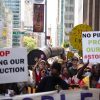
Sportwashing Allegations at Africa’s Top Football Tournament
Following the recent Africa Cup of Nations (AFCON) tournament in Ivory Coast, a continent-wide campaign has emerged on social media challenging the tournament's main sponsor, TotalEnergies, over its involvement in the East African Crude Oil Pipeline (EACOP).
SUMMIT OF THE FUTURE: ‘The UN Secretary-General Underestimated the Difficulty of Reaching Consensus’
CIVICUS discusses the upcoming Summit of the Future with Renzo Pomi, who represents Amnesty International at the United Nations (UN) in New York.

Parliamentarians: Active Aging Enhanced By Using Artificial Intelligence
With projections that by 2060, over 1.2 billion people in Asia will be 65 or older, and by adopting technology, including artificial intelligence technologies, it is possible to plan for active and fulfilled aging, lawmakers attending a regional meeting on Aging Preparedness and Care Economy in Asia heard.
Paraguay: ‘Bureaucratic Criminalisation’, New Legislation Threatens NGOs and Democracy
In a move that has aroused national and international concern, the Paraguayan Senate has given preliminary approval to a controversial bill that imposes strict controls on NGOs in a case of ‘bureaucratic criminalisation’.
Zimbabwe Needs Awareness, Advanced Tech to Beat Cancer
Earlier this year, then 46-year-old Lydia Musundiwa, based in the Zimbabwean capital Harare, was diagnosed with colon cancer, which, already at an advanced stage, killed her in less than two months. Now, Landeni, her 49-year-old widower, has to contend with the burden of looking after their three children single-handedly.
Building Tomorrow Today
Around the world, young people are driving change to ensure our youngest learners get the best start in life. In rural Kenya, Aisha, a young female entrepreneur trained through a UNICEF-supported programme, has started her own Early Childhood Education (ECE) centre. This centre provides quality early learning to over 50 children and creates jobs for other young women as teachers and support staff.
Life or Energy: The Hydroelectric Dilemma in Amazonian Brazil
The decade-and-a-half-long battle for life in the so-called Volta Grande (Big Bend) of the Xingu river, a stretch of the river dewatered by the Belo Monte hydroelectric power plant in the Brazilian Amazon, has a possible solution, albeit a partial one.
Government Indifferent to Invasion of Drug Traffickers in the Peruvian Amazon
The invasion of lands inhabited by Amazon indigenous communities is growing in Peru, due to drug trafficking mafias that are expanding coca crops to produce and export cocaine, while deforestation and insecurity for the native populations and their advocates are increasing
Emergency Response: Building Resilient Education Systems in Haiti Amid Multiple Crises
Haiti is witnessing unprecedented levels of lawlessness and brutality from armed gangs, which target schools and hospitals. The groups have plunged the country into a crisis and apart from the gun violence accusations, disturbing reports of ruthless sexual violence, including gang rape. Millions of children are in harm's way; many are out of school and it is estimated that between 30 and 50 percent of armed group members are children.
Eswatini: Jailing of Politicians the Latest Act of Repression
Two politicians have just been sentenced to long prison terms in Eswatini. Their crime? Calling for democracy. Mthandeni Dube and Bacede Mabuza, both members of parliament (MP) at the time, were arrested in July 2021 for taking part in a wave of pro-democracy protests that swept the southern African country. A third MP, Mduduzi Simelane, remains subject to an arrest warrant after going into hiding.« Previous Page — Next Page »





One world, one humanity, now one court to defend its rights. Another step towards universal human rights, but not remotely a step far enough. The United Nations adopted the Universal Declaration of Human Rights more than half a century ago, but that has done little to stop violations the world over, just as the Geneva Convention has not protected prisoners of war enough. Democracy itself and the freedom it presupposes has not been protective enough. This is the century to move from politicisation of human rights towards humanising political ways. IPS keeps an eye on that difficult path.

The Week with IPS

NEXT STOP - SDGs
Tracking global progress towards a sustainable world
Tracking global progress towards a sustainable world
