Languages
Saturday, September 19, 2026



News and Views from the Global South
Poverty & SDGs

Funding Cuts by Traditional Donors and the Future of Localization: Power, Paradox, and the Politics of Aid
In recent years, major international donors such as the European Union (EU), the Foreign, Commonwealth & Development Office (FCDO), USAID, and other bilaterals (such as BMZ, Sida, the Netherlands among others) have significantly reduced development funding to global majority countries.
Latin America and the Caribbean Lead the Way Toward a Future Without Hunger
In a region where hunger has cast a persistent shadow for generations, from the debt crises of the 1980s through the volatility of the 1990s to the recent shock of COVID-19, an unexpected and powerful development is now emerging: Latin America and the Caribbean is making significant progress in the global fight against hunger.
The Juggling of Aid: How WFP is Delivering More with Less
Serious-to-severe food insecurity has been widely felt among those living through the worst, protracted humanitarian crises. For organizations like the World Food Programme (WFP), they must work under the “relentless demand” for humanitarian aid, including food.
FFD4 Must Deliver for the World’s Most Vulnerable Nations
Five years from the 2030 deadline for the Sustainable Development Goals (SDGs), we face a development emergency. The promise to eradicate poverty, combat climate change, and build a sustainable future for all is slipping away. The SDG financing gap has ballooned to over $4 trillion annually—a crisis compounded by declining aid, rising trade barriers, and a fragile global economy.
Despite Strong Commitment, SDGs Progress Alarmingly Off Track 10 Years On—New UN Report Finds
Finland now ranks first in global sustainable development goals progress. Barbados is ahead globally in its commitment to UN multilateralism or cooperation among multiple nations. Only 17 percent of sustainable development goals (SDG) targets are on track for 2030, according to the Sustainable Development Report 2025 (SDR) released today by the UN Sustainable Development Solutions Network (SDSN)
Weaponizing Food Worsens Starvation
Wars, economic shocks, planetary heating and aid cuts have worsened food crises in recent years, with almost 300 million people now threatened by starvation.
The 2025 World Social Summit Must Not Be a Missed Opportunity
Rumors circulating at UN Headquarters suggest there is little appetite for ambition at the Second World Summit for Social Development, set to take place in Doha on 4-6 November 2025. Diplomats and insiders whisper of “summit fatigue” after a packed calendar of global gatherings—the 2023 SDG Summit, the 2024 Summit of the Future, and the upcoming June 2025 Fourth International Conference on Financing for Development. Compounding this fatigue is the chilling rise of anti-rights rhetoric and political resistance from some governments, casting a shadow over multilateral efforts. For some, just getting any multilateral agreement is good enough. As a result, the Zero Draft of the Social Summit Political Declaration lacks the ambition required to confront the multiple social crises our world faces.
Unmasking Harm Reduction: Youth Demand Action on Tobacco Industry’s New Tactics
The World Health Organization (WHO) for this year’s World No Tobacco Day (May 31) has chosen the theme, “Unmasking the Appeal”, to reveal the tactics employed by the tobacco and nicotine industries to make their harmful products enticing, particularly to young people.
African Giving Practices: Understanding a Tradition of Generosity and Community Support
Across Africa, giving is not just an act of charity; it’s a deep-rooted tradition embedded in culture, community, and mutual care. The concept of giving has evolved through generations, often taking on forms that are as diverse as the continent itself.
Want To Fix the World, Ubuntu (Humanity to Others) Can Help
The world needs an urgent fix and humanity could just be it.
How to Put the ‘Sexy’ Back into Agriculture – Thoughts From CGIAR Science Week
This week presented a beacon of hope for young people so that the “girl from the South and the boy, of course” could stay in the developing world, Dr Ismahane Elouafi, Executive Managing Director of CGIAR, said during a press conference on the final day of the CGIAR Science Week.
Behind the Feeding of the 5,000 (or Should That Be 10,000) at CGIAR Science Week
Good Food for All is the motto of The Chef's Manifesto, a project that brings together more than 1,500 chefs from around the world to explore how to ensure the food they prepare is planet-friendly and sustainable.
Welcoming Science: CGIAR Week-Long Focus on Innovation for Food, Climate-Secure Future
The world’s leading scientists and decision-makers in agriculture, climate, and health are meeting in Nairobi this week to promote innovation and partnerships towards a food, nutrition, and climate-secure future. As current agrifood systems buckle under multiple challenges, nearly one in 11 people globally and one in five people in Africa go hungry every day.
Malnutrition Not Due to Cash Poverty Alone
The World Bank set its US ‘dollar-a-day’ poverty line using its 1990 data. Despite many doubts and criticisms, its poverty numbers fell until the COVID-19 pandemic began in 2020.
20 Years of the WHO FCTC: It’s Time to Make Big Tobacco Pay
The world took a historic step in the fight against tobacco when the World Health Organization Framework Convention on Tobacco Control (WHO FCTC) came into force—the first legally binding global health treaty of its kind.
Only Political Will Can End World Hunger: Food Isn’t Scarce, but Many People Can’t Access It
History has shown us again and again that, so long as inequality goes unchecked, no amount of technology can ensure people are well fed.
Tax the Super-Rich. We have a World to Win
Why can’t there be education for every child? Why can’t there be healthcare for everyone who needs it? Why can’t everyone be freed from hunger and deprivation? Though these are promised to all as rights, people are repeatedly told that there is no money.
Malnutrition in Nigeria Rises Alarmingly, Urgent Action Needed
In June 2024, 26-year-old Zainab Abdul noticed her two-year-old daughter growing pale, losing weight, and battling diarrhea. She wasn’t surprised. Since jihadist-linked bandits had forced them out of their village in Kadadaba, Zamfara State, in northwestern Nigeria, her family had been living in a refugee camp with limited access to food.
Report Exposes Silent Global Emergency as More Crises-Affected Children Need Urgent Education Support
A report released today on the International Day of Education sounds alarm as the number of school-aged children in crisis worldwide requiring urgent support to access quality education reaches a staggering 234 million—an estimated increase of 35 million over the past three years fueled by intensifying armed conflict, forced displacements, more frequent and severe weather and climatic events, and other crises.
Unlocking SDG Success: How Better Data Can Develop Africa
That one in three Africans will not be counted as countries failing to meet census deadlines is a huge setback for development planning.
These Billion Humans Simply Do Not Exist
Perhaps demographers would consider designing a new classification system to separate from their estimates of the world’s total population –eight billion plus– the billion humans who live without legal identity and, thus, are deprived from the most basic rights.« Previous Page — Next Page »


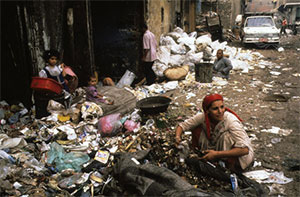 Romani people in Cairo, Egypt, forage through trash. Credit: UN Photo/Armineh Johannes
In 2015, the United Nations adopted the Sustainable Development Goals (SDGs) in an effort to promote “peace and prosperity for people and the planet.” To achieve that goal, it is essential to provide equal opportunities and access to basic services to all people. The 2025 UN SDG Report found that 35% of the 169 SDG targets are on track or making moderate progress, while 18% have reversed compared to the 2025 baseline. One in ten people still live in extreme poverty, one in eleven experience food insecurity, and over 1.1 billion people live in slums without access to clean water and sanitation. It is imperative to acknowledge the societal, technological, economic, and political issues that sustain poverty in countries around the world. Eradicating poverty will require significant frameworks in policy and governance on a national and international scale to ensure that all people will have equal access to basic services and economic opportunities by 2030. Furthermore, a dramatic reduction of United States foreign aid in 2025, including the termination of 83% of USAID programmes, threatens to erode years of fragile development gains.
Throughout the world, violent conflict and natural disasters also contribute to extreme poverty. The complete destruction of infrastructure and blockage of aid has significantly impoverished Palestine since October 7th. The destructive impact of Hurricane Maria in Puerto Rico left $91 billion in damage. An inadequate US government response also revealed significant and enduring questions within the issue of mitigating poverty: how do we rebuild infrastructure after its destruction? How do we restimulate economic development and bring in financial aid after disasters? Similar questions have been raised in the realm of regional cooperation, as devastating floods have wrecked hundreds of thousands of homes across multiple Southeast Asian nations in the past few years. Furthermore, the COVID-19 pandemic has greatly exacerbated the global poverty crisis, particularly in developing countries, setting back the United Nations goal of eradicating poverty by 2030.
IPS is committed to providing comprehensive features that focus on the persisting environmental, sociopolitical, and systemic issues that sustain poverty, and the steps taken worldwide towards poverty eradication.

The Week with IPS

NEXT STOP - SDGs
Tracking global progress towards a sustainable world
Tracking global progress towards a sustainable world

