Languages
Saturday, September 19, 2026



News and Views from the Global South
Poverty & SDGs

Power Arrives but the River Dries Up for Brazil’s Amazonian Dwellers
The flow of the igarapé always dropped for three months every year, but now it has been dry for two years in a row, complains Maria Aparecida dos Anjos, looking at the trickle of water that when flooded reaches the stilts of her wooden house, 50 metres away and on a slope of more than 10 metres high.
It’s the Greed, Stupid!
The available data is self-explanatory: business-prompted human activities have already altered over 70% of the Earth’s lands, with 24 billion tonnes of fertile soil lost due to industrial agriculture, the excessive use of chemicals, overgrazing, deforestation, pollution and other major threats.
Protect the Rights and Future of Youth, Right Now, From Addiction and Harm
As the world commemorates UN Human Rights Day December 10, with the theme, “Our Rights, Our Future, Right Now,” it’s time to ask: Are we truly listening to what the youth envision for their present and future?
Latin America’s Poor Are More Urban and More Vulnerable
Poverty, while declining in Latin America and the Caribbean so far this century, shows a new face, that of the looming vulnerability of the poor as they become less rural and more urban, the United Nations Development Programme (UNDP) says in a new analysis.
Another Tsunami Sweeps Sri Lanka
On 26 December 2004 a powerful Asian tsunami swept over many of Sri Lanka’s coastal provinces, killing thousands of people and wildlife, devastating habitats and even washing away a trainload of passengers far from the rail tracks.
South Africa’s G20 Presidency in 2025: A Pivotal Moment for the Country and Africa
In 2025, South Africa will assume the presidency of the G20, a pivotal moment in the African country's international diplomatic efforts. The Group of Twenty (G20), is an intergovernmental economic forum comprising 19 countries and two regional unions - the European Union (EU), and recently the African Union (AU). It represents 85 per cent of the global economy, 75 per cent of world trade and 67 per cent of the global population.
Youth-Led Landmark Climate Change Case Starts in The Hague
The intersection of law, diplomacy, and science will come under the spotlight at the International Court of Justice hearings starting today (Monday, December 2, 2024) in The Hague as the court starts its deliberations into the obligations under international law of UN member states to protect people and ecosystems from climate change.
Eliminating Rabies in Africa Must Begin with Quality Data
Rabies, despite being a major public health concern in Africa, is still not fully understood, due to the limited data available on it. This has slowed down efforts to eliminate it, yet the continent bears a significant burden of the disease and accounts for most of the deaths it causes globally.
Solar Project Causes Social and Environmental Conflict in Rural El Salvador
With machete in hand, Salvadoran farmer Damián Córdoba weeds the undergrowth covering the trunk of what was once a leafy tree to show the deforestation taking place on the Santa Adelaida farm, where a company seeks to install a solar park in western El Salvador.
Never Disparage a Toilet
In most Western European countries you can purchase –or rent- a 60 square-metres flat that is equipped with two toilets, one for her and one for him. Larger apartments may feature even more. For those who can afford it, such facilities are taken for granted. Yet, nearly half the global population—over 3.5 billion people—live without access to safely managed sanitation, including 419 million forced to practice open defecation.
Mayan Farmers Improve Their Livelihoods and Polyculture of Milpa in Mexico
María Bacab, a Native Maya, considers herself the “guardian of seeds” as she cares for the milpa - an ancestral Mesoamerican polyculture that mixes maize, beans, squash and other vegetables - and promotes its practice and use in Mexico.
UNiTE: Violence Against Women—A Plight That Spares No Country Across All Continents
Despite the 1,583 legislative measures in 193 countries around the world, violence against women has not been eradicated or even abated.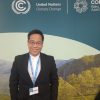
Global Climate Challenges: Perspectives from a Chinese COP29 Delegate
As COP29 draws to a close, voices from diverse regions have shed light on their contributions, challenges, and aspirations in tackling the climate crisis.
UN’s OCHA Calls to Correct the Imbalance in Climate Finance Allocation
As climate-induced disasters continue to wreak havoc worldwide, the Office for the Coordination of Humanitarian Affairs (OCHA), a UN body specializing in emergency response, has issued a clarion call for an ambitious and fair global climate finance goal at COP29. Greg Puley, Head of the Climate Team at OCHA, highlighted the pressing need for enhanced disaster risk reduction and climate resilience measures, particularly in vulnerable and conflict-affected regions.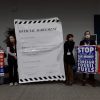
It’s a Deal—Wealthy Nations Pledge Not to Build New Unabated Coal-Power Plants
Of all fossil fuels, coal has had the most serious and long-term effects on global warming. When burnt, coal releases more carbon dioxide than oil and gas, producing an estimated 39 percent of the global carbon dioxide emissions. Yet, coal is still the number one energy source, providing nearly 40 percent of the world’s electricity.
Governments Must Ease Pressure on Families to Stop Children Slipping Through the Cracks
From the cost-of-living crisis to the impacts of war, cuts to social protection and even climate change, families worldwide are facing a combination of pressures that test their capacity to cope and care for children.
World Inequality Still Rising Despite Some Convergence
Despite earlier income convergence among nations, many low-income countries (LICs) and people are falling further behind. Worse, the number of poor and hungry has been increasing again after declining for decades.
International Day for the Eradication of Poverty 2024

Our world has witnessed unprecedented levels of economic development. The advance of our technological capabilities continues unabated. Our financial resources continue to grow.
Localization in Zimbabwe: A Critical Look at the Grand Bargain and Charter for Change
Localization has become a buzzword in international development, aiming to shift power and resources closer to the communities directly impacted by crises.
Higher Education Course Rescues Indigenous Guarani Culture in Argentina
A few years ago, Bernardo Olivera moved to Posadas, the capital of the Argentinean province of Misiones, to study mathematics at the public university. Interested in numbers and keen to progress, he felt, however, that the education system put a barrier in his way because of his indigenous origin.
Partnership-building: A Sustainable Tool for African Non-profit Organisations
In the landscape of African nonprofit organisations and indeed the world over, sustainability remains a cornerstone for enduring impact. However, continued funding is a pivotal aspect of sustainability.« Previous Page — Next Page »


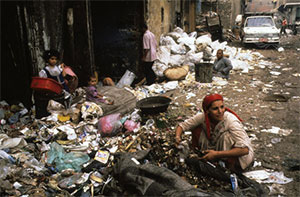 Romani people in Cairo, Egypt, forage through trash. Credit: UN Photo/Armineh Johannes
In 2015, the United Nations adopted the Sustainable Development Goals (SDGs) in an effort to promote “peace and prosperity for people and the planet.” To achieve that goal, it is essential to provide equal opportunities and access to basic services to all people. The 2025 UN SDG Report found that 35% of the 169 SDG targets are on track or making moderate progress, while 18% have reversed compared to the 2025 baseline. One in ten people still live in extreme poverty, one in eleven experience food insecurity, and over 1.1 billion people live in slums without access to clean water and sanitation. It is imperative to acknowledge the societal, technological, economic, and political issues that sustain poverty in countries around the world. Eradicating poverty will require significant frameworks in policy and governance on a national and international scale to ensure that all people will have equal access to basic services and economic opportunities by 2030. Furthermore, a dramatic reduction of United States foreign aid in 2025, including the termination of 83% of USAID programmes, threatens to erode years of fragile development gains.
Throughout the world, violent conflict and natural disasters also contribute to extreme poverty. The complete destruction of infrastructure and blockage of aid has significantly impoverished Palestine since October 7th. The destructive impact of Hurricane Maria in Puerto Rico left $91 billion in damage. An inadequate US government response also revealed significant and enduring questions within the issue of mitigating poverty: how do we rebuild infrastructure after its destruction? How do we restimulate economic development and bring in financial aid after disasters? Similar questions have been raised in the realm of regional cooperation, as devastating floods have wrecked hundreds of thousands of homes across multiple Southeast Asian nations in the past few years. Furthermore, the COVID-19 pandemic has greatly exacerbated the global poverty crisis, particularly in developing countries, setting back the United Nations goal of eradicating poverty by 2030.
IPS is committed to providing comprehensive features that focus on the persisting environmental, sociopolitical, and systemic issues that sustain poverty, and the steps taken worldwide towards poverty eradication.

The Week with IPS

NEXT STOP - SDGs
Tracking global progress towards a sustainable world
Tracking global progress towards a sustainable world

