Languages
Monday, October 19, 2026



News and Views from the Global South
Press Freedom
RIGHTS-ETHIOPIA: New Media Law, New Threat to Press Freedom
A new media law - six years in the making - has been passed by Ethiopia's House of People's Representatives. Its preamble declares that "the proclamation removes all obstacles that were impediments to the operation of the media in Ethiopia." But an analysis by Ethiopian journalists finds it actually clears the way for government to continue to harass and persecute the messenger when the message is not in line with the whims of the rulers.HONDURAS: The Data You Seek Will Be Available – in 2018
In a highly controversial decision, the Honduran Institute for Access to Public Information (IAIP) has decided to keep from public scrutiny for 10 years key documents from the Finance Ministry and the tax collection authority.PAKISTAN: Two Journalists Kidnapped on Restive Border
The abduction Friday of two Pakistani journalists representing the New York Times (NYT) in troubled Mohmand Agency by pro-Taliban fighters has put the spotlight on a spate of kidnappings for ransom that has swept the Federally Administered Tribal Areas (FATA) bordering Afghanistan.
IRAQ: Journalist Charges Censorship by U.S. Military in Fallujah
U.S. journalist Zoriah Miller says he was censored by the U.S. military in the Iraqi city of Fallujah after photographing Marines who died in a suicide bombing.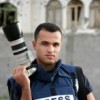
MIDEAST: When You Shoot the Messenger
The assault of IPS Gaza correspondent Mohammed Omer has left Israeli security personnel with a lot of explaining to do. And they are not doing a very good job of it.MIDEAST: Israelis Assault Award Winning IPS Journalist
Mohammed Omer, the Gaza correspondent of IPS, and joint winner of the 2008 Martha Gellhorn Prize for Journalism, was strip-searched at gunpoint, assaulted and abused by Israeli security officials at the Allenby border crossing between Jordan and the West Bank on Thursday as he tried to return home to Gaza.
MEDIA: Against Giant Odds, A Touch of Triumph
Parents call it the strawberry coloured nightmare. In the suburbs of Cape Town in South Africa they call it 'tik'. Something that mimics the effect of adrenalin. The news feature on 'tik' explores its dangerous spread, interviewing parents and others who talk about the devastation this addiction is bringing to homes and lives. 'Tik' is coloured pink, we learn, to make it more attractive to teenagers.
MEDIA: IPS Has New Chairman
The IPS International Association has chosen Federico Mayor as new chair of its Board of Directors. He replaces Mario Soares, former President of Portugal (1986-1996), who has been guiding the IPS Board since 2002.LEBANON: Newsrooms Fall Prey to Seven Deadly Sins
Prejudiced reporting is not uncommon anywhere, but in Lebanon the level of news distortion has taken on a new dimension as a result of assassinations, physical threats, political pressure, biased reporting, lack of professionalism, rampant corruption and self-censorship. These are the seven deadly sins that have increasingly been plaguing the Lebanese media over the years.MEXICO: Murder of Indigenous Reporters Fuels Hatred, Division
No one has been brought to justice for the murders of two young indigenous reporters in the southern Mexican state of Oaxaca in April, a case that has mobilised social activists and drawn condemnation from UNESCO.RIGHTS-CHILE: Growing Outcry Over Filmmaker’s Arrest
There is growing international alarm over the arrest of Chilean filmmaker Elena Varela, who was taken into custody by police a month ago while working on an investigative documentary on the conflicts between lumber companies and the Mapuche indigenous people in southern Chile.MEDIA-SINGAPORE: Restrictions Follow Critics to Cyberspace
When Lee Hsien Loong became Singapore’s prime minister after his father, Lee Kuan Yew, four years ago, he encouraged citizens to "feel free to express diverse views, pursue unconventional ideas, or simply be different". Today, these hopes for a city-state that can be more relaxed about criticism and more open to frank debate appear to have been too high.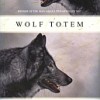
Q&A: ‘Unlike the Wolf, Sheep Are Afraid of Freedom’
The censored world of Chinese contemporary writing is an unlikely place for the rise of literary mystery. But ‘Wolf Totem’, which has sold millions of copies in China and won the inaugural Man Asian Literary Prize last fall, is the ultimate whodunit.POLITICS: World Peace Report Card Shows “Slight” Improvement
Everyone loves rankings. The nations of the world are constantly ranked on some criteria by various governments and organisations, but notably absent has been a ranking that shows which countries are the most at peace. Until two years ago.
BURMA: Earthquake Lets China Off the Hook
The outpouring of global sympathy in the aftermath of the deadly Sichuan earthquake has shifted the focus away from China’s role and influence in cyclone-stricken Burma, quieting critics.CZECH REPUBLIC: Read the Papers And Fear the Muslims
One result of the Czech media and politicians' frequent warnings of the dangers of Islamic terrorism has been a growing Islamophobia.MEDIA-BANGLADESH: Making Waves Over Community Radio
For 15 years the Bangladesh NGOs Network for Radio and Communication (BNNRC) campaigned for the introduction of community radio in the country, only to be turned down by successive, democratically-elected governments.SLOVAKIA: Govt Wins First Battle Against Media
In the midst of a war against the media, the government has passed a controversial press bill that journalists and opposition alike say endangers freedom of the press.SOUTH ASIA: Differing on Right to Information
The right to information (RTI), as espoused by the United Nations and international human rights organisations, does not have full endorsement from South Asian media practitioners and scholars.
BURMA: Foreigners, Cameras Banned in Cyclone-Hit Areas
Images of the dead keep trickling out of Burma. The most moving are those of children who died when Cyclone Nargis tore through their world in the populous Irrawaddy delta.
RIGHTS-JAPAN: Broadcasters Break Hanging Secrecy Taboos
The final seconds in the life of a Japanese death row inmate - the rasping muffled last words, the trapdoor springing open, the whip of a noose and a Buddhist gong signalling the end - has made radio history here, waking listeners up to what goes on in one of the most secretive execution systems in the world.« Previous Page — Next Page »





Journalism is dangerous work. Dozens of reporters and other media workers are killed in the line of duty each year. Hundreds more face threats, intimidation, and harassment as they risk their lives to let us know what is going on in war zones and as they root out corruption. In the Information Age, the Internet provides us with new ways to disseminate the news even as it poses new threats to press freedoms.


IPS Director General Farhana Haque Rahman was invited by UNESCO as a panelist at the World Press Freedom Day 2017 gathering in Jakarta, in the Plenary Session: Quality journalism: a public good for just, peaceful and inclusive societies.

The Week with IPS

NEXT STOP - SDGs
Tracking global progress towards a sustainable world
Tracking global progress towards a sustainable world
