Languages
Wednesday, October 28, 2026



News and Views from the Global South
Press Freedom
RIGHTS-MALAYSIA: Blogger's Arrest – 'Politically Repressive'
The arrest, under the official secrets act (OSA), of a prominent blogger and senior aide to opposition icon Anwar Ibrahim has shaken the fast growing blogging community in this country dominated by docile, state-controlled mainstream media.COLOMBIA: Using Communication to Build Peace
"We don't want to give birth to children who go off to war. We want our children to be filmmakers, painters, dentists, whatever they want, but not to repeat this disgraceful war," a Colombian woman tells IPS.MEDIA-IRAN: New TV Channel to Focus on Iraq, Shia Issues
Iran’s newly launched English language satellite television channel ‘Press TV’ will focus its coverage on difficult issues in the Middle East such as the United States’ occupation of neighbouring Iraq and the Shiite question.MEDIA-CARIBBEAN: A Chill in the Air
At a Caribbean media conference to mark World Press Freedom Day last month, Patrick Cozier, the general secretary of the Barbados-based Caribbean Broadcasting Union, issued a grim warning.BRAZIL: Journalist Wages Solitary Battle in Amazon
Death threats, physical assaults and 32 lawsuits - this is what freelance journalist Lucio Flavio Pinto has faced as a result of the one-man battle he is waging in this northern Brazilian city, the main gateway to the Amazon jungle.POLITICS-SRI LANKA: As Violence Rises, Media Climate Declines
The overhead projector cast a ghastly glow on the larger- than-life picture of Darmarathnam Sivaram, the Sri Lankan Tamil journalist abducted and killed in April 2005.POLITICS-US: Neo-cons Spinning Hearts and Minds
As the George W. Bush administration struggles through its last two years in office, it appears that the agenda of neoconservative ideologues has finally lost its appeal among strategic parts of the U.S. foreign policy apparatus.RIGHTS-ZIMBABWE: Another Attempt to Reclaim Media Independence
Zimbabwean media practitioners have launched a self-regulatory media body for journalists despite government threats of unspecified action against them.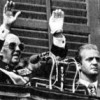
SPAIN: First Free Elections Still an Example, 30 Years On
On the eve of the 30th anniversary of Spain's first free elections after the end of the dictatorship of Francisco Franco (1939-1975), they remain an outstanding example that transitions from de facto regimes to democracy can be peaceful and orderly.MEDIA-SENEGAL: Radio Station Mired in Technicalities
For a while it appeared as if Madiambal Diagne might have found a way around the Senegalese government's apparent determination to keep him away from the airwaves.MEDIA-MEXICO: Supreme Court Deals Blow to Powerful Broadcasters
Mexico's Supreme Court dealt a major blow to the country's powerful and formerly untouchable biggest broadcasters, Televisa and TV Azteca, by declaring several key clauses of a 2006 law unconstitutional.MEDIA-LATIN AMERICA: Easy to See the Speck in the Other’s Eye
People have been collectively tearing their hair out all over Latin America because of the Venezuelan government's decision not to renew the broadcasting licence of that country's most popular television station, RCTV.MEDIA-UAE: ‘Glamour Factor’ Can Push Social, Political Agenda
A semi-governmental media company in this most vibrant of Middle East cities is feverishly working on the much-anticipated launch of 'Arabiya MTV'.PAKISTAN: Cleric Turns Heat on NGOs
''These foreign agents are against our religion. How can we allow them to work here when we know they come with an American agenda and support Israel?" asked Maulana Fazalullah, the pro-Taliban cleric, referring to non-governmental organisations (NGOs).MEDIA-THAILAND: Community Radio Refuses to Go Silent
They may still be on the margins of the country's media landscape with their limited reach on the airwaves and small audiences, but Thailand's community radio stations are refusing to go silent.MEDIA-IRAQ: Journalists Face Repression on All Sides
The working environment for Iraq's journalists is becoming increasingly dangerous and difficult, with 31 killed just since the start of this year, according to the International Federation of Journalists (IFJ).MEDIA-AUSTRALIA: Tightening ‘Anti-Terrorism’ Censorship
The prospective widening of Australia's censorship laws to crackdown on material that advocates terrorism has alarmed civil society groups.IRAN: Charges Against Renowned Scholar Called "Absurd"
The arrest of Dr. Haleh Esfandiari, Middle East programme director at the Washington-based Woodrow Wilson Centre, by Iranian security forces in Tehran on May 8 has sparked grave concerns among Iranian-Americans with dual citizenship who travel to Iran.US/IRAQ: ‘Pentagon Moved to Fix Iraqi Media Before Invasion’
In the run-up to the March 2003 invasion of Iraq, the Pentagon planned to create a 'Rapid Reaction Media Team' (RRMT) designed to ensure control over major Iraqi media while providing an Iraqi 'face' for its efforts, according to a ‘White Paper' obtained by the independent National Security Archive (NSA) which released it Tuesday.SOUTH ASIA: Report on Media Freedom Under Flak
A report on press freedom in South Asia produced by the International Federation of Journalists (IFJ) has been criticised by media experts following its launch in this far-flung Indian Ocean island country that itself scores badly on the issue.MEDIA-MEXICO: Broadcasting Law to Face Supreme Court Challenge
A year ago, the Mexican government and political parties caved in to pressure from powerful media consortia Televisa and TV Azteca, and passed a law that favoured the two broadcasting giants, to the detriment of aims to democratise the media.« Previous Page — Next Page »





Journalism is dangerous work. Dozens of reporters and other media workers are killed in the line of duty each year. Hundreds more face threats, intimidation, and harassment as they risk their lives to let us know what is going on in war zones and as they root out corruption. In the Information Age, the Internet provides us with new ways to disseminate the news even as it poses new threats to press freedoms.


IPS Director General Farhana Haque Rahman was invited by UNESCO as a panelist at the World Press Freedom Day 2017 gathering in Jakarta, in the Plenary Session: Quality journalism: a public good for just, peaceful and inclusive societies.

The Week with IPS

NEXT STOP - SDGs
Tracking global progress towards a sustainable world
Tracking global progress towards a sustainable world
