Languages
Monday, September 14, 2026



News and Views from the Global South
Religion
70 Years since the Universal Declaration on Human Rights – Hope Against Hope
“Save the Children estimates that 84,701 children under five have died in Yemen from untreated cases of severe acute malnutrition between April 2015 and October 2018.” “The grim analysis of United Nations data comes as intense fighting has again erupted in Yemen's strategic port city of Hodeidah.”
Geneva Centre Executive Director: We must unmask the greatest scam of the century through the promotion of equal citizenship rights
Security cannot be achieved by reactivating the armament race and an environment of tension and division, the Executive Director of the Geneva Centre for Human Rights Advancement and Global Dialogue, Ambassador Idriss Jazairy, said during the “A New Human Concept of Security” conference organized by the European Centre for Peace and Development in Belgrade.
Are you a believer?
Do you believe in God, Allah, Elohim, or do you think that religion is “the opium of the people” as Karl Marx called it in his work “A Contribution to the Critique of Hegel’s Philosophy of Right”? Either way, whatever religion you belong to, believe in, practice or do not practice, it is always your personal choice. To be precise: it is a human right.
Muslim Allies In the Fight Against Extremism
With the rise of violent extremism worldwide has come the stereotyping of an entire religion. In many countries and across many borders, Muslims have been vilified for events they are just as outraged at.
Church and Conflict in South Sudan
Throughout fifty years of struggles, South Sudan’s different churches have remained one of the country’s few stable institutions, and in their workings toward peace, have displayed a level of inter-religious cooperation rarely seen in the world.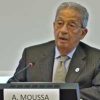
HE Amr Moussa: “It is our common responsibility to harness the collective energy of religions, creeds and value systems”
On 25 June 2018, the Geneva Centre for Human Rights Advancement and Global Dialogue organized a World Conference on the theme of “Religions, Creeds and Value Systems: Joining Forces to Enhance Equal Citizenship Rights” at the United Nations Office at Geneva in collaboration with the International Catholic Migration Commission, the Arab Thought Forum, the World Council of Churches, the World Council of Religious Leaders, Bridges to Common Ground and the European Centre for Peace and Development.
Wider Views for More Equal Societies
Inequalities are on the rise. Since 1980, 1% of the richest people have received double income than the 50% of the poorest. After several years of decline, hunger is also on the rise. The report on the State of Food Security and Nutrition in the World estimates that the number of chronically undernourished people in the world increased from 777 million in 2015 to 815 million in 2016. If we go deeper into the analysis we observe that three-quarters of the world’s extremely poor and food-insecure people live in rural areas.
The Nowhere People: Rohingyas in India
A devastating fire in a shanty at Kalindi Kunj, a New Delhi suburb, that gutted the homes of 226 Rohingya refugees from Myanmar, including 100 women and 50 children, has trained a spotlight on India's ad hoc policy on international migrants.
Removing Hate from Sermons
It has been nearly 10 years since an angry mob raged through the streets of Gojra in the early morning hours of Aug 1, 2009. The trouble had begun the day before, Friday, when certain xenophobic clerics had incited Muslim villagers, citing rumours about the desecration of religious verses. On that grim day, around 10 Christians were burned alive.
For the First Time, Buddhist Prelate in State Delegation
Sri Lanka’s foreign policy initiatives have gone one notch higher with the inclusion of a member of the Buddhist clergy in a delegation for top level talks between President Maithripala Sirisena and Japanese Prime Minister Shinzo Abe.
The Expanding Phenomenon of Religious and Nationalist Extremism
The attack on Dr Zafar Iqbal on March 3, only proves that religiously motivated extremism of the violent type, whether manifested in individual or group actions, continues to find its practitioners in society. And we are at a loss to determine how best to combat them effectively. The scourge is not a new phenomenon, nor unique to our country, but it has gained in salience in recent times.
Panel Debate During the 37th Regular Session of the 2018 UN Human Rights Council: The Headscarf Represents a Source of Commonality Between Islam, Christianity and Judaism
Renowned experts representing the Islamic, Christian and Jewish traditions concluded that the headscarf is a source of commonality between the three main Abrahamic religions: Islam, Christianity and Judaism. The joint call to action was made during a panel debate organized by the Geneva Centre for Human Rights Advancement and Global Dialogue (hereinafter “the Geneva Centre”) and the Permanent Mission of People's Democratic Republic of Algeria to UN Geneva on 23 February 2018 – on the margins of the 37th regular session of the UN Human Rights Council (26 February to 23 March 2018 ) – at the United Nations Office in Geneva on the theme of “Veiling/Unveiling: The Headscarf in Christianity, Islam and Judaism.”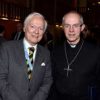
Executive Director of the Geneva Centre Ambassador Idriss Jazairy meets the Archbishop of Canterbury
(Geneva Centre) - The Executive Director of the Geneva Centre for Human Rights Advancement and Global Dialogue Ambassador Idriss Jazairy met with the Archbishop of Canterbury The Most Reverend and Right Honourable Justin Welby during a conference organized on 16 February 2018 by the World Council of Churches on the theme of “Ecumenical Spring: from Negotiated Frontiers to Open Borders.”
“No Time to Waste” in Ending FGM
More than 200 million women around the world have experienced some kind of female genital mutilation (FGM) and more could be at risk, a UN agency said.
Religion: Between ‘Power’ and ‘Force’
In 1994, Dr. David R. Hawkins wrote a book positing the difference between power and force (Power vs. Force: The Hidden Determinants of Human Behavior - the latest revised version came out in 2014).
Moralist Upsurge in Brazil Revives Censorship of the Arts
It is not yet an official policy because censorship is not openly accepted by the current authorities, but de facto vetoes on artistic expressions are increasing due to moralistic pressures in Brazil.
Civil Society Activists Speak Out– Despite Threats
They are young, smart and willing to take the rough road. Victor, Jubilanté and Khaled are independent fighters who speak out with a force that could possibly change the appearances of their countries, and beyond.
Shedding Diplomacy, Roberto Savio Speaks about Fear as a Tool to Gain Power
At the outset my thanks to Dr Hanif Hassan Ali Al Kassim, and Ambassador Idriss Jazairy who lead the Centre for Human Rights Advancement and Global Dialogue for organizing this panel discussion at a critical moment in history. The Centre, is one of the few actors for peace and cooperation between the Arab world and Europe. As a representative of global civil society, I think it will be more meaningful if I speak without the constraints of diplomacy, and I make frank and unfettered reflections.
A Responsibility to Prevent Genocide
Almost 70 years since the Genocide Convention was adopted, the international community still faces a continued and growing risk of genocide.
Despite Progress, Gay & Abortion Rights Face Threats in Latin America
Cancun, Mexico, of white sand beaches and spring break-style nightlife, was, this past June, the unusual backdrop for a regional gathering on human rights and democracy.
“Every Day Is a Nightmare”
Parul Akhtar,* a Rohingya woman in her mid-twenties, may never wish to remember the homeland she and her children left about three weeks ago.« Previous Page — Next Page »


Religion plays a big and in some cases growing role in the socio-political dynamics within countries and often is a factor in civil and cross-border conflict, conflict resolution and peace building. From Burmese monks' marches to the role of religious fundamentalism, this dedicated site gathers IPS stories about how religion affects our world, from daily life to geo-politics.

The Week with IPS

NEXT STOP - SDGs
Tracking global progress towards a sustainable world
Tracking global progress towards a sustainable world
