Languages
Sunday, November 15, 2026



News and Views from the Global South
Sustainable Development Goals

Addressing the Scandal of Invisibility in Asia & the Pacific
Each year, the births of 64 million children under the age of five and deaths of 8.4 million people are invisible to governments in Asia and the Pacific. Most countries in the region are yet to achieve universal civil registration, leaving many people without a legal identity and, as a result, invisible to the State.
Uruguay: Green Bills Over Blue Gold
Drinking water is running out in Uruguay — this headline got the small South American country onto international news. Prolonged drought has brought the reservoir and river that supply the capital Montevideo down to 10 per cent of their normal water level. Unless the rain comes, there is sufficient water only until mid-June, at best.
Kenya’s Hits and Misses on Journey to Eliminating Plastic Waste
Plastic bags were a part and parcel of life in Kenya. More than 100 million plastic bags were used annually in Kenyan supermarkets alone, with at least 24 million plastic bags discarded every month. Kenya was choking under the weight of plastic bags.
Healthy Homes – A Right of Rural Families in Peru
Adopting a “healthy housing” approach is improving the living conditions of rural Peruvian women like Martina Santa Cruz, a 34-year-old farmer who lives with her husband and two children in the village of Sacllo, 2,959 meters above sea level in the Andes highlands municipality of Calca.
A Climate Finance Goal That Works for Developing Countries
After years of failing to meet climate finance commitments, the new climate finance goal under discussion this week in Bonn is critical, but without supporting reforms of the global financial architecture we risk repeating past mistakes.
Massive Fish Mortality Strikes Kashmir’s Lake, Threatens Livelihoods
Abdul Lateef Dar, a 45-year-old man living on the outskirts of Kashmir's renowned Dal Lake, relies on the lake's fish for food and income.
No Peace Until Peace For All
As we head into June, we will commemorate a number of important international days that call for much-needed support to protect refugees, end child labour, stop sexual violence in conflict and ensure human rights for the innocent children victims of aggression.
Citizen Science Is Key in Helping to Tackle the Threat of Invasive Alien Species
Nature is declining rapidly, and the rate of species extinction is accelerating. The Global Assessment Report of the Intergovernmental Science Policy Platform on Biodiversity and Ecosystem Services (IPBES) (2019) revealed that one million species are at risk of extinction. Invasive alien species, alongside climate change, changing use of sea and land, direct exploitation of organisms and pollution, are all major causes of the unprecedented and ongoing declines in biodiversity and ultimately the nature crisis that we are facing now.
Transforming Food Systems through Conscious, Mindful Practices
Deep in the Egyptian desert, the SEKEM community celebrates its first wheat crop – grown to alleviate shortages and price increases caused by the war in Ukraine, and the latest crop in a 46-year history of regenerative development, which has effectively made the desert bloom. On another continent, a consumer who buys acai collected and produced by the Yawanawá in Brazil helps protect 200,000 acres of land.
Kenya Moots Disbanding the Loss and Damage Fund, Seeks Fair Equitable Climate Action
The Climate Change envoy to the President of Kenya has asked Kenya’s and, by extension Africa’s negotiators at the ongoing climate conference in Bonn, Germany, not to put much emphasis on financing the Loss and Damage kitty but instead calls for fairness and equity.
Education Cannot Wait Interviews United Nations Resident Coordinator in Colombia Mireia Villar Forner
Mireia Villar Forner is the United Nations Resident Coordinator in Colombia. Ms. Villar Forner brings more than 25 years of experience, which she acquired within the United Nations and externally, to the position. At the United Nations, she most recently served as Resident Coordinator in Uruguay, where she led the work of the United Nations development system to accelerate the implementation of the 2030 Agenda for Sustainable Development. She also held senior positions at the United Nations Development Programme (UNDP), including that of Resident Representative in Uruguay, Deputy Resident Representative in Bolivia and Deputy Resident Representative in Iraq during the country’s political transition. She also served at the UNDP Liaison Office in Brussels, where she played a key role in strengthening the partnership between the Organization and the European Union. Before that, she worked as the focal point for Latin America and the Caribbean, as well as the Arab States, in UNDP’s Bureau for Crisis Prevention and Recovery, after an assignment as Head of the Programme Section of the Electricity Network Rehabilitation Programme in Northern Iraq. She started her career with the United Nations at UNDP’s Regional Bureau for Arab States. Prior to joining the Organization, Ms. Villar Forner worked in the financial sector in Spain. She holds a master’s degree in foreign service from Georgetown University in the USA, and a bachelor’s degree in economics from the University of Barcelona in Spain.
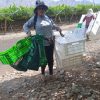
Peru’s Agro-Export Boom Has not Boosted Human Development
Peru’s agro-export industry is growing steadily and reached record levels in 2022. But this has not had a favorable impact on human development in this South American country, where high levels of inequality, poverty, childhood anemia and malnutrition persist, as well as complaints about the poor quality of employment in the sector.
Kenyan Scientist’s Trend-Setting Research into Health Benefits of Snails
Snails and slime are usually followed by the thought ‘EEW!’ from most people … some might even scream at seeing a snail near them. For Dr Paul Kinoti, however, these slimy creatures could earn him international recognition because his research on snails landed his institution, Jomo Kenyatta University of Agriculture and Technology (JKUAT), a Ksh. 127 million (USD 1 million) grant.[related_articles]
How Farmer Producer Organisations Benefit Small Scale Farmers in India
Until a decade ago, marginal farmers Gangotri Chandrol and Sunitabai lacked livelihood options in the post-monsoon season.
G7 Has Failed the Global South in Hiroshima
"G7 countries have failed the Global South here in Hiroshima. They failed to cancel debts, and they failed to find what is really required to end the huge increase in hunger worldwide. They can find untold billions to fight the war but can’t even provide half of what is needed by the UN for the most critical humanitarian crises."
Government Financing for Mayan Train Violates Socio-environmental Standards
Mexico’s development banks have violated their own socio-environmental standards while granting loans for the construction of the Mayan Train (TM), the flagship project of the presidency of Andrés Manuel López Obrador.
Finding Ways to Feed South Africa’s Vast Hungry Population
In the deep rural village of Jekezi in South Africa's Eastern Cape, most young and able-bodied people have fled the area, leaving behind people with disabilities, the elderly, and children.
Livestock Producers Seek to Integrate Biogas and Animal Protein Market in Brazil
It is the “best energy,” according to its producers, but biogas from livestock waste still lacks an organized market that would allow it to take off and realize its potential in Brazil, the world's largest meat exporter.
To Confront Our Current Crises, It’s Time to Put Our Money Where Our Mouth Is
The finance sector’s role in the current global crises – notably climate, biodiversity, and food security – is significant. Polluting activities and environmentally-destructive practices for short-term economic gains have catapulted us to our current untenable situation. We're ‘sawing off the branch we’re sitting on’ by sacrificing life-giving ecosystem services for profit, and that branch is sagging and splitting under our weight.
Rural Women’s Constant Struggle for Water in Central America
“This is a very difficult place to live, because of the lack of water,” said Salvadoran farmer Marlene Carballo, as she cooked corn tortillas for lunch for her family, on a scorching day.
Empowering Women is Key to Breaking the Devastating Cycle of Poverty & Food Insecurity in sub-Saharan Africa
Studies consistently show that women have lower rates of agricultural productivity compared to men in the region, but it’s not because they’re less efficient farmers.« Previous Page — Next Page »


The Week with IPS

NEXT STOP - SDGs
Tracking global progress towards a sustainable world
Tracking global progress towards a sustainable world
