Languages
Wednesday, August 26, 2026



News and Views from the Global South

Israel Escalates Offensives on Lebanon
Attacks on Lebanon over the past two months, as instigated by the Israeli Defense Forces (IDF) have been increasingly indiscriminate. The Disaster Risk Management Unit at the Lebanese Council of Ministers confirmed that the death toll of Lebanese civilians has risen to over 2,530. Furthermore, Israel’s hostilities have led to casualties among United Nations (UN) personnel, which has been described as “violations of international law”.
Unlocking Urban Climate Finance: Key insights from Indonesia
Over half of Asia-Pacific's population now live in cities. While urbanization brings people closer to opportunities and better services, many urban dwellers are also experiencing the adverse impacts of climate change such as floods, urban heat and infectious diseases. Urban activities are among the major contributors to greenhouse gas (GHG) emissions.
Egyptian Parliament Moves to Strengthen Support for People with Disabilities and the Elderly
In a significant move to address the challenges faced by people with disabilities and the elderly, six Egyptian parliamentary committees met in Cairo on October 12 to discuss national strategies and legislative efforts.
Meet the Young Women Arrested for Fighting Corruption in Uganda
Until recently, Margaret Natabi would never have dreamed of taking her anti-corruption fight on the streets of Uganda’s capital, Kampala.
With God on Our Side: Netanyahu, Trump, and Putin
Bronisław Malinowski (1884 – 1942) did for several years conduct socio-anthropological research in the Trobriand Islands. Returning to England after World War I, he wrote several ground breaking books, among them Magic, Science, and Religion in which he assumed that people's feelings and motives are crucial for understanding the way their society functions. Malinowski considered society to be intimately interlinked with individuality – i.e. an individual’s ideas and behaviour are created and formulated within the social circles s/he lives and vice versa. Consequently, an individual’s personality might influence an entire society, depending on the leading role s/he is granted.
Syrian Displaced Children Go Hungry, Stunting Their Growth
Children in northern Syria are suffering from hunger, illness, and malnutrition as a result of poverty, poor living conditions for most families, and the collapse of purchasing power amid the soaring prices of all essential food commodities. Displacement and a lack of job opportunities make this worse.
69 Years of Development in Gaza Erased by Israel-Hamas War
The second of the polio vaccination campaign in Gaza has yielded relative success, as so far more than 420,000 children have been vaccinated since the second round of immunizations began one week prior. This exception stands out as the uptick in airstrikes and sustained blockages of aid give humanitarian organizations cause for concern for the deterioration of Gaza, especially in the north.
The IMF Just Made the Case for its Own Irrelevance
This month, the International Monetary Fund (IMF) had an opportunity to end one of its most reviled policies and lift billions of dollars of debt off the backs of crisis-stricken developing countries. It chose not to.
Another Nobel for Anglocentric Neoliberal Institutional Economics
New institutional economics (NIE) has received another so-called Nobel prize, ostensibly for again claiming that good institutions and democratic governance ensure growth, development, equity and democracy.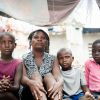
UN Announces Embargo on Arms in Haiti
On October 19, the United Nations (UN) Security Council unanimously voted to expand an arms embargo in an effort to combat the high levels of gang violence that plagues Haiti. Armed groups have taken control of the majority of Port-Au-Prince, the nation’s capital, leading to numerous clashes with the local police. Humanitarian organizations hope that this embargo will prevent Haitian gangs from accessing illicit weapons and munitions unchecked.
Russia-Africa: Developing Media Partnership
At a recent media briefing, Maria Zakharova, the spokesperson for Russia's Foreign Ministry, criticized the United States for its support of educational programs, media and NGOs in Africa. Zakharova argued that these efforts are part of a broader attempt by the U.S. to impose Western values and governance models on sovereign African states, framing it as a form of neo-colonialism.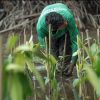
COP16 – Is This Our Last Chance to Save Nature?
As COP16 approaches, we have been reflecting on the state of our planet in 2024; the word "crisis" feels insufficient to describe the devastation we're witnessing.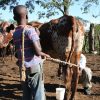
Capacity Building Is Key to Africa’s Digital Sequencing Success Story
Christian Tiambo has always wished to uplift local farmers’ communities through cutting-edge science. As climate change wreaked havoc on local agriculture, Tiambo, a livestock scientist at the Centre for Tropical Livestock Genetics and Health (CTLGH) and at the International Livestock Research Institute (ILRI), focused on conserving and developing livestock that could withstand environmental stress.
Salt: Bangladesh Communities On the Frontline of Climate Change
Global warming has far-reaching effects, and certain countries, particularly those with low lying coastal regions, are more vulnerable than others. Bangladesh, the largest delta in the world, is at the forefront of the global warming crisis. Its coastal areas are increasingly exposed to rising sea levels, natural disasters, and salinization, all of which have devastating effects on its population.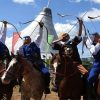
Reviving the Spirit of the Steppe: Kazakhstan Has Hosted the 5th World Nomad Games
In a vibrant display of culture and tradition, Kazakhstan recently hosted the 5th World Nomad Games in Astana, celebrating the enduring spirit of nomadic heritage against a backdrop of modernity and globalization. This biennial event, which drew competitors and spectators from around the globe, served not only as a showcase of traditional sports but also as a poignant reminder of the resilience of a culture that faced near extinction under Soviet rule.
Beyond the Headlines: The Hidden Impact of Flooding on Agriculture and Soil Health
Hurricanes Helene and Milton resulted in record-setting rain, flooding, and flash flooding events across several states, including Florida and North Carolina, leaving devastating impacts on people, communities, and infrastructure that will require many years of rebuilding and recovery.
The Future of Food Security Lies Beyond COP29’s Negotiation Tables
Climate change has thrown our food systems into chaos. Extreme weather events and dramatic climate variations are hammering food production and supply chains across the world. As global leaders gear up for COP29, there’s plenty of buzz about climate action. But can we really expect these slow-moving, bureaucratic negotiations to deliver tangible and swift results to decarbonize and insulate our agri-food systems? Most likely not. But do not despair. While the COP29 talks unfold, crucial climate solutions for transforming food systems are already taking root on the ground.
Aid Blockades Signal Trouble for Gaza Ahead of Winter
On October 15, the World Health Organization (WHO) announced the beginning of the second round of Gaza’s polio vaccination campaign. Over the last week, the Palestinian Ministry of Health, in partnership with WHO, the United Nations Children’s Fund (UNICEF), and the United Nations Relief and Works Agency for Palestine Refugees in the Near East (UNRWA), has managed to vaccinate over 181,000 children under the age of ten in Gaza.
A Glimpse into Tanzania’s Political Turmoil Ahead of 2025 Election
At a rally to mark International Youth Day on August 12 in Tanzania’s southern Mbeya region, John Mnyika stood with a determined expression, addressing his supporters. The air was charged with anticipation. Mnyika, the Secretary-General of Tanzania’s opposition party, Chadema, was preparing to speak about the upcoming elections when the chaos erupted. Without warning, heavily armed police officers stormed the event, grabbed Mnyika, and dragged him away.
Biodiversity Goal Can Be Achieved in the Southern Ocean
COP16, the much-anticipated follow-up talks to the 2022 Kunming-Montreal Global Biodiversity Framework (GBF) agreement, which aims to reverse an alarming loss of nature on land and sea, opens in Cali, Colombia.
Overlapping Crises Hinder Global Social Development and Poverty Reduction
Social development in a global context shows the risk of trending downwards and not recovering if countries do not minimize the long-term impacts of multiple crises and work towards building up their resilience. As much as this will require national political will, it will also need global cooperation for it to be possible.« Previous Page — Next Page »


Want to keep up with the latest news and views from the Global South? Sign up for IPS Daily News Report for daily emails with our top stories about international development, climate change, gender and more. (Formerly IPS TerraViva since 1993).

The Week with IPS

NEXT STOP - SDGs
Tracking global progress towards a sustainable world
Tracking global progress towards a sustainable world
