Languages
Thursday, August 27, 2026



News and Views from the Global South

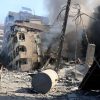
Death Toll Rises During Israel’s Siege in Lebanon
One week has passed since the beginning of Israel’s invasion of Lebanon. Over the past three weeks, Lebanon has seen a considerable uptick in hostilities from the Israeli armed forces. Routine bombardments have resulted in significant civilian casualties as well as the failure of several critical infrastructures. The United Nations warns that displacement continues to grow as shelters approach maximum capacity.
Amazonian Bioeconomy: An Essential Path for Sustainable Development
The Amazon is at a critical juncture. Despite its abundant biodiversity, cultural richness, and immeasurable environmental value, it faces serious threats that endanger its future and the communities that depend on it.
The Future of Civic Freedoms: Lessons from My Time at CIVICUS
When I joined CIVICUS in 2019, I came in with two decades of work on influencing and monitoring public policies through grassroots and global activism. Joining CIVICUS as Secretary-General felt familiar, like returning home after a period of separation. My first international role in 2006 – as Campaign Director of the Global Call to Action against Poverty – was initially hosted by CIVICUS. One of my most memorable campaign endeavours, The World We Want 2015, was conceptualised in the basement of CIVICUS House in 2011.
Pakistan’s Digital Censorship—The Real Cost of Internet Disruptions
Over the past few months, Pakistan has been grappling with a persistent and disruptive internet slowdown, leaving millions of citizens frustrated.
Strategic Patience can Mitigate Conflict Between Israel & Iran
How will Israel respond to Iran’s recent ballistic missiles barrage? “Strategic patience” is the best course. Israel has its hands full with Hamas and Hezbollah. Now is not the time to escalate a new major war with Iran, which could have nuclear implications.
IPEF: Much Ado about Nothing
After 2.5 years, US President Joe Biden’s Indo-Pacific Framework for Prosperity (IPEF) is increasingly irrelevant due to its own limitations and broader US foreign policy shifts.
Playing Nuclear Games: Tickling the Tail of the Promethean Nuclear Fire Dragon
In recent years, the rhetoric, strategy and practice of nuclear deterrence has grown riskier, more urgent, more dangerous, less stable, and increasingly in the hands of deficient leaders and policymakers.
Agroecology: The Game-Changing Solution to Global Food, Climate and Conflict Crises
Edward Mukiibi, President of Slow Food, champions agroecology as a transformative answer to the world's most pressing crises: food insecurity, climate change, and violent conflicts. In a world where these challenges intersect, Mukiibi called for an urgent rethink of our approach to food systems.
Continued Hostilities in Gaza Threaten the Second Round of Polio Vaccinations
Over the past two months, the polio epidemic in Gaza has slowly mitigated due to response efforts by the World Health Organization (WHO) and the United Nations (UN). The first round of the polio vaccination campaign has been largely successful, with around 506,000 children having been immunized. If the Israel authorities allow for further humanitarian pauses, the second round is expected to begin on October 14. However, health officials are concerned that this will be more difficult than expected due to the continuance of deadly attacks in the past few weeks.
Biogas, a Circular Energy, Advances in Brazil Thanks to Local Arrangements
“I don't know of a more sustainable technology for the transformation of society than biogas,” said Professor Alex Enrich-Prast, an activist for this energy alternative with a highly diversified and decentralised expansion in Brazil.
Republicans Blame Women for America’s Low Birth Rate
Countries around the world are experiencing low birth rates. In 2022, more than one hundred countries, representing two-thirds of world’s population, experienced fertility rates below the replacement level of 2.1 births per woman.
‘The Focus Should Be on Holding Social Media Companies Accountable, Not Punishing Individual Users’
CIVICUS discusses the recent Twitter/X ban in Brazil with Iná Jost, lawyer and head of research at InternetLab, an independent Brazilian think tank focused on human rights and digital technologies.

A Growing New Battle: Nuclear Weapons vs Conventional Arms
The warnings from the United Nations and from anti-nuclear activists are increasingly ominous: the world is closer to a nuclear war—by design or by accident—more than ever before. The current conflicts—and the intense war of words—between nuclear and non-nuclear states—Russia vs. Ukraine, Israel vs. Palestine and North Korea vs. South Korea—are adding fuel to a slow-burning fire.
“Escalation Dominance” . . . and the Prospect of More Than 1,000 Holocausts
Everything is at stake. Everything is at stake with nuclear weapons. While working as a nuclear war planner for the Kennedy administration, Daniel Ellsberg was shown a document calculating that a U.S. nuclear attack on communist countries would result in 600 million dead. As he put it later: “A hundred Holocausts.”
Empowering Change & Resilience: Social Protection in the Age of Megatrends
Social protection systems are essential to achieving the 2030 Agenda for Sustainable Development. However, social protection is insufficient across Asia and the Pacific, and the region is at risk from megatrends: climate change, demographic shifts and digitalization. Tens of millions of people have been pushed into extreme poverty since COVID-19, reversing past gains, and many millions more live precariously just above the poverty line.
May Teacher Voices Echo Around the Globe
We must build a new social contract for education – a contract based on equality, equity, and universal human rights. At the center of our global efforts to ensure education for all, we must put teachers first in everything we do. They are frontlines heroes who deliver every day to educate children, cultivate young talent, and build a strong society. They are the substitute parents, the mentors and the ones who contribute to shaping the identify of a child in war, in refuge or in climate change.
To Put a Stop to Siphoning off Money, Start with Data
The commonly used Bangla phrase for siphoning off money out of the country – “taka pachar” – is rather misleading. Because taka, the Bangladeshi currency, is never taken out of Bangladesh. It’s not useful anywhere else. What goes out is its equivalence in foreign currencies, especially, US dollars. The technical term for such criminal act is Illicit Financial Flows (IFFs). Mistakenly, sometimes IFFs are referred to as money laundering – a processing of criminal proceeds to disguise their illegal origin.
Why Africa Should Embrace Territorial Markets to Withstand Climate Shocks and Crises
African policymakers, local leaders and the private sector have been asked to create an enabling environment that will help African traders and farmer folks build reliable systems for food security and resilience through territorial markets. During a week-long 2024 Africa Agroecological Entrepreneurship and Seed Festival in Harare, Zimbabwe, experts observed that persistent crises have shown the importance of resilient close-to-home ‘territorial’ markets that feed billions of people every day—from public markets and street vendors to cooperatives, from urban agriculture to online direct sales, and from food hubs to community kitchens.
The UN Cybercrime Convention: A New Repressive Tool in Disguise?
The UN Office on Drugs and Crime hailed the recently agreed Cybercrime Convention as a ‘landmark step’ in cooperating to tackle online dangers. But human rights organisations aren’t so sure.
Dominican Republic Orders the Expulsion of Thousands of Haitian Migrants
Over the past few months, the escalation of gang violence and mass displacement in Haiti have been of great concern for humanitarian organizations. Severe levels of armed violence have resulted in significant instability, with food insecurity, sexual violence, civilian casualities, and restricted freedom of movement plaguing the nation. Displacement cases have risen sharply, to the extent that the Dominican Republic has ordered the return of thousands of Haitian migrants.
Will Ukraine Benefit if IMF Ends its Punitive Fees on Debt Burdened Countries?
Over the coming month, the United States has a window of opportunity to lift a multi-billion-dollar burden from Ukraine, and other countries in financial distress, without costing the US taxpayer a dime.« Previous Page — Next Page »


Want to keep up with the latest news and views from the Global South? Sign up for IPS Daily News Report for daily emails with our top stories about international development, climate change, gender and more. (Formerly IPS TerraViva since 1993).

The Week with IPS

NEXT STOP - SDGs
Tracking global progress towards a sustainable world
Tracking global progress towards a sustainable world
