Languages
Tuesday, September 1, 2026



News and Views from the Global South

Using Education To Stop the Generational Cycle of Violence Against Women in the Pacific
Parliamentary representation by women in Pacific Island countries remains stubbornly low at 8.4 percent. Yet women leaders across the region have been meeting every year for the past four decades to discuss goals and drive action to address gender inequality and the most pressing development challenges in the Pacific.
Typhoon Yagi Devastates Southeast Asia
In early September, Typhoon Yagi, a deadly tropical cyclone, hit Southeast Asia and Southern China, causing widespread destruction. According to the United Nations (UN), wind speeds, reaching 213 kilometers per hour, as well as heavy flooding and severe landslides, have devastated affected areas. Yagi is the strongest natural disaster to hit the South China Sea in three decades, leaving over 500 people killed, 38 missing, and 1,900 injured.
Multilateral Systems in Urgent Need of Reform, Says UN Secretary General
As the United Nations gears up to host the international community for the high-level meeting week, the UN chief appeals to world leaders to commit to universal agreements to work towards solutions.
Amid Great Challenges, Hope Reigns As More Children Reached with Education Support
Amid unprecedented global challenges and a growing list of countries in crisis, there is an existential threat to decades of development gains—with the global community marked by intensified armed conflict, forced displacements, and the debilitating effects of climate crises.
UN’s Summit of the Future to Forge a New Path for Humanity
A major event at UN Headquarters – Summit of the Future scheduled for September 22-23-- is being billed as a once in a generation opportunity for the international community to grapple with important questions, and forge a new path, for the benefit of all.
UN’s Five Major Leaders Skip Key Summit
The United Nations, over the last year, has been relentlessly promoting the upcoming Summit of the Future – scheduled for September 22-23—as a landmark event. And rightly so. But, surprisingly, the provisional list of speakers, released early this week, reflects notable absentees for a high-level summit-- the five permanent members (P5) of the Security Council -- whose representatives do not include any head of state (HS) or head of government (HG).
Mexican chinampas survive surrounded by threats
Mexican Crescencio Hernández orders radishes, herbs and lettuce for shipment to an alternative market in west-central Mexico City.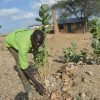
Governments Using Billions of Public Funds to Subsidize Climate-Destructive Industries—Report
A report examining corporate capture of public finance is accusing industries fueling the climate crisis, including fossil fuel ones, of draining public funds in the Global South, singling them out for squeezing out of governments USD 700 billion in public subsidies each year.
Explainer: Why Venezuela Needs To Reduce Its Gas Flaring
The most visible part of gas flaring in Venezuela is the so-called “Monagas illuminated nights.” These are red and orange skies, which are visible from the homes of the locals at night and which show the gas flaring in the oil fields of Monagas, a state located in the east of the Caribbean country and key in its oil production.
Nagorno-Karabakh: One Year After the Ethnic Cleansing
It has been 12 months since Hayk Harutyunyan, a 22-year-old photographer from Nagorno-Karabakh, cleaned his house for the last time and closed the door behind him for good.
Where Has Poverty Gone?
Political polarization, the climate emergency, organized crime, migration, and low economic growth currently dominate the public debate in Latin America and the Caribbean (LAC), and rightly so. However, there is a significant structural challenge to human development and democracy itself that, along with inequalities, lies at the root of these crises: poverty.
ECW Delivers Holistic Education Against All Odds, But More Funding Needed
Education Cannot Wait (ECW) has delivered quality education to children in crisis "against all odds," ECW Executive Director Yasmine Sherif said at the United Nations today. "And you can imagine the odds. We are seeing more armed conflict, a growth of climate-induced disasters and the biggest refugee movement since World War 2."
To Kill the Future, Zero the Past
Today’s weapons are capable of wiping out entire swaths of humanity, demolishing remaining shreds of culture along with them. News coverage of the one-sided Gaza campaign make it plain that’s exactly what’s happening. Destroying the past destroys the future too. The world must band together to make sure these atrocities stop.
Humanitarian Crisis in Gaza Worsens While Polio Vaccine Campaign Succeeds
Today, the chief of the United Nations Relief and Works Agency for Palestine Refugees in the Near East (UNRWA), Philippe Lazzarini, confirmed that the first round of Gaza’s polio vaccination campaign had ended successfully, reaching 90 percent coverage. The second round of this campaign is set to begin by the end of September, delivering Gaza’s children with a critical second dose of the polio vaccine.
We Stand with the Girls and Women of Afghanistan
Today, we stand with solemn hearts as the world marks this week the three-year ban on girls’ secondary education in Afghanistan. Today and every day, we must stand up for the millions of Afghan girls and women living under the yoke of gender-apartheid: systematized and institutionalized oppression, exclusion, and marginalization based exclusively on their gender. However, standing in solemnity for their suffering is not enough. We must act to remove the oppression and injustice. Against all odds, we must continue to deliver results to provide the girls access to an education well beyond grade sixth.
Are the World’s Ongoing Conflicts in Danger of Going Nuclear?
The constant drumbeat of nuclear threats seems never ending—emanating primarily from the Russians, Israeli right-wing politicians and North Koreans. The threats also prompt one lingering question: Can there be a World War III without the use of nuclear weapons?
Odious Debts: What Can Bangladesh Learn from Ecuador?
Bangladesh’s White Paper committee will review foreign loan deals signed by the fallen kleptocratic regime. We recommend that it identifies and declares the loans or portions of loans that did not benefit the nation as unpayable, because they were siphoned off the country by corrupt politically powerful elites, or worse used to buy deadly weapons and surveillance equipment to oppress people. Such loans are “odious” – they stink and are detestable.
15 Years After the Civil War Ended, Sri Lanka Faces Another Crucial Election
Thousands of Tamils are heading to Mullivaikal on the northeast coast of Sri Lanka, many of whom were here 15 years ago and still live in the region. They are there, May 18, to commemorate the massacre of civilians in a ‘no fire zone’ during the final stages of the civil war.
Building Inclusive Smart Cities: Bridging the Gender Gap
When the Beijing Declaration was adopted in 1995, it called for the removal of systematic and structure barriers that prevent women and girls from enjoying their human rights across social, economic, political and environmental domains. Over the last decade, the proportion of population with access to the internet has increased from 36 per cent in in 2013 to 67 percent today.
Leaders Can Rise to the Summit, Together
As heads of state and government fly into New York for the United Nations General Assembly and the Summit of the Future (September 22-30), 2.3 billion mothers, fathers, and children are unsure where their next meal will come from. Millions face the terror of brutal, protracted armed conflicts that make no distinction between civilians and soldiers.
How Much is Too Much for Mount Everest? Isn’t it Time For Sagarmatha to Rest
"That’s Mt. Everest!" I overheard this from a trekking guide to his trekkers team. I stopped and asked him—which one! He was not our guide, but I approached. He pointed a finger and showed me Mt. Everest and I cried—I don't know why. I was overwhelmed and humbled to finally witness the world's tallest mountain—it was not from the base camp but from Thyangboche while returning.« Previous Page — Next Page »


Want to keep up with the latest news and views from the Global South? Sign up for IPS Daily News Report for daily emails with our top stories about international development, climate change, gender and more. (Formerly IPS TerraViva since 1993).

The Week with IPS

NEXT STOP - SDGs
Tracking global progress towards a sustainable world
Tracking global progress towards a sustainable world
