Languages
Wednesday, August 5, 2026



News and Views from the Global South

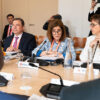
Preventing Pandemics Needs Every Tool in the Toolbox – Including Animal Vaccines
Just five years on from the Covid-19 pandemic, another animal-borne disease is mutating and spreading across borders and species. Avian influenza has already resulted in the loss of more than 630 million birds in the last 20 years. And new figures from the inaugural State of the World’s Animal Health report find that the number of reported outbreaks in mammals, including cattle, sheep and cats, doubled last year compared to 2023.
‘Only a Handful of Environmental Organisations Still Dare Challenge Corporate Projects in Court’
CIVICUS speaks to Cristinel Buzatu, regional legal advisor for Central and Eastern Europe at Greenpeace, about how Romania’s state gas company is weaponising the courts to silence environmental opposition.
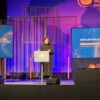
How Mongolia Can Expedite It’s Just Transition Plans to Include Its Nomads
Youth activist Gereltuya Bayanmukh still reflects on the events in her formative years that inspired her to become a climate activist. When she was a child, she would visit her grandparents in a village 20 km to the south of the border between Russia and Mongolia.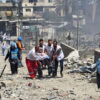
Genocide Made Invisible
Whatever the outcomes of Benjamin Netanyahu’s visit to the White House on Monday and the latest scenario for a ceasefire in Gaza, a bilateral policy of genocide has united the Israeli and U.S. governments in a pact of literally breath-taking cruelty.
World Bank’s IFC Finally Adopts Remedial Action Framework
The World Bank’s private sector arm has raised the bar — and others may follow. On April 15, the International Finance Corporation (IFC) became the first development finance institution to adopt a formal remedy policy, publishing its Remedial Action Framework (RAF) to address environmental and social harm caused by IFC-supported investment projects.
Staff Union Dismisses UN Restructuring as “Chaotic, Incoherent, Rushed & Lacking Strategy”
A coalition of UN staff unions, led by the 60,000-strong Coordinating Committee of International Staff Unions and Associations (CCISUA), has written to UN member states criticizing the UN80 reform process as “incoherent and lacking strategy”. The union, one of the largest single coalitions in the world body, is asking the 193 member states to take over the UN reform process which is currently in the hands of a Task Force.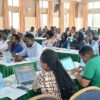
Kenya’s Shirika Plan: A New Dawn for Refugee Rights and Integration
When Jean Baremba arrived in Kenya in 2018, he looked forward to rebuilding a life shattered by war in the Eastern Democratic Republic of Congo.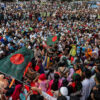
Bangladesh’s Democratic Promise Hangs in the Balance
When Bangladesh’s streets erupted in protest in mid-2024, few could have predicted how swiftly Sheikh Hasina’s regime would crumble. The ousting of the prime minister last August, after years of mounting authoritarianism and growing discontent, was heralded as a historic opportunity for democratic renewal. Almost a year on, the question remains whether Bangladesh is genuinely evolving towards democracy, or if one form of repression is replacing another.
How Global Fund is Saving Lives from Malaria, TB, & HIV across Africa
In Gabú, Guinea-Bissau, a grandmother named N’beta hesitated. Her six-month-old grandson, Seco, was healthy, so why give him medicine? But community health workers Jamilia and Amadu gently explained that the medicine wasn’t for illness, but for protection. It was part of a seasonal malaria chemoprevention campaign designed to protect children during the worst malaria transmission months — the rainy season.
FfD4 at Sevilla Plants the Seeds of Debtor Unity
UN Member States adopted the ‘Compromiso de Sevilla’ at the Fourth Financing for Development Forum (FfD4) which concluded July 3-- the culmination of months of contentious negotiations that pitted wealthy nations against the developing world in competing visions for reform of the global economic architecture.
The Silencing of Hong Kong
Joshua Wong sits in a maximum-security prison cell, knowing the Hong Kong authorities are determined to silence him forever. On 6 June, police arrived at Stanley Prison bringing fresh charges that could see the high-profile democracy campaigner imprisoned for life. This is the reality of Hong Kong: even when behind bars, activists can be considered too dangerous ever to be freed.
Lessons from South Africa on Monitoring the Impact of Invasive Trees on Water Resources
Concerns about the impacts of invasive species is not new; it dates to the 19th century. The term was popularized in Charles Elton’s 1958 book “The Ecology of Invasions by Animals and Plants”. However, the concept gained significant attention in the 1990s and early 2000s as academic interest surged. This led to an increase in publications by invasion biologists.
The Rise of Islamophobia in New York’s Mayoral Elections– with the Statue of Liberty in a Burqa
The prospect of New Yorkers electing their first Muslim Mayor, come November, has ignited a rash of paranoid statements by right-wing US politicians, including Islamophobia-- the irrational fear and hatred against Islam and Muslims. Last week, a Republican politician caricatured America’s iconic Statue of Liberty wearing a burqa-- an outer garment worn by some Muslim women that covers the entire body and face. But that internet meme, spreading across social media, was deleted after protests.
Sudanese Refugees and IDPs Disproportionately Affected By Crisis
Since the wake of the Sudanese Civil War in 2023, Sudan has faced a dire humanitarian crisis that has been marked by extreme violence, widespread civilian displacement, and an overwhelming lack of basic services in relation to the massive scale of needs. The latest reports from a host of United Nations (UN) organizations shed light on the rapid deterioration of living conditions for Sudanese internally displaced persons (IDPs) and refugees.
Does the UN Overstep Its Responsibility to Protect Mandate?
The UN has been criticized by some member states for overstepping the mandate of its Responsibility to Protect (R2P) doctrine during a debate in the General Assembly.
African Fish Workers Excluded From International Trade Deals: Report
A new report has raised concerns about the exclusion of African fish workers from trade protocols between their governments and developed countries, resulting in impoverished communities relying on fishing.
Post-Earthquake Myanmar Faces ‘Immense’ Suffering, Cannot Be Forgotten
“Myanmar cannot become a forgotten crisis,” Jorge Moreira da Silva, Executive Director of the United Nations Office for Project Services (UNOPS), has said. “This country has faced cyclones, war, conflict, violence, climate and now immense suffering.”
UN80: Alternative Reform Pathways — Fiscal Prudence, Relocation Realities, & Underutilized Charter Mechanisms
Recent proposals to relocate UN operations to lower-cost duty stations ignore demonstrable economic patterns. Empirical evidence suggests that establishing UN hubs often triggers localized inflation, negating projected savings.
Pumped Storage Hydropower is an Option for Latin America
Having hydroelectric power without damming rivers, dismantling the environment or displacing populations is possible in Latin America and the Caribbean, with reversible power plants that take advantage of their mountainous geography, and pave the way for only renewable sources to generate electricity.
Democracy under Attack: Why the World Needs a New UN Special Rapporteur
When tanks rolled through Myanmar’s streets in 2021, civil society groups worldwide sounded the alarm. When Viktor Orbán systematically dismantled Hungary’s free press, democracy activists demanded international action. And as authoritarianism returns to Tanzania ahead of elections, it’s once again civil society calling for democratic freedoms to be respected.
Multi-Year Drought Gives Birth to Extremist Violence, Girls Most Vulnerable
While droughts creep in stealthily, their impacts are often more devastating and far-reaching than any other disaster. Inter-community conflict, extremist violence, and violence and injustice against vulnerable girls and women happen at the intersection of climate-induced droughts and drought-impoverished communities.« Previous Page — Next Page »


Want to keep up with the latest news and views from the Global South? Sign up for IPS Daily News Report for daily emails with our top stories about international development, climate change, gender and more. (Formerly IPS TerraViva since 1993).

The Week with IPS

NEXT STOP - SDGs
Tracking global progress towards a sustainable world
Tracking global progress towards a sustainable world
