Languages
Sunday, August 9, 2026



News and Views from the Global South


‘The Regime Seeks to Consolidate Absolute Control by Eliminating All External Oversight’
CIVICUS discusses Nicaragua’s withdrawal from the United Nations Educational, Scientific and Cultural Organization (UNESCO) and other international organisations with Wisthon Noguera, an activist, student and deputy coordinator of the National Youth Platform of Nicaragua.
How to Spur Economic Growth in Africa’s Fragile and Conflict-Affected States
More than half of sub-Saharan Africa’s population lives in fragile and conflict-affected states (FCS)—economies that face profound challenges such as stagnant economic growth, weak institutions, inadequate public services, extreme poverty, war, and forced internal displacement.
UN vs US: the Battle for Transgender Rights
As the Trump administration continues its battle against the United Nations-- over war crimes, human rights, and the climate treaty, among others -- they also remain sharply divided over Lesbian, Gay, Bisexual, Transgender, and Intersex. (LGBTI) rights. The US has taken several actions, some by Executive Order, related to transgender people, including restricting Access to Gender-Affirming Care, banning Transgender Individuals from Military Service, rescinding Protections for Transgender Students and ending Federal Funding for gender Ideology.
Oceans at Risk: Report Warns Global Fossil Fuel Expansion Threatens Marine Biodiversity
A newly released report by Earth Insight in collaboration with 16 environmental organizations has sounded a global alarm on the unchecked expansion of offshore oil and gas projects into some of the most biologically rich and ecologically sensitive marine environments on the planet.
UN Ocean Decade vs. Coastal Reality: ‘They Took Our Sea,’ Say Vizhinjam Fishworkers
As the UN Ocean Conference (UNOC) approaches, bringing renewed attention to SDG 14 (Life Below Water) and the rights of ocean-dependent communities, India’s Vizhinjam coast highlights the environmental injustice and human cost of unchecked coastal development.
Solar Energy Brings Water to Iconic Salvadoran Village of El Mozote
The worst massacre of civilians in Latin America occurred in the Salvadoran village of El Mozote, where environmental projects are beginning to emerge, slowly fostering awareness about protecting the natural resources of this deeply symbolic site, embedded in the country's historical memory.
Girls in Kenya Are Repurposing the Invasive Mathenge Tree Into Furniture
Char Tito is hammering nails into wood at Kakuma Arid Zone Secondary School in Turkana County, northern Kenya. The 16-year-old is making a traditional chair under the scorching sun outside one of the classroom blocks.
While Population Rises, Jobs Decline: Global Job Markets Tied to U.S. Consumerism
While Asia and the Pacific seem to be booming in employment and GDP growth, reports reveal a possible volatile and fragile market pegged to U.S. consumerism.
Is There a Case for UN Optimism?
On April 16, Seton Hall University's School of Diplomacy and International Relations hosted UN General Assembly President Philemon Yang as part of its World Leader Forum.
Why we Must Put Ocean-Positive Solutions at the Heart of Global Development
The ocean is far more than a vast expanse of water; it is a cornerstone of life and a critical driver of sustainable development. The intricate relationship between human development and the ocean underscores why ocean governance and sustainability are pivotal to global progress. Its significance becomes particularly evident in Small Island Developing States (SIDS), where the ocean is not just a resource but an intrinsic part of identity and survival.
CIVICUS’ New Leader Speaks on Global Declines in Civic Freedom
On June 1, CIVICUS Global Alliance, announced the appointment of Mandeep Tiwana as its new Secretary-General. With his tenure underway, Tiwana sat down with an IPS correspondent to discuss CIVICUS’s work in promoting civic freedom and solidarity in an increasingly autonomy-restrictive world.
Why the UN Staff Union Does Not Agree with the High Commissioner’s Expensive & Poorly-Managed Project
Like you, we attended last week’s townhall where UN High Commissioner (for Human Rights) Volker Turk presented his latest plans for moving staff out of headquarters. We note that this project has been carried out without adequate consultation with the staff union. The key points we learned and which we are concerned about:
South-West Pacific Communities Threatened by Ocean Heat, Sea-Level Rise
The South-West Pacific experienced unprecedented warming in 2024, according to a World Meteorological Organization (WMO) report released today (June 5)—threatening islands in a region where half the population lives close to the coast.
Portugal: No Longer an Exception to Europe’s Far-right Rise
For decades, Portugal stood as a beacon of democratic stability in an increasingly unsettled Europe. While neighbours grappled with political fragmentation and the rise of far-right movements, Portugal maintained its two-party system, a testament to the enduring legacy of the 1974 Carnation Revolution that peacefully transitioned the country from dictatorship to democracy. It was long believed that Portugal’s extensive pre-revolution experience of repressive right-wing rule had effectively inoculated it against far-right politics, but that assumption is now demonstrable outdated. An era of exceptionalism ended on 18 May, when the far-right Chega party secured 22.8 per cent of the vote and 60 parliamentary seats, becoming the country’s main opposition force.
Hundreds of Cholera Cases Are Declared Per Day in Sudan
A particularly virulent outbreak of cholera was detected in the Khartoum State of Sudan and is a direct result of the Sudanese Civil War, warns the United Nations.
Why the World Bank Should Lift Its Outdated Ban on Nuclear Energy
On June 10, the World Bank’s board will meet to consider lifting an outdated ban on nuclear energy – one that has remained in place for decades despite the growing global need for clean, reliable electricity.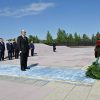
Kazakhstan’s Path From Tragedy to Tolerance: Interfaith Dialogue, Peace, and Disarmament
On the windswept steppe west of Astana, President Kassym-Jomart Tokayev led a solemn ceremony this week to mark Kazakhstan’s Day of Remembrance for the Victims of Political Repressions and Famine—an annual reflection on one of the nation’s darkest chapters.
Rethinking Digital Platform Design: A Systems Approach
A better internet that supports democracy rather than undermines it is possible. In 2025, we stand at a crossroads in the digital era. Our platforms have become the new public squares, but rather than fostering democracy and dignity, many are optimized for manipulation, division, and profit. The Council on Technology and Social Cohesion's "Blueprint on Prosocial Tech Design Governance" offers a systems-level response to this crisis.

Noor Mukadam Got Justice, But Why Does Pakistan’s Legal System Fail Its Women?
“It’s brought me some closure,” said Shafaq Zaidi, a school friend of Noor Mukadam, reacting to the Supreme Court’s May 20 verdict upholding both the life sentence and death penalty for Noor’s killer, Zahir Jaffer.
In a Changing World, Protecting Nature is Protecting Our Future
In a world marked by armed conflict, threats to democracy, technological disruptions, and geopolitical tensions, many people are asking: Why should we prioritize environmental crises when there are other, more visible or perceived as more urgent challenges?
Truce on the Line: After the War Stops, the Suffering Continues
In the war-worn borderlands of Jammu and Kashmir, the silence that followed the May 10 ceasefire between India and Pakistan is not the comforting kind—It is uneasy.« Previous Page — Next Page »


Want to keep up with the latest news and views from the Global South? Sign up for IPS Daily News Report for daily emails with our top stories about international development, climate change, gender and more. (Formerly IPS TerraViva since 1993).

The Week with IPS

NEXT STOP - SDGs
Tracking global progress towards a sustainable world
Tracking global progress towards a sustainable world
