Languages
Tuesday, August 11, 2026



News and Views from the Global South


In Harmony with Nature: A Dryland Perspective on Development and Biodiversity
Nowhere is this more apparent than in the world’s drylands. Covering 41% of the Earth’s land surface, these regions are home to over two billion people and support 50% of the world’s livestock and 44% of its cultivated systems (UNCCD). Far from being marginal, drylands are central to global food security, biodiversity, and climate resilience.
The Largest Multi-Billion Dollar Deal in US History– & a Potential 51st American State?
When US President Donald Trump offered to declare neighboring Canada as America’s 51st state, the Canadians vehemently rejected the proposal. “We don’t want to be part of America,” was the rallying cry. And the short-lived offer was shot down in flames.
How Computational Biology Is Zoning in on the Future of Agriculture
When pioneering agronomist and father of the “Green Revolution” Norman Borlaug set out to breed a disease-resistant, high-yielding variety of wheat, he spent years laboriously planting and pollinating different specimens by hand. He manually catalogued every outcome until he landed on the variety that would transform farming and avert famine. The result was even greater than expected: it is estimated that he saved more than a billion people worldwide from starvation.
Global Push to Protect Oceans Gains Momentum Ahead of UN Conference in Nice
As delegates prepare for the third United Nations Ocean Conference (UNOC) in Nice, France, momentum is building around ocean governance, finance for marine conservation, and an urgent shift toward a regenerative blue economy. Ocean advocates say the world is at a critical juncture—and the next few weeks could shape the future of marine protection for decades.
The #ChurchToo Movement: A Wake-Up Call for the Modern Church
I was researching the role of the church in addressing contemporary issues such as gender-based violence, climate change, and social justice when I came across the #ChurchToo movement—and I got really excited. Not because the stories were easy to read (they weren’t), but because this movement was a bold, necessary conversation that faith communities could no longer ignore.
Using AI as an Ally: What the latest UNDP Human Development Report Means for Latin America, Caribbean
The United Nations Development Programme’s 2025 Human Development Report (HDR) says crises such as the Covid-19 pandemic have contributed to ‘the flatlining of decades of progress in the Human Development Index,’ with Latin America and the Caribbean facing unique challenges and opportunities.
HeForShe Campaign Tackles ‘Sex for Fish’ Abuse Malawi’s Lakeshore Communities
Women in fishing communities in Malawi's lakeshore districts of Nkhotakota and Mangochi are frequently targets of sexual exploitation for fish, a practice commonly known as 'sex for fish.' A recent report by the Malawi Human Rights Commission (MHRC) has unearthed disturbing accounts of women being coerced into transactional sex to access fish from male boat owners, exposing a widespread violation of their rights.
A New Pope at a Pivotal Moment: Civil Society’s Hopes for Leo XIV
The new pope, the latest in a line dating back almost 2,000 years, was quickly subjected to a very modern phenomenon: no sooner had Pope Leo XIV delivered his first address than people started trawling his social media history for clues about his views. In the context of an ongoing culture war, the fact that far-right grievance entrepreneurs were quick to decry the new pope as ‘woke’ seemed reason enough for progressives to welcome him. But for civil society and the global human rights community, it’s how Leo acts that matters.
The True Cost of America’s Retreat: How USAID Cuts Threaten Millions of Lives
In January 2025, President Trump signed an executive order that upended humanitarian efforts globally, leaving millions of vulnerable people without lifesaving services. The administration's decision to slash American international aid by 83% is creating daily tragedies in the world's most fragile regions.
UN Reform – Once Again?
The UN is going through another exercise in reforming itself under immense pressure from the US, its main funder. This time US President Donald Trump has expressed himself much more forcefully and seems determined to pare down US contributions and demand further curtailing of UN expenses, while some other donors, reluctant to show their own hands, are quietly cheering on the US.
The Country with the Lowest Fertility?
Many countries around the world have a fertility rate below the replacement level of 2.1 births per woman, but one country stands out with its exceptionally low fertility rate.
Agenda for Nuclear Non-Proliferation Review Conference Still Unclear
The Treaty on the Non-Proliferation of Nuclear Weapons must not be allowed to collapse under the weight of geopolitical cynicism, the preparatory committee at the UN heard.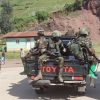
Civilians Face Humanitarian Disaster in Great Lakes, Horn of Africa Conflicts
Political instability and conflicts in the Great Lakes, the Horn of Africa, Sudan, and South Sudan have led to massive displacements and civilian suffering, and because the whole region is in crisis, the civilian population has few places to find refuge.
UN Ocean Conference Must Inspire Global Ambition
The United Nations Ocean Conference (UNOC) takes place every three years and in just a few weeks, the international community will gather in Nice, France, at a time when the International Science Council has called for the world to address the new reality of a disrupted Earth system.
Fostering Dialogue for Disarmament Ahead of Non-Proliferation of Nuclear Weapons Review Conference
The argument for nuclear disarmament is perhaps more relevant than it has been since the end of World War II, especially in a world where there is a growing gulf between nuclear states and between nuclear states and those who don't have the weapons.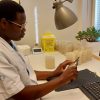
Explainer: How Germs Outsmart Antimicrobials and Why It’s Making Us Sicker
More people are dying from once treatable infections because the medicines we rely on are no longer working as they should. The culprit? A growing health threat called antimicrobial resistance (AMR).
A Revolution in the Working Culture at the UN
How would the UN80 Initiative, designed to mark the 80th Anniversary of the United Nations, turned out to be, if Kamala Harris had won the American presidential election in November last year?
Will Europe Wage Peace?
With President Trump’s efforts to end the Ukraine war, Europeans are now mainly responsible for prolonging it. Despite lame protestations of peace, Europe seems committed to fighting ‘to the last Ukrainian’.
‘Our Legal Challenge of the Funding Freeze Is Testing the Judiciary’s Ability to Check Executive Power’
CIVICUS speaks with Eric Bjornlund, President and CEO of Democracy International, about the impacts of the US foreign aid freeze and the resulting legal challenges the Trump administration is facing. Democracy International is a global civil society organisation (CSO) that works for a more peaceful and democratic world.
Seafood Without Transparency is a Recipe for Disaster
Seafood is a staple in my house – fish tacos, paella, sushi. But no matter how good it tastes, I can’t help but wonder: was my fish caught responsibly? Or did something go horribly wrong before it ever reached my plate?
Explainer: What Rural Communities in Tanzania Need to Know about Carbon Trading and Land Rights
As global demand for carbon credits rises, Tanzania has become a magnet for carbon offset projects. From Loliondo in Arusha to Kiteto in Manyara, foreign firms and conservation groups are looking for land to capture carbon and sell credits to polluting industries in the Global North. The growing interest in carbon trading has sparked hope, confusion, and concern— putting millions of hectares of village land and the livelihoods of people who depend on it at risk.« Previous Page — Next Page »


Want to keep up with the latest news and views from the Global South? Sign up for IPS Daily News Report for daily emails with our top stories about international development, climate change, gender and more. (Formerly IPS TerraViva since 1993).

The Week with IPS

NEXT STOP - SDGs
Tracking global progress towards a sustainable world
Tracking global progress towards a sustainable world
