
Wednesday, November 11, 2026



News and Views from the Global South
IPS UN: Inside the Glasshouse

Achieving Global Consensus on How to Slow Down Loss of Land
Expectations are high, perhaps too high, as the 14th Conference of the Parties (CoP 14) of the United Nations Convention to Combat Desertification (UNCCD), now into the third day of its two-week session, is being held outside the smog-filled Indian capital of New Delhi.
U.N. Criticised for Link-up with Saudi Prince MBS
The United Nations is under growing pressure to scrap an event it is co-hosting with the private foundation of Saudi Arabia’s crown prince Mohammad bin Salman, who has been linked to the killing of journalist Jamal Khashoggi.
They Call it Multistakeholderism. Where Does That Leave the UN?
Global governance is slipping away from the United Nations. Whether it is in managing the Internet, where the UN’s governing structure offers only an advisory role for governments; or climate change, where the most exciting actions are now corporate-led partnerships outside the UN Framework Convention on Climate Change; or the Gates Foundation-sponsored Gavi, The Vaccine Alliance, which is in a tug of war with the World Health Assembly on who sets health policy in developing countries, the institutional basis for global decision-making is changing.
Is the UN’s High Seas Treaty Heading Towards Troubled Waters?
The world’s high seas, which extend beyond 200 nautical miles, are deemed “international waters” to be shared globally-- but they remain largely ungoverned.
UNICEF’s Goodwill Envoy a Messenger of ill-Will, Complain Critics
When two-time Wimbledon tennis champion Boris Becker, a UNICEF goodwill ambassador, refused to make a commitment not to play in South Africa, a country blacklisted for its apartheid policies, the UN children’s agency stripped him of the prestigious title, back in October 1987.
Close the Door on Nuclear Testing
Everybody knows that nuclear weapons have been used twice in wartime and with terrible consequences. Often overlooked, however, is the large-scale, postwar use of nuclear weapons:
Sudan Transition an “Opportunity” to End Darfur Crisis
Sudan’s transition to civilian rule offers a chance to end the ethnic violence that plagues the western province of Darfur and end a peacekeeping mission there, a top United Nations official said Monday.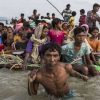
After Two Years of Horrors in Burma, the U.S. Is Still Doing Too Little, Too Late
Monsoon season is currently wreaking havoc on the more than 911,000 Rohingya refugees displaced from their homeland in Burma (Myanmar) to the ramshackle camps of Cox’s Bazar, Bangladesh.
Little Hope of Justice for Rohingya, Two Years after Exodus
Two years after the start of an exodus of Rohingya civilians from genocide-like attacks in Myanmar, members of the mainly Muslim minority have little hope of securing justice, rights or returning to their homes, according to the United Nations and aid groups.
G7 Leaders Urged to Promote Gender Empowerment
As leaders of the seven major industrialised nations (G7) meet in the coastal seatown of Biarritz in the south west of France, one of the world’s leading women’s organisations is calling for the protection and advancement of women worldwide.
Why Can’t Dynamic Asia-Pacific Beat Poverty?
Asia and the Pacific is lauded globally for its rapid economic growth over recent decades and has lifted 1.1 billion people out of extreme poverty since 1990. Nevertheless, the region continues to have the largest number of poor people in the world.
Southern African Development Community Loses Billions in Illicit Outflows
The Southern African Development Community (SADC), which comprise 16 member states, loses about 8.8 billion dollars in trade-related illicit outflows and about 21.1 billion dollars in external government debt payments annually, according to a new report released here.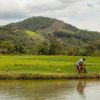
Solving the Climate Crisis is Beyond Governments
Throughout my ten years working in international development and climate policy, I’ve mostly heard colleagues talk about the private sector as if it was this intangible, multifaceted medusa with its own business lingo that is impossible for us policy experts to tackle: “the ‘private sector’ needs a return on investment in order to act on climate” or “the ‘private sector' does not have the right incentives, but we need ‘private’ capital to solve this crisis”
UN Aid Boss Promises “Punishment” for Misconduct in Yemen and Palestine
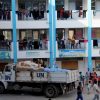
A senior United Nations official has promised a thorough investigation into allegations of misconduct in field operations in Yemen and the occupied Palestinian territories, saying that those responsible would be punished.
Addressing Gender & Protection Issues During Humanitarian Emergencies
Vanuatu is among the world’s ‘most at-risk’ countries to natural disasters. In the last 12 months alone, the country has faced multiple volcanic eruptions, earthquakes, cyclone and tsunami.
The Role of Women’s Organisations in Crisis-Settings
To mark World Humanitarian Day, we celebrate the overlooked women leaders who are first responders, unwavering advocates, and powerful change-makers in humanitarian emergencies.
Russia and Syria in the Spotlight for Latest Idlib Medic Deaths
Medical aid groups have again blasted Russian and Syrian government forces this week for an ever-growing death toll among doctors, paramedics and other health workers in military strikes in northwestern Syria.
A Key Role for 1.8 Billion Youth in UN’s 2030 Development Agenda
The UN Population Fund (UNFPA) is convinced that the world’s 1.8 billion adolescents and youth-- a quarter of the global population—have a key role to play in helping implement the UN’s 2030 Development Agenda.
Establishing a Science & Technology Park is No Walk in the Park
The success of Silicon Valley has been inspirational for many countries worldwide wishing to establish science and technology parks. In Asia, successful science and technology parks can be found in many economies, including China, Japan and Thailand.

Rules of War Widely Flouted, 70 years on: Red Cross
World governments are not doing enough to stop armed groups from committing mass rape, torture and other war crimes, the head of the Red Cross aid group head Peter Maurer said on Tuesday.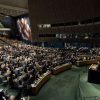
Will Sanctions Undermine 1947 US Treaty with UN?
When Yassir Arafat was denied a US visa to visit New York to address the United Nations back in 1988, the General Assembly defied the United States by temporarily moving the UN’s highest policy making body to Geneva-- perhaps for the first time in UN history-- providing a less-hostile political environment for the leader of the Palestine Liberation Organisation (PLO).« Previous Page — Next Page »





It was dubbed "The Glass House" by U.S. ambassador James Wadsworth in 1966. Half a century later, the United Nations has gradually expanded its role as agent of peace and protector of the world's vulnerable populations, while simultaneously facing internal pressures to become more inclusive, increase transparency and maintain legitimacy in the post-Cold War political and economic order. Highlighting the local impacts of global policies on economic development, environment, health and human rights, IPS's coverage goes beyond the edicts of the Security Council to illuminate the power struggles, successes and shortcomings of the 193-member institution as it grapples with crises like climate change, armed conflict, poverty and HIV/AIDS.

The Week with IPS
