
Friday, July 24, 2026



News and Views from the Global South
Women in Politics

SIERRA LEONE: Woman Breaking Traditional Walls in Chieftaincy Elections
A war is raging in the eastern part of the country, once the centre stage for battles during the 10-year civil war and the place where "blood diamonds" were once mined. But this time the war is not for diamonds, but about whether a woman has the right to stand for paramount chief in the local chieftaincy election.POLITICS-AFRICA: Seeking a Democratic South Sudan
The atmosphere is heavily charged with political tensions, alliances are already in the offing, expectations are high and the pressure for the country to achieve a successful transition from an interim government to a democratically elected one is immense.ETHIOPIA: New Election Code Sparks Furore
Opposition parties are troubled by what they say is government’s strategy to keep them out of the general elections in May 2010.
POLITICS-NAMIBIA: SWAPO Wins
The ruling South West Africa People's Organisation party (SWAPO) has won legislative elections in Namibia, with voters also giving incumbent President Hifikepunye Pohamba a second five-year term in office.
POLITICS-NAMIBIA: Born Frees Make their Mark
"It was like writing my first exam. I was nervous and didn’t want to make a mistake. I must have checked the ballot 10 times."
NAMIBIA: Waiting at the Polls
The Electoral Commission of Namibia (ECN) has again suspended the observer status of a human rights watchdog it accuses of lying about mistakes on the voter’s roll.
POLITICS-NAMIBIA: SWAPO’s Dominance Challenged
"Man RDP!" sighs Martha Hamukoto, sitting on the steps of a Windhoek office block. She is lamenting the breakaway faction, the Rally for Democracy and Progress (RDP).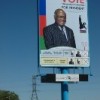
POLITICS-NAMIBIA: ‘Parties Totally Don’t Care About Women’s Rights’
Gender activists foresee a drop in female parliamentarians after Namibia’s general and presidential elections on November 27 and 28. It’s a trend that jeopardises the region’s goal of 50 percent female representation in politics by 2015.POLITICS-BOTSWANA: I Lost the Election, But I Am a Winner
When Kgomotso Mogami threw her name into the hat to contest the Gaborone Central parliamentary seat it was easy for many people to write her off.SOUTH SUDAN: Media Give Us a Fair Deal – Women
The guns have gone silent – except for sporadic conflict in parts of the vast South Sudan region, such as the Eastern Equatoria State. It may not be the absolute end of the conflict in the region, but it is a reason for renewed hope.POLITICS: Malawians Demand Local Councils
In Malawi, local government elections are as rare and endangered as the country’s black rhinoceros.
POLITICS-NAMIBIA: The Struggle Does So Not Continue
They are called the "born frees", the children of Namibia’s Independence, and they will vote for the first time this month. Struggle credentials mean zip to them, and they have a serious beef with politicians.
SWAZILAND: Help Sex Workers – Senator
It is one of the world's oldest professions, dating so far back that it is even mentioned in the Bible. But in the deeply cultural and religious country of Swaziland, Senator Thuli Msane stirred a hornet's nest when she publicly challenged a new strict bill opposing prostitution.POLITICS-MOZAMBIQUE: Victory for Frelimo Amid Claims of Election Fraud
The incumbent, President Armando Guebuza, has won the Mozambican 2009 elections in a landslide, obtaining three quarters of the votes, according to official results.ZAMBIA: Give Us Our Constitution
Pressure is mounting for a new constitution that is inclusive of all citizens' views as the ongoing delays by the body granted to draft it still continues.
AFRICA: Counting on Media for Good Governance
While campaigning in the last election, Margaret Roka Mauwa, Member of the Malawian Parliament, did not promise her voters that when she won she would buy them coffins.
SOUTH SUDAN: Complicating the Vote for Women
In April 2010, the people of South Sudan will vote in a milestone general election, and for the first time, South Sudanese women will be able to participate.
Q&A: Reality Fell Upon Us: Women's Voices Must Be Heard
Fifty-six percent of Rwanda's parliamentarians are women, a manifestation of the active role women have taken in rebuilding the country since the 1994 genocide.EGYPT: Disputes Rise Over Quotas for Women MPs
Disputes have arisen over new legislation setting a quota for female representatives in parliament. Spokesmen for the ruling National Democratic Party (NDP) of President Hosni Mubarak describe the quotas as a milestone for women's rights, but some critics say the move threatens to create more problems than it solves.POLITICS-BOTSWANA: Parties Block Women Candidates for Upcoming Elections
As Botswana prepares for general elections in October, gender activists are protesting against the lack of female parliamentary candidates.
POLITICS-SOUTH SUDAN: Women Ready To Take Their Place
When the women of South Sudan welcomed the signing of the Comprehensive Peace Agreement (CPA) in 2005, they were cognizant of the fact that true democracy will be realised only when their human rights are realised.« Previous Page — Next Page »


In societies throughout the world, women’s participation in political and leadership roles is limited. Underrepresented as voters and position holders, women are restricted at local and at global levels. A variety of obstacles bar women’s political participation. Reduced access to education in many countries, as well as weaker political connections make it more difficult for women to enter the political stage. In addition, there are many discriminatory laws that severely reduce the opportunity for women to gain leadership positions. As has been seen, there are many individuals who have overcome these obstacles with great success. There have been great strides to increase women’s political participation. In the last 20 years, the percentage of women in parliamentary positions has nearly doubled. This promising, albeit slow progress, is necessary to empower women and reduce gender inequality. These articles look at various aspects of women’s participation politics.

The Week with IPS

Tracking global progress towards a sustainable world
