Languages
Friday, September 25, 2026



News and Views from the Global South
Women's Health

Public Flogging in Afghanistan Strips Women of Dignity
In the bone-chilling Afghanistan winter, a woman was dragged into a public square early this year and publicly lashed for a crime she may or not have committed. According to the ruling handed by the Taliban Supreme Court, the woman and the male culprit who was jointly accused of extra-marital affair received 30 lashes each and a one-year suspended prison sentence. The sentence was carried out in the presence of several local officials and residents in a province whose name is left out to protect the victim.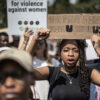
International Women’s Day 2026: A Resistance Stronger than the Backlash
Consider what International Women’s Day looked like a few years ago, and what it looks like now: the same date, the same global moment of reflection, but a vastly changed global landscape. Gender rights are facing the most coordinated and wide-ranging attack in decades. Anti-rights forces are dismantling protections secured after generations of struggle, destroying infrastructure built to address gender-based violence and realise reproductive rights and rewriting legal frameworks to roll back rights, with a specific focus on excluding transgender people. This is the result of a deliberate, carefully crafted, handsomely funded and globally coordinated strategy.
Extreme Heat Undermines Decent Work in North Eastern Kenya
By 9 a.m. on a Wednesday, Hawa Hussein Farah is already watching the temperature climb. Awake since 6 a.m., she has prepared her three children for school before walking them to class and heading to Suuq Mugdi, an open-air market in Garissa town, to buy the fruit she will sell.
Gaza: Physicians Call For Unimpeded Aid To Restore Reproductive Healthcare
Israel must lift all restrictions on medicine, food and aid coming into Gaza, rights groups have demanded, as two reports released today (Jan 14) document how maternal and reproductive healthcare have been all but destroyed in the country.
United States Withdrawal From Organizations Triggers Global Alarm
President Donald Trump's executive order to stop United States support for 66 international organizations, including 31 United Nations (UN) groups, has faced strong opposition from these organizations, the global community, humanitarian experts, and climate advocates, who are concerned about the negative effects on global cooperation, sustainable development, and international peace and security.
Maternal Deaths Spike in War-Torn Ukraine
“It was an emergency caesarean section when the life of the pregnant woman was at risk. We did the operation with just flashlights and no water, and against a backdrop of constant explosions,” says Dr Oleksandr Zhelezniakov, Director of the Obstetrics Department at Kharkiv Regional Clinical Hospital, in eastern Ukraine.
Tanzania’s Pandemic Fund Ushers in a New Era of Health Preparedness
When COVID-19 hit Tanzania in 2020, Alfred Kisena’s life was torn apart. The 51-year-old teacher still remembers the night he learned that his wife, Maria, had succumbed to the virus at a hospital in Dar es Salaam. He wasn’t allowed to see her in her final moments.
Tackling the Hidden Toll of Breast Cancer in the Pacific Islands
The burden of breast cancer, the most common cancer among women, is global, and the projected increase in cases in the coming decades will affect women in high- and low-income countries in every region.
XDR-TB Drug Trial Participants Continue to Celebrate its Success
When Tsholofelo Msimango joined a small trial of a new drug regimen for tuberculosis (TB) treatment a decade ago, she had no idea whether the medicines she was about to be given would help her.
Parliamentarians Seek Solutions to Protect Children from Digital Abuse
Vulnerable children are being targeted online faster than parliamentarians and law enforcers can act, a conference convened by the Asian Population and Development Association (APDA) heard. Yet, with international cooperation and sharing of ideas, lawmakers believe the scourge of online abuse can be addressed.
Beijing+30: A Culmination of International, Intergenerational Dialogue
Thirty years since the UN Fourth World Conference on Women in Beijing, the resolve that defined and united the world toward a global agenda for gender equality make it just as relevant in 2025.
African Leaders Commit to Climate-Health Nexus and Adaptation Solutions
At the Second Africa Climate Summit (ACS2) held in Addis Ababa, Ethiopia, from 8-10 September, African leaders committed to the climate and health nexus and their desire to advance climate-resilient and adaptive health systems on the continent.
How Stigma Undermines Contraceptive Use Among Women in Sierra Leone
Eunice Dumbuya, a young activist in Freetown, Sierra Leone, still remembers being called promiscuous after getting a contraceptive implant a few years ago. She knew the risks of an unplanned pregnancy in her conservative country, so she made a choice.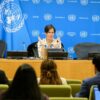
New Report Investigates Violence Against Women and Girls Through Surrogacy, Sparks Global Dialogue
A United Nations report calling for the global abolition of surrogacy has sparked intense debate among experts, with critics arguing that blanket bans could harm the very women the policy aims to protect.
Why Collective Healing is Central to Peacebuilding
 Wars and oppression leave behind not just rubble and graves. They leave behind invisible wounds, profound trauma carried by survivors. And most often, women carry the largest burden. They are targeted not only because of their gender, but because surviving and leading threaten structures based on patriarchy and domination.

Experts Launch a Climate and Health Curriculum for African Negotiators Ahead of COP30
Despite climate change being a health risk multiplier, health is often underrepresented in climate negotiation processes. Experts attribute this to a lack of funding by the African governments and a lack of capacity building among climate negotiators.
The Right to Care: A Feminist Legal Victory That Could Change the Americas
On 7 August, the Inter-American Court of Human Rights delivered a groundbreaking decision that could transform women’s lives across the Americas. For the first time in international law, an international tribunal recognised care as an autonomous human right. Advisory Opinion 31/25, issued in response to a request from Argentina, elevates care – long invisible and relegated to the private sphere – to the level of a universal enforceable entitlement.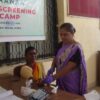
Hypertension and Diabetes Grows Among India’s Poor Communities
Generally thought to be diseases of the wealthier classes, non-communicable diseases (NCDs) like hypertension and diabetes are on the rise among India’s underprivileged working classes in semi-urban and rural sprawls.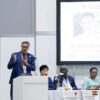
Aid Funding Crisis Means Parliamentarians’ Visionary Leadership Even More Crucial
As funding for sexual and reproductive health rights was on a “cliff edge,” parliamentarians now needed to play a “visionary” leadership role because “financing strong, resilient health systems for all their people rests with governments,” said Dr. Alvaro Bermejo, Director General of the International Planned Parenthood Federation (IPPF).
Sexual Health Rights: Contradictions in East African Laws, Policies
Sarah Namukisa nearly missed her final year exams earlier this year. She was subjected to a mandatory pregnancy test—the 25-year-old student at the Medical Laboratory Training School in Jinja was then expelled because she was pregnant.
The Hidden Backbone of Maternal Health: Asia’s Midwifery Gap
Asia-Pacific’s midwives are a healthcare lifeline capable of delivering nearly 90 percent of essential maternal and newborn services. Yet the region grapples with severe shortages, underinvestment, and systemic neglect.« Previous Page — Next Page »


Worldwide, women’s health is a serious issue. The result of a wide diversity of factors, most notably insufficient access to education, women’s health issues must be addressed. Without access to proper schooling, many girls grow up without the necessary understanding of reproductive health. Due to this, reproductive issues and sexually transmitted infections plague women in developing countries. Women struggle to battle infections such as HIV. The lack of relevant services, coupled with the lack of women’s rights pertaining to their own health, are some of the serious issues that these stories seek to explain.

The Week with IPS

NEXT STOP - SDGs
Tracking global progress towards a sustainable world
Tracking global progress towards a sustainable world
