Languages
Thursday, October 8, 2026



News and Views from the Global South
Active Citizens
MALAWI: Village Chief Leads Fight For Maternal Health
In Ntcheu, a rural district in central Malawi, villagers have taken the fight against the country's high maternal mortality rate into their own hands. They have almost eradicated maternal deaths in the area by urging pregnant women to give birth in hospitals, under medical supervision.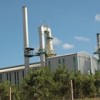
MOZAMBIQUE: BHP Billiton Plans Six Month Bypass of Smelter Smokestack Scrubbers
Civil society groups are challenging a six-month authorisation granted aluminium giant BHP Billiton to emit potentially dangerous fumes from its Mozal smelter into the air without treating them first.MALAWI: Women Candidates Hard Hit by Election Postponement
News that Malawi’s November local government elections are to be postponed yet again has hit female candidates hard – and mostly in their pockets. And it could mean that the country will have less female candidates to vote for when they finally go to the polls.
ZAMBIA: Election Violence Could Mean Fewer Women Participants
There are growing fears that increasing numbers of women candidates and voters may not participate in the 2011 general elections because of an upsurge in election-related violence.MALAWI: Innovative Campaigning by Women Candidates
You will find Beauty Kasonda on her campaign trail at funerals, weddings, church functions or just about any local gathering in her community. Kasonda does not have the sort of funding her male counterparts have for campaigning in the country’s November 2010 elections but she is not letting that stop her.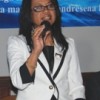
MADAGASCAR: Women Form Own Political Parties for Fair Representation
Brigitte Rasamoelina and Yvette Sylla are women with two different approaches to politics in Madagascar. One formed a political party, while the other decided to legalise her organisation as an association. But both women are considering running in Madagascar's November elections.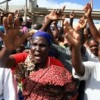
ZAMBIA: Calls for Political Parties to Field 50 Percent Female Candidates
With women having achieved little in terms of representation in decision-making positions in Zambia, a national women’s lobby group is hoping to change this in the 2011 general elections.
INDIAN OCEAN ISLANDS: Women Join Forces for Political Equality
"Instead of moaning all the time, why don’t you create your own (political) party?" some men asked Brigitte Rabemanantsoa Rasamoelina, a female politician from Madagascar. She accepted the challenge and in February formed Ampela Mano Politika, a political party which started with only 22 female members and now has over 5,000 female members ... and 10 men.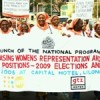
MALAWI: Women Candidates Desperate to Finance Freebies for Voters
Mable Malinda wants to contest the local government elections but the independent candidate who is using her life savings to fund her campaign only has 500 dollars left in her bank account. She has already spent three times as much buying handouts for voters – an unofficial requirement when contesting elections in Malawi.MADAGASCAR: Calls for Equality to be Written into New Constitution
Madagascan female activists are asking that the right of women to participate directly in politics be included in a new draft of the country’s Constitution, so that there can be 30 percent of female politicians in parliament by 2012 and 50 percent by 2015.ZAMBIA: Need to Mainstream Gender Equality into all Policies
Despite the adoption almost a decade ago of a national gender policy that aims to ensure fair participation of men and women in the development process, most of the Zambian government’s policies still remain gender blind, say civil society and women's rights associations.
KENYA: Rural Parents Prevent HIV Transmission to their Children
When Samuel Mwangi’s one-year-old HIV-positive son died five years ago, he thought the death of his child also meant the death of his family’s legacy. "I wept. And to the bottom of my heart, I knew that that was the end of my generation," said HIV-positive Mwangi.
ZIMBABWE: A Chance for Women’s Voices to be Heard?
As Zimbabwe embarks on writing a new constitution with the countrywide collection of public submissions starting on Jun. 23, not all women are upbeat about the process.
ANGOLA: Changing More than Policies
She may have been little-known in political circles until now, but by putting herself forward as the first female independent presidential candidate, Luisete Macedo Araújo (50) has thrust herself into the limelight.
AFRICA: Renewing the Promise of Education for All
The World Cup is wreaking havoc with a key millennium development goal in South Africa: as the football tournament hit its stride, not a single child across the nation attended school.MALAWI: Gay Couple Released After Presidential Pardon
Five months and a day after their arrest, the gay Malawian couple who dared to publicly declare their union with a traditional engagement party were pardoned by the president and released without conditions.Malawi Gays Had No Chance
Rejecting the argument that the arrest and trial of Steven Monjeza and Tiwonge Chimbalanga amounted to a violation of their rights to freedom of conscience and expression as protected by Malawi's constitution, Blantyre chief resident magistrate Nyakwawa Usiwa Usiwa sentenced the two men to 14 years hard labour for "unnatural acts" and "gross indecency".
Sudan Election Results – Another Step Along Uncertain Road
A convoy of Omar al-Bashir supporters, hooting and chanting party slogans as it drove through Khartoum, drew only disinterested stares en route to a celebration at party headquarters on Apr. 26
SUDAN: Election Results Expected Soon
Poor access to telephone networks and lack of roads in some areas of South Sudan is delaying the submission of voting results to the election commission.SIERRA LEONE: Anti-Corruption Campaign Nabs Top Officials
The crusade against corruption seems to be gathering momentum in this West African country, with the arrest and prosecution of senior government officials, including cabinet ministers.UGANDA: Government Pushes Ahead With Repressive Media Law
The proposed media law is a monster, says Dr George Lugalambi, chair of a coalition fighting to preserve press freedom in Uganda. Publishers and journalists would have to apply annually for a licence, which could be revoked at will in the interests of "national security, stability and unity," or if coverage was deemed to be "economic sabotage."« Previous Page — Next Page »





Active citizens are committed to social change because they know that it is achievable. Yet, for most Africans, a shift towards elected government in recent decades has yet to translate into an effective voice in decision-making. Now, the Strengthening Citizen Demand for Good Governance using evidence based approaches - funded by DFID's Governance and Transparency Fund - seeks to raise their voices. Through its partnership with the Overseas Development Institute (ODI) and CIVICUS,, IPS reporters across the continent will seek to define the extent and limits of state capability, government accountability and the responsiveness of leaders to the needs of citizens.

The Week with IPS

NEXT STOP - SDGs
Tracking global progress towards a sustainable world
Tracking global progress towards a sustainable world
