Languages
Monday, October 12, 2026



News and Views from the Global South
Projects
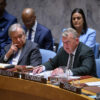
Consequences of Inaction: UN Security Council Pressed to Act Before Hunger Becomes Famine
Across the board, UN officials and humanitarian organizations urged the Security Council to act before the consequences of food insecurity and famines hit, during a high-level open debate on Tuesday, August 25. More than 80 representatives took part in Tuesday’s conversation on conflict-related food insecurity under the theme “Food under fire: the Security Council’s role in mitigating global and local food crises”.
The Indian Ocean Is Sounding the Alarm and Its Islands Are Among the First to Hear It
Across this vast ocean, the latest monitoring by Mercator Ocean International shows marine heatwave conditions ranging from moderate to severe. At the same time, the World Meteorological Organization expects a strong El Niño to intensify through August to October, with a positive Indian Ocean Dipole also likely to develop. These are not distant scientific signals. They are an urgent warning that the ocean system on which millions depend is under mounting stress.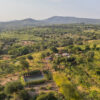
Grand Planetary Challenges Need a Grand Coalition to Solve Them
Several coalitions exist today to defend the territories in which people live and work. Global leaders have long understood the importance of shared responsibility for collective security and have invested significant time in establishing networks, partnerships and alliances. In 2025, global spending on defense reached a record $2.9 trillion.
GEF Proposes $140 Million Program to Strengthen Drought Resilience
For pastoralists in Arvaikheer — a village in Mongolia’s dry central plains — rain can determine whether there is enough grass for cattle to roam, whether waterholes are replenished and whether families make it through another dry season. But as climate change makes rainfall increasingly unpredictable, even a wet season may no longer provide water and pasture needed to sustain people and livestock.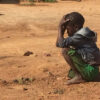
Western-Led Green Revolution Failing Africa
As AGRA turns 20, a new report exposes its worsening failure to double productivity and incomes and halve undernourishment in participating African nations as promised.
Hiroshima’s Question: Will We Continue to Live Under the Nuclear Shadow?
This year’s Hiroshima Peace Declaration did not begin with words of remembrance alone. It opened instead with what the declaration called “military invasions using nuclear weapons as tools of intimidation,” “imperious actions by major powers in violation of international law,” and the failure of the Nuclear Non-Proliferation Treaty, or NPT, Review Conference — for the third consecutive time — to adopt a final document.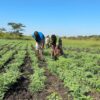
New Chickpea Variety to Drive Climate Resilience in Africa
New chickpea seed research and production have become the new frontier of climate resilience in southern Africa as farmers battle failing cereal production.
Accepting What It Cannot Control, CARICOM Focuses on What It Can
From wars that drive up fuel prices to supply chain disruptions, inflation and increasingly frequent climate disasters, Caribbean leaders say many of the forces shaping the region's future lie beyond their control.
U.S.-Saudi Nuclear Agreement Opens Door to Civilian Nuclear Cooperation, with One Major Caveat
On Wednesday, July 22, the U.S. Secretary of Energy, Chris Wright, and Saudi Arabia’s Minister of Energy, HRH Prince Abdulaziz bin Salman bin Abdulaziz signed a civilian nuclear cooperation agreement, best known as a 123 agreement, as well as an accompanying bilateral safeguards agreement, according to the U.S. Department of Energy and the Saudi Ministry of Energy.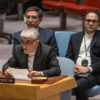
Food and Transport Costs through Strait of Hormuz Remain High, Burdening Vulnerable Economies
Prior to the latest round of hostilities between the United States and Iran, freight traffic had been increasing in the Strait of Hormuz, and negotiations were underway for a new agreement to fully restore trade through this channel.
Human-Caused Climate Change, Not El Niño, Drives Most Coral Bleaching Events – Research
Every morning, as the Indian Ocean retreats from the reef off Zanzibar's Jambiani village, Chiku Chande steps into the knee-deep lagoon carrying bundles of seaweed seedlings. Years of farming these waters have taught her about every channel and coral outcrop. But lately, the corals that once glowed in brown and gold have become chalky white.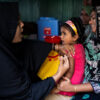
Children in Conflict Zones and Remote Areas Bear the Brunt of Global Immunization Gaps
Despite growing up and working in vastly different geographic regions and environments — one shaped by decades of armed conflict and political instability, and the other by remote, hard-to-reach areas — both Sagal and Johao encounter children daily who have never been vaccinated. Sagal and Johao are members of UNICEF’s Global Youth Health Advisory Group, where they advance children’s health by shaping UNICEF’s strategies, policies, and campaigns, while working directly in their own countries to connect community realities to global conversations about children's health.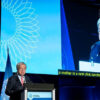
Global AI Governance Cannot Wait As the Digital Divide Widens
Throughout July 2026, various United Nations (UN) bodies and global experts have underscored the need for increased comprehensive artificial intelligence (AI) governance. Although AI yields significant potential gains for global development, persistent structural barriers continue to impede equitable access and deepen the digital divide.
From the Nuclear Age to the Age of Artificial Intelligence: Can Humanity Build a New Architecture for Peace?
More than eight decades after the atomic bombings of Hiroshima and Nagasaki ushered humanity into the nuclear age, the world is confronting another technological revolution whose consequences extend far beyond science and industry.
Why Pastoral Production Requires Regional Coordination, Harmonised Policy
At the 64th sessions of the Subsidiary Bodies (SB64) under the UNFCCC in Bonn, Germany, the Local Communities and Indigenous Peoples Platform (LCIPP) underscored the importance of ethically and equitably incorporating indigenous values and knowledge and local knowledge systems such as pastoralism into climate policies and actions ahead of the 31st Conference of Parties on climate change (COP31).
Remember Your Humanity
Eighty years since the dawn of the nuclear age, which began with the first nuclear test in New Mexico, USA, and with the tragic atomic bombings of Hiroshima and Nagasaki, humanity faces a deep existential crisis. This crisis is much more unstable and unpredictable than the gravest Cold War confrontations. In 1955, when there were only three states with nuclear weapons and the first thermonuclear weapon was being developed, the Russell-Einstein Manifesto posed a profound question: “Shall we put an end to the human race; or shall mankind renounce war?” Today, with 9 states possessing nuclear weapons and several thousand thermonuclear devices, this question becomes an ultimate choice.
CARICOM Leaders Gather in Saint Lucia as Caribbean Confronts Mounting Global, Regional Challenges
Caribbean leaders are meeting in Saint Lucia for their annual summit, confronting a convergence of global and regional challenges ranging from rising living costs and climate change to crime, food security and geopolitical tensions.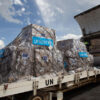
Ebola Outbreak Could Cost Africa $3.6 Billion and Threaten Nearly One Million Livelihoods
A new assessment from the United Nations Development Programme (UNDP) warns that the Ebola outbreak could cost Africa USD 3.6 billion, push 985,000 people into poverty, and put 300,000 jobs at risk.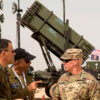
When an Ally Becomes a Liability
For a generation, no foreign leader bet more heavily on a single American president than Benjamin Netanyahu bet on Donald Trump. Trump moved the US embassy to Jerusalem, tore up the 2015 nuclear accord with Iran, recognized Israeli sovereignty over the Golan Heights, and in February 2026 joined Israel in the opening strikes of a war against Iran that Netanyahu had spent three decades urging Washington to wage.
Understanding an Interconnected World
When Roberto Savio begins talking about The Global Citizen Handbook, he does not begin with the book itself. He begins with today’s young people.
Universities Join Hands to Enhance Agroforestry Research for Mitigating Climate Change
A team of universities, led by Addis Ababa University, has joined forces to implement a four-year Intra-Africa academic mobility project aimed at strengthening agroforestry research and education for climate change mitigation.« Previous Page — Next Page »





The Week with IPS

NEXT STOP - SDGs
Tracking global progress towards a sustainable world
Tracking global progress towards a sustainable world
