Languages
Thursday, October 22, 2026



News and Views from the Global South
Small Island Developing States

As Forests Felled Wood Shortage Hits Villagers in Zimbabwe
Linet Makwera (28) has a baby strapped on her back as she totters barefoot, picking tiny pieces of wood on both sides of a dusty and narrow road, peering fearfully at people passing by along the road in Chimanimani’s Mutambara area in Gonzoma village located in Zimbabwe’s Manicaland Province, east of the country.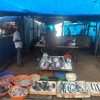
Voices from the Margins: Small-Scale Fishers Demand Rights, Recognition at COP16
Small-scale fishers play a fundamental role in feeding people—they use sustainable methods of catching and processing fish products and are a significant force in the employment and livelihoods of millions of people internationally—yet, until now, they have been excluded from climate and biodiversity conferences.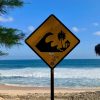
Navigating the Waves: Strengthening Tsunami Preparedness in a Changing Climate
This year’s World Tsunami Awareness Day presents a moment of reflection 20 years on from the catastrophic Indian Ocean Tsunami in 2004. The tsunami resulted in 225,000 fatalities across 14 countries and emphasized the urgent need for effective tsunami preparedness, especially in the face of growing climate change challenges.
A Pact for the World’s Poorest
Last month, world leaders gathered at the time of the UN General Assembly in New York and agreed on a pioneering Pact for the Future. This global accord has implications across a broad range of issues that affect every country. It offers much hope for the poorest and most vulnerable countries on the planet, known as Least Developed Countries (LDCs).
Building Water Security for the Next Generation in the Pacific Territories
The Pacific Islands region is both the frontline of the wrath that climate change is lashing on the environment and human life and the drive for innovation and solutions to stem the destruction and strengthen island environments for the future. The survival of life, even nations, in the Pacific depends on it.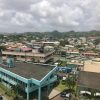
COP 29: High Stakes for Small Islands Fighting for Climate Finance
Small Island Developing States (SIDS) are experiencing the most severe impacts of climate change. When leaders of those islands met in Antigua and Barbuda in May, they let the world know that achieving climate justice hinges on comprehensive climate finance.
In Tonga the UN Secretary-General Declares a Global Climate Emergency
Three months ahead of the COP29 United Nations (UN) Climate Change Conference, the United Nations Secretary-General, António Guterres, has called for an emergency response from the international community as new data from the World Meteorological Organization (WMO) reveals a critical deterioration in the state of the climate.
In Samoa, Protecting the Ocean is Our Way of Life
In Samoa, we use a simple phrase to capture our way of life: Fa’asamoa. At the core of this concept is respect for others, devotion to family and a deep appreciation for the preservation of our natural resources. Importantly, Fa'asamoa has enabled us to sustainably fish our vibrant coral reefs for millennia, in a way that provides good health and prosperity for everyone in our communities.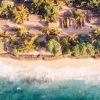
Pacific Community Photographic Winners Bring Impacts of Climate Change to Life
The Pacific Community’s photographic competition winners reflect the devastating climate impacts on beautiful and sensitive environments, documenting the most pressing issues the communities who live on the islands face today.
Partnering for Progress: Maldives’ Sustainable Ocean Initiatives
The ocean is our lifeline, covering 70 percent of the earth’s surface, it is the source of half of the oxygen we breathe, and it absorbs 26 percent of the carbon dioxide we produce. It is home to millions of marine species, contains 97 percent of all of the water on our planet and offers humankind immense resources.
Kanak Political Grievances Are Fed by Deep Inequality in New Caledonia
New Caledonia, a French overseas territory of about 290,000 people in the southwest Pacific, is facing a challenging recovery from weeks of civil unrest that erupted in mid-May, leaving an aftermath of destruction and political turmoil.
Germany’s Climate Envoy Talks Partnerships with SIDS; Urges G20 Nations to Step Up Emissions Reductions
Germany’s State Secretary and Special Envoy on International Climate Action, Jennifer Morgan, has emphasized the need for urgent climate action and called on G20 nations to do more to curb greenhouse gas emissions. The G20 comprises 19 developed and developing nations, the European Union and, since 2023, the African Union. It represents the world’s biggest economies, totaling 85 percent of the global GDP.
Peoples’ Climate Vote Shows Global Support for Stronger Climate Action
The global public opinion research on climate change reveals that 80 percent, or four out of five, of people globally want their governments to take stronger action to tackle the climate crisis.
Commonwealth Secretary-General Calls for Concrete Finance Commitments for Small Island Developing States
Commonwealth Secretary-General Baroness Patricia Scotland is calling for concrete commitments to climate finance that will acknowledge the multi-dimensional vulnerability faced by the world’s small island developing states (SIDS).
UN, International Partners Coordinate Aid to Papua New Guinea Landslide Disaster
As the communities of Enga province in Papua New Guinea contend with the landslide that has devastated the residents of Yambani, the United Nations and its partners have been active on the ground addressing the immediate humanitarian needs, according to agencies.Papua New Guinea’s prime minister, James Marape, says “extraordinary rainfall” and weather pattern changes were responsible for multiple disasters in the Pacific Island nation this year, including the landslide last Friday.
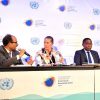
Uniting for Climate Action: UN, World Bank and UNDRR Leaders Push for Climate Finance, Justice and Nature-Based Solutions for SIDS
As leaders of Small Island Developing States (SIDS) meet for the 4th International Conference on SIDS in Antigua this week, top United Nations and World Bank officials are calling for urgent action to help SIDS tackle their unique challenges and plan for the next decade.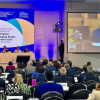
Small Island Nations Demand Urgent Global Action at SIDS4 Conference
“This year has been the hottest in history in practically every corner of the globe, foretelling severe impacts on our ecosystems and starkly underscoring the urgency of our predicament. We are gathered here not merely to reiterate our challenges, but to demand and enact solutions,” declared Antigua and Barbuda Prime Minister Gaston Brown at the opening of the Fourth International Conference on Small Island Developing States on May 27.« Previous Page





The Week with IPS

NEXT STOP - SDGs
Tracking global progress towards a sustainable world
Tracking global progress towards a sustainable world
