Languages
Friday, October 9, 2026



News and Views from the Global South

Ecobreves – BRAZIL : Mapping the Jaguar Genome
Deciphering the gene map of the jaguar (Panthera onca) is the goal of a new project being jointly undertaken by a number of Brazilian institutions.Ecobreves – HONDURAS: Satellite Monitoring of Natural Resources
A satellite monitoring system donated by the government of Taiwan will enable the creation of a database of natural resources in Honduras and the damages they could suffer as a result of disasters such as hurricanes or earthquakes.
Belo Monte Dam Hit by Friendly Fire
Those who made the final decision on the design of Brazil’s Belo Monte hydroelectric dam will face legal action in the future for the damages caused. This is the kind of warning one would expect from environmentalists, but in this case it comes from a surprising quarter: staunch supporters of hydropower.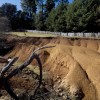
Action Needed Now to Prepare for Severe Drought
Mexico and Central America look like they are covered in dried blood on maps projecting future soil moisture conditions.Ecobreves – LATIN AMERICA: Decline in Renewable Energy
The generation of energy from renewable sources in Latin America dropped from 25 percent of total output in 1990 to 23 percent in 2009, according to the Economic Commission for Latin America and the Caribbean (ECLAC).Ecobreves – BRAZIL: Greenhouse Effect of Amazon Hydro Dams Revealed
The planned construction of 22 hydroelectric power plants in the Amazon region over the next eight years will cause the emission of 153 million tons of carbon dioxide into the atmosphere, a new study reveals.Ecobreves – LATIN AMERICA: Mega Cities in Search of Climate Leadership
Representatives of civil society, political organizations and the private sector from Buenos Aires, Mexico City and São Paulo, the three most populous cities in Latin America, met in the Argentine capital to promote leadership around the climate change issue.
Action Needed Now to Prepare for Severe Drought Conditions in the Future
Numerous scientific studies predict severe and permanent drought conditions in large parts of Mexico, the United States and Central America.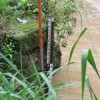
Colombian River Basin Passes the Test of El Niño and La Niña
Patricia Gómez, an engineer, is leading a training workshop for a group of 11 men at the fire station in Neiva, the capital of the department of Huila in southwest Colombia.
Argentina Faces the Dilemma of Unconventional Oil and Gas
Vast reserves of natural gas and oil trapped underground, whose exploitation would signify major environmental impacts, will be the greatest challenge facing YPF, the Argentine oil company that recently returned to state control.
Colombian River Basin Passes the Test of El Niño and La Niña
Risk prevention measures with active community participation have reduced the threat of flooding and water shortages in the Colombian city of Neiva.Ecobreves – BRAZIL: Increased Public Concern Over Climate Change
Climate change is considered a “very serious” problem by 65 percent of Brazilians interviewed in a survey conducted by the National Confederation of Industry (CNI) in December and released in the second week of May.Ecobreves – CHILE: Unprecedented Campaign for Reforestation in Patagonia
A campaign jointly organized by public and private agencies aims to plant one million trees in the Chilean region of Patagonia, which has lost more than three million hectares of native forest in the last 100 years through fires and logging.Ecobreves – VENEZUELA: Caracas Residents Affected by Cement Plants
Residents of Chuao, a neighborhood in southeast Caracas, are protesting against a cement plant installed near their homes which releases large amounts of harmful particulates into the air they breathe.
An Argentine Perspective on Degrowth
The controversial concept of degrowth receives little press coverage in a region like Latin America. But the idea of a way of life that is not aimed exclusively at GDP growth does have its proponents in Argentina.
Renewable Energies Need New Incentives
Clean, renewable energies contribute to economic growth and job creation while decreasing dependency on imports. This is why governments should be increasing incentives for the development of renewable energy during a crisis like the one facing Europe today, German engineer Björn Pieprzyk told Tierramérica.Ecobreves – BRAZIL: Heat Enhances Biomass Energy Generation
The Luiz de Queiroz School of Higher Studies in Agriculture at the University of São Paulo has developed a technique to increase the energy production capacity of sugar cane and eucalyptus waste.Ecobreves – HONDURAS: Moringa Trees for Reforestation and Nutrition
The moringa tree (Moringa oleifera), native to India, is being used in Honduras to reforest the area around the Nacaome River dam, in the southern department of Valle, as well as to provide a nutritious source of food for local communities.Ecobreves – ARGENTINA: Chaco Forests Threatened by Cattle Ranching
The Argentine branch of the environmental organization Greenpeace has denounced the alleged deforestation of an area of forest where logging is restricted in the northeastern province of Chaco.Ecobreves – MEXICO: Partnership to Protect Environmental Rights
The non-governmental Mexican Center of Environmental Law (CEMDA) and the public but autonomous National Human Rights Commission have signed an agreement for the protection of human rights guarantees.
U.S. Corporations Sponsor Carbon Scam in Europe**
Major publicly traded U.S. corporations, including Dow Chemical, ConocoPhillips, Chevron and Cabot Corporation, have secured multi-million-dollar dubious carbon credits to compensate for their greenhouse gas emissions in Europe, as revealed in this investigative report.« Previous Page — Next Page »





Tierramérica is the main communications platform on sustainable development and the environment in Latin America and the Caribbean. It is produced by IPS Noticias, the agency’s Spanish-language service, which created it jointly with the United Nations Development Programme (UNDP) and the United Nations Environment Programme (UNEP), with later support from the World Bank. The weekly editions of Tierramérica are published in Spanish, Portuguese and English and are picked up and printed by dozens of media outlets in the region. Follow us on Facebook and Twitter.

From the Frontline of Environment
Supported by

Tierramérica en Español

Terramérica em Portuguese

