Languages
Tuesday, October 6, 2026



News and Views from the Global South


Bolivia Boosts Incentives for Foreign Oil Companies
Almost six years after the nationalisation of gas and oil reserves in Bolivia, foreign companies maintain an active presence in the sector, and the government is now offering them greater incentives to increase oil production.Ecobreves – CHILE: Campaign for Communities Blighted by Pollution
The Chilean environmental organization Oceana has launched a campaign to support the communities of Ventanas and Puchuncaví, which face severe impacts from the pollution created by a nearby copper foundry and three coal-fired thermoelectric power plants.
U.S. Corporations Sponsor Carbon Scam in Europe
The Clean Development Mechanism of the Kyoto Protocol on climate change ended up creating a perverse incentive that gave rise to an emissions reduction scam in Europe.Ecobreves – VENEZUELA: Fundraising to Protect Sea Turtles
A lack of funds has forced the Centre for Sea Turtle Research and Conservation (CICTMAR) to cut back its patrolling of Cipara and Querepere beaches on the northeastern Venezuelan pensinsula of Paria, where female leatherback sea turtles (Dermochelys coriacea) are laying their eggs.Ecobreves – HONDURAS: Community Works to Rescue Coastal Sand Dunes
The community of Santa Rosa de Aguán, in the northern Honduran department of Colón, is preparing to implement a plan to rehabilitate coastal sand dunes as a means of reducing its vulnerability to extreme weather events.Ecobreves – BRAZIL: New Technology Lowers Cost of Biodegradable Plastic
The Federal University of São Carlos is developing a new technology that will lower the cost of producing biodegradable plastics.
Civil Society Determined to Have an Impact on Rio+20
Innovating and stepping up the pressure on governments are the bywords for civil society participation in the run-up to Rio+20, a conference with the ambitious goal of changing the way humankind relates with the planet.
Civil Society Determined to Have an Impact on Río+20
An online platform to which up to 400,000 people can be connected at the same time will make it possible to propose recommendations to the leaders gathered at Rio+20.Ecobreves – HONDURAS: Work of Local Water Boards to be Recognized at Rio+20
The Association of Water Administration Boards of the South Sector of Pico Bonito Park, in Honduras, will be recognized at the United Nations Conference on Sustainable Development (Rio+20) for conserving water resources and the habitat of a species of hummingbird endemic to this Central American nation.Ecobreves – ARGENTINA: Environmentalists Call for Urgent Adoption of E-Waste Law
The environmental organization Greenpeace Argentina is calling for the swift approval of a proposed law on the collection and management of electronic waste, which was tabled in the country’s legislature four years ago.Ecobreves – BRAZIL: Deforestation Endangers Northeastern Macaw
Deforestation of the caatinga, a semi-arid biome in northeastern Brazil, could place the blue-winged macaw (Ara maracana) in danger of extinction, according to a new study from the Federal University of Rio Grande do Norte.
Regularising Land Tenure in Brazil’s Impoverished Northeast
Despite the abundance of natural resources on its more than 25 million hectares of land, including six million hectares ideal for agriculture, the northeast Brazilian state of Piauí has some of the country’s lowest socioeconomic indicators.
Buenos Aires Unprepared for More Intense Storms**
The 18 deaths caused by a storm that hit Buenos Aires earlier this month tragically demonstrate the lack of preparedness for the ever more frequent and powerful weather events faced by the Argentine capital and its suburbs.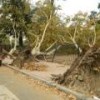
Buenos Aires Unprepared for Normally Extraordinary Storms
In Buenos Aires, damage to real estate from flooding is projected to total 80 million dollars per year by 2030 and 300 million dollars per year by 2050.
Project to Regularize Rural Land Tenure in Northeast Brazilian State of Piauí
The Brazilian state of Piauí will receive a major injection of funds to regularize land titles for family farmers and promote sustainable agricultural growth.Ecobreves – CUBA: “Greener” Cement Developed
Cuban scientists have developed a type of cement that is cheaper to produce and less polluting than conventional cement, with the support of the Federal Polytechnic School of Lausanne, Switzerland.Ecobreves – BRAZIL: Studying Manatee Reproduction Through Feces
The analysis of feces could be the key to better understanding the reproductive cycle of the Amazonian manatee in its natural habitat, according to the Conservation of Amazonian Aquatic Vertebrates Project at the Mamirauá Institute in Brazil.Ecobreves – HONDURAS: Public Officials Charged for Violating Environmental Law
Over the past year, the Environmental Prosecutor’s Office of Honduras has issued 19 injunctions against an equal number of individuals, including a number of public officials, for violations of the General Law on the Environment.
Who Will Deal with the Thousands of Abandoned Oil Wells in Peru?
Peru has thousands of abandoned oil wells that continue to pollute their surroundings, with 269 considered to pose a serious hazard. But the government has yet to carry out an inventory in order to identify and subsequently clean up and seal them, despite a law passed in 2007 for this purpose.
Brazil is a Model for the Rights of Forest Communities
Brazil is one of the most advanced countries in the world when it comes to legally guaranteeing the rights of forest communities and reducing deforestation, says economist Jeffrey Hatcher in this interview.Ecobreves – MEXICO: Call to Ban Transgenic Soybeans
An alliance of civil society organizations, academics and citizens has called on the Mexican government not to grant authorization for the commercial cultivation of genetically modified soybeans in the southeastern state of Yucatán, because of the potential impact on local honey production.« Previous Page — Next Page »





Tierramérica is the main communications platform on sustainable development and the environment in Latin America and the Caribbean. It is produced by IPS Noticias, the agency’s Spanish-language service, which created it jointly with the United Nations Development Programme (UNDP) and the United Nations Environment Programme (UNEP), with later support from the World Bank. The weekly editions of Tierramérica are published in Spanish, Portuguese and English and are picked up and printed by dozens of media outlets in the region. Follow us on Facebook and Twitter.

From the Frontline of Environment
Supported by

Tierramérica en Español

Terramérica em Portuguese

