Languages
Saturday, October 24, 2026



News and Views from the Global South


Green Economy Takes a Beating at Civil Society Forum
Activists gathered in Brazil from around the world doubt the political will of governments to attack the root causes of the environmental crisis, and demand drastic changes in the system of production and consumption.
After Durban, Latin America Looks Towards Rio+20
The upcoming summit in Rio de Janeiro presents an opportunity to reach agreements that can prevent the world from passing the point of no return in the unsustainable use of natural resources.Ecobreves – HONDURAS: Local Communities Lead Up Mitigation Efforts
The residents of Costa de los Amates, a region of Honduras near the border with El Salvador, are gearing up for community work aimed at preventing the flooding of the Goascorán River during the winter season.Ecobreves – ARGENTINA: First Energy Efficient Neighborhood
A multi-stakeholder forum made up by civil society organizations, private companies, academic researchers and the government plans to create a neighborhood in Argentina with 100 solar-powered homes.Ecobreves – MEXICO: Future of Cities Depends on Sustainability
Sustainability is decisive for the future of Mexican cities, concludes a new book on conditions in the country’s urban areas.Ecobreves – BRAZIL: Analyzing the Impacts of Plastic Bags
A study undertaken by the Technological Research Institute of São Paulo (IPT) will assess the impacts of plastic bags on a typically Brazilian environment. The statistics currently used in the country to measure these impacts come from foreign research.Only Civil Society Can Save Rio+20, Say Activists
Large-scale social mobilisation, including street protests and parallel activities, is the only thing can save the United Nations Conference on Sustainable Development (Rio+20) from ending in nothing but frustration, according to activists and analysts.
Only Civil Society Can Save Rio+20, Say Activists
Porto Alegre is preparing to receive thousands of activists for a Thematic Social Forum aimed at preventing the international environment summit in June from turning into another major disappointment.Ecobreves – VENEZUELA: Victory Over Yellowtail Moths
Significant advances were made last year in the battle against yellowtail moths (Hylesia metabus) in towns along the northeastern Venezuelan peninsula of Paria. The moths inhabit the mangrove swamps of the Gulf of Paria which separates Venezuela from the islands of Trinidad and Tobago.Ecobreves – BRAZIL: New Website on Endangered Animals
The Chico Mendes Institute for the Conservation of Biodiversity (ICMBio), a Brazilian national government agency, has launched a new website with information on endangered species found in the various conservation units for which the institute is responsible.Ecobreves – HONDURAS: Regional Loan for Wastewater Treatment
The Central American Bank for Economic Integration (CABEI) has approved a one-million-dollar loan to finance a wastewater management project in the Honduran capital, aimed at combating pollution in the Guacerique River basin, one of the city’s main sources of water.Ecobreves – CUBA: Therapeutic Cancer Vaccine Available in Clinics
Some 500 lung cancer patients at 65 polyclinics in Cuba have begun to receive treatment with the CimaVax-EGF therapeutic vaccine, developed by the Center for Molecular Immunology (CIM) on the western outskirts of the country’s capital.The Green Economy, Boon or Menace?
The development of the green economy is the subject of pitched debate among specialists. While some believe it will deepen social inequalities and increase corporate control over natural and biological resources, others highlight its potential role in protecting the environment and creating employment.Montevideo Tackles Gas Emissions from Solid Waste
The government of the Uruguayan capital plans to reduce greenhouse gas emissions from the solid waste produced by its 1.3 million inhabitants, through a project set to enter into operation in March. The carbon credits generated will be purchased by the World Bank.Ecobreves – HONDURAS: New Earthquake Shelter Opened
The Japan International Cooperation Agency (JICA) has joined forces with the local beneficiary population to build the first earthquake shelter in Honduras.Ecobreves – BRAZIL: Sea Level Rising More Rapidly Near São Paulo
The sea level of the Atlantic Ocean is rising increasingly rapidly on the northern coast of the southern Brazilian state of São Paulo, according to a new university research study.Ecobreves – MEXICO: Air Pollution Standards Demanded
The poor air quality in the Mexican capital points to the urgent need for regulations on the use of clean fuel and the control of motor vehicle emissions, warned a non-governmental organization.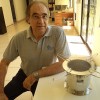
CLIMATE CHANGE: Clean, Efficient Wood Stoves Good for People and the Planet
In his quest to make the most efficient possible use of energy generated through wood combustion, Salvadoran René Núñez developed a simple but highly efficient wood stove that produces no smoke and reduces greenhouse gas emissions by 95 percent.SOUTH AMERICA: Responsible Tourism at the “End of the World”
An innovative responsible tourism initiative in the Beagle Channel - a narrow strait linking the Atlantic and Pacific near the southernmost tip of South America - ensures the compatibility of the observation and conservation of unique bird and mammal species.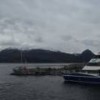
Responsible Tourism at the “End of the World”
Tour guides were the first to notice that the birds on the Beagle Channel islands, home to many unique species, were frightened away by the arrival of noisy boats full of visitors.Ecobreves – HONDURAS: Solar Power for Coffee Drying
Small-scale coffee growers in the northern Honduran region of Subirana are promoting the use of solar power to dry coffee beans in order to mitigate the pollution caused by other processes. Similar initiatives are also underway in Costa Rica and Nicaragua.« Previous Page — Next Page »





Tierramérica is the main communications platform on sustainable development and the environment in Latin America and the Caribbean. It is produced by IPS Noticias, the agency’s Spanish-language service, which created it jointly with the United Nations Development Programme (UNDP) and the United Nations Environment Programme (UNEP), with later support from the World Bank. The weekly editions of Tierramérica are published in Spanish, Portuguese and English and are picked up and printed by dozens of media outlets in the region. Follow us on Facebook and Twitter.

From the Frontline of Environment
Supported by

Tierramérica en Español

Terramérica em Portuguese

