
Saturday, October 10, 2026



News and Views from the Global South
Trade and poverty: Facts beyond theory
Caribbean Struggles to Make Complex Trade Deal with EU a Reality
When Caribbean journalists met in Antigua in late March to discuss the Economic Partnership Agreement (EPA) that was signed between the European Union and the Caribbean Forum (CARIFORUM) countries in 2008, they were told that the absence of tax treaties, foreign exchange controls and language barriers were among the factors preventing the full implementation of the accord.KENYA: Legal Lacuna While Biotechnology Is Sneaked in
Farming with genetically modified organisms (GMOs) is becoming more widespread in Kenya due the promotion of biotechnology through clever schemes, exacerbated by the lack of a legal framework for the commercialisation of these controversial products.
SIERRA LEONE: First Fruit Juice Company Adding Value to Farming
Crate loads of lush ripe mangos are stacked up, a sweet fragrance filling the air. Factory workers wait for their instructions, decked out in protective coats, rubber boots and hairnets. As they see each other kitted out for the first time, they break into giggles. This is a big week for Sierra Leone as its first fruit- processing plant goes into production.
LDCs Seek Mini Trade Deal
Leaders from the Least Developed Countries are making a strong push in Istanbul for a mini trade deal for their 48 impoverished nations - ahead of any worldwide agreement under the Doha Round.
ECONOMY: Malawians Keen to Build Trade Ties with India
Building on historical relationships, Malawians have set their sights on strengthening trade and investment relations with India in sectors as diverse as agriculture, telecommunications and pharmaceuticals.TRADE: Glencore: Profiteering From Hunger and Chaos
The rapid rise in prices for food, fuel and commodities has been disastrous for the world's poor, including Indonesian market vendor Lia Romi. But it's a bonanza for multinational trading firms such as Glencore.
DEVELOPMENT: Investment, Not Charity for LDCs
Least Developed Countries do not need charity; they want more and smarter investments. This is the point of departure for the Fourth U.N. Conference for the world’s poor countries (LDC-IV) begins in Istanbul, Turkey.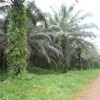
AFRICA: Development Agencies Support Harmful Oil Palm Production
Increasing industrial production of oil palm in sub-Saharan African countries, carried out by foreign corporations, is destroying the livelihoods of thousands of Africans and the biodiversity of ecosystems. Despite this, industrialised countries’ governments and development agencies continue to promote such production.
AFRICA: Investment Growth Benefiting Only Some Poor States
While foreign direct investment in least developed countries (LDCs) in Africa has risen sharply over the past decade, most of it went to resource-rich economies and had little impact on employment creation.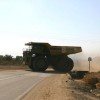
DEVELOPMENT-ZAMBIA: ‘Real Changes Needed in Policy and Implementation’
Zambia has enjoyed economic growth of around six percent per year over the past decade, says Patrick Mucheleka, but the government is failing to translate this into social and economic development for the majority of citizens. The upcoming conference on least developed countries in Turkey offers an opportunity to recalibrate the country's approach to development.Jamaica Moves to Slash Hefty Food Import Bill
Behind the rusting zinc sheets covering the gates to his inner-city home, Norman Hamilton is one of the army of backyard gardeners who have been called to action in Jamaica's latest efforts to improve food security.
AFRICA: Tripartite Free Trade Plan May Repeat Previous Mistakes
With regional wheels rolling to put in place the envisaged grand tripartite free trade area (FTA), questions have arisen about whether it would be viable and increase competitiveness.
TRADE: “A Doha Round Collapse Is a Betrayal of Poor Countries”
"It would be bad news for poor countries in Africa if the Doha Round of trade talks fails. This round was meant to rebalance the rules of world trade in favour of developing countries. We have put a lot of resources and hopes into this process and a collapse would be a big betrayal for us."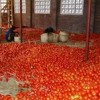
EAST AFRICA: Women Breaking Through Trade Barriers
For 12 years now, the women around Tsangano in Malawi’s southern district of Ntcheu have put together their tomato harvest, selling some 20 tons at the outdoor markets that abound in Lilongwe, the capital. But they have very little to show for their hard work.Colonial-Style Land Grabbing Back on the Table
The highly-contested Principles on Responsible Agricultural Investment (RAI), a set of priorities that peasants’ collectives and food rights groups have been battling for years, are back on the table this week, as the annual Conference on Land and Poverty opened at World Bank headquarters here Monday.ZAMBIA: High-Tech Border Post Transforming Trade
A few weeks ago, a truck driver got the shock of his life when his employer called from South Africa asking why he had siphoned fuel from his vehicle while awaiting clearance at the Kasumbalesa Border Post between Zambia and the Democratic Republic of Congo.
SENEGAL: Dispute Over Fishing Permits for Foreign Fleets Hots Up
Senegal's small-scale fishers are challenging the government over licences granting foreign trawlers permission to fish in Senegalese waters. The artisanal fishers condemn the "selling off" of the country's fishery resources at a time when stocks off Senegal's coast are severely depleted.DEVELOPMENT: IBSA Fund Packs Small But Sustainable Punches
Despite only three million dollars a year coming into the India-Brazil-South Africa (IBSA) Fund for Poverty and Hunger Alleviation, it aims to pack punches above its weight with small but sustainable projects.DEVELOPMENT: IBSA’s South-South Funding With No Strings Attached
Development donors typically impose strict conditions on recipient countries. Now a different South-South approach to funding is taking shape through the India-Brazil-South Africa (IBSA) Fund for Poverty and Hunger Alleviation.DEVELOPMENT: India and South Africa — Ever-Tightening Relations
Much is made about China’s footprint in Africa but what about its emerging markets rival India?Dominican Republic Seeks Greater Autonomy for CARIFORUM
The first public hint that something was amiss within the Caribbean Forum (CARIFORUM) bloc came last week from Belize's foreign minister, Wilfred Elrington, when his country hosted the 18th meeting of the Caribbean Community (Caricom) Council of Ministers, the second highest body within the 15-member regional grouping.« Previous Page — Next Page »





Trade has historically been a geopolitical tool, creating significant economic imbalances in developing countries. However, many countries in East Asia and Latin America have been able to alleviate poverty due to increasing trade. Tackling poverty has proven to be much harder in low income countries in sub-Saharan Africa, Asia and Latin America, and their dismal trade performance is one important reason for that. They remain at the margins of world trade and indeed of the world economy. These articles are aimed at informing readers about the complexities of trade and its varying effects on development, with a special focus on the consequences of the global economic crisis, the potential of fair trade and the gender implications of trade policies.

The Week with IPS

Tracking global progress towards a sustainable world
