Languages
Saturday, November 21, 2026



News and Views from the Global South
Africa
Deep Divisions Over Egypt’s Referendum
Egyptians go to the polls Saturday to vote on a package of constitutional amendments which, in some ways, mirrors the longtime demands of the Egyptian opposition.
INDIA: Engaging Africa With Software and Soft Power
India cannot match China’s massive investments in Africa, but it is using its information technology capabilities and its affordable university courses to stay relevant on the continent.
Libya Declares Immediate Ceasefire
Libya's government has announced it will halt all military operations in the country hours after the United Nations Security Council backed a no-fly zone over the country.POLITICS-ZAMBIA: Days of Male Domination Numbered
Elizabeth Phiri was so incensed when she was overlooked as a parliamentary candidate for the Patriotic Front in a 2008 by-election on the basis of her gender that she quit the party. Four years on, she has rejoined the party but remains pessimistic - but other women politicians see reasons to hope the 2011 elections will be different.
AFRICA: Anxious Eyes on Green Climate Fund
The African Development Bank says it is concerned about administrative delays holding up progress on the Green Climate Fund - one of the most significant achievements from the Cancún climate talks.
Investment in African Economies Shifting Away from Raw Materials
Local and foreign investment on the African continent is slowly moving away from agriculture and raw materials to manufacturing, services, communication and tourism, despite poor infrastructure and low skills levels.Malawi Donor Funding Threatened by Rights, Governance Issues
Malawi is bracing itself for difficult economic times following a decision by the country’s main donors to withhold financial aid amounting to $400 million. Donors say they are responding to a range of governance and human rights issues in the country.U.S. Congress Weighs Aid Package to Post-Mubarak Egypt
As Egypt braces for Saturday's vote on constitutional amendments in its first referendum since the revolution, lawmakers here are seeking to address the North African country's economic situation in addition to immediate political developments, by introducing legislation that seeks to stimulate foreign direct investment (FDI).
U.N. Body Authorises Military Intervention in Libya
As Libyan leader Muammar el-Gaddafi's fighter planes and helicopters continue to mercilessly pound civilians and rebel groups inside Libya, the U.N.'s most powerful political body voted to militarily intervene in the besieged North African country in an attempt to prevent and neutralise the attacks.Military Intervention in Libya May Already Be Irrelevant
As the White House and its partners in the international community inch closer to a decision over military action in Libya, while Muammar Gaddafi's forces advance steadily into rebel-controlled territory, some analysts argue that the intervention debate is nearing irrelevance after raging unabated for almost a month.
AFRICA: ‘We Cannot Leave Lives of Nationals to Development Partners’
As donors retreat from funding HIV prevention and treatment, the vulnerability of national programmes reliant on external funding has become apparent. Without long-term sustainability, the lives of millions could be at risk.Agricultural Policy Is Gender Policy
Eva, a Ghanian woman, was given five pigs and some training on how best to care for them. Eventually, her farm grew to 400 pigs and she was able to buy more land and a motorbike which she not only used for transporting her goods to market but for helping neighbours get to town and to hospital quicker.SOUTH AFRICA: Convention To Secure Decent Work for Domestic Workers
Despite formal recognition of domestic workers' rights in South Africa, they still face a struggle for fair treatment.
Zambezi Floods Displace Thousands in Namibia
Thousands of people and livestock in the Caprivi Strip have had to be evacuated as annual floodwaters rise in the Zambezi. However, loss of life has been kept to a minimum as informal warning systems prove to be effective.
KENYA: Community Turns Garbage Into Energy Source
A community-based organisation in the Kenyan slum area of Kibera set out to clean up garbage and deal with waste water; Ushiriki Wa Safi ended up creating a community cooker that turns waste into an energy source.
AFRICA: Responsible Travel Means Not “Haggling Over Wooden Beads”
Tourism as a concern found its way onto the agenda of the 1992 Earth Summit in Rio de Janeiro because of its potential for development but also due to its adverse effects on some populations and natural resources, particularly in Africa.SOUTHERN AFRICA: Plumbing Grey Data for Clear Water
They come like pilgrims to the Department of Geological Surveys office in Lobatse, 120 kilometres south of the Botswanan capital. In the sparsely furnished offices there, they pore over charts, trying to take the guesswork out of choosing where to sink a borehole.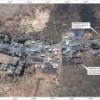
LIBYA: Satellite Technology to Help the Displaced
Analysis based on satellite images and maps is helping to identify the flows of people fleeing the political violence in Libya to neighbouring countries.
ZAMBIA: The Extended Family – Blessing or Burden?
Peggy Kapanda has bad memories of the time she spent living with her uncle when she was young. She was treated as a second-rank child. But this only motivated her to do a better job herself. At her small home in John Laing compound, in Zambia's capital Lusaka, she and her husband take care of two other children in addition to their own three young boys.MALAWI: Uncertainty Over Role for Traditional Birth Attendants
When the ban on traditional birth attendants was lifted last year, pregnant women quickly appeared at Dorothy Chirwa's door in Malombe village in Mangochi, a district on the southern shores of Lake Malawi. Chirwa was among the thousands of TBAs banned from providing women with care in 2007.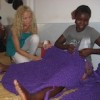
TRADE: Chic Carpets Link Mozambique, Denmark and, Soon, Brazil
In two rooms in a small Mozambican coastal town, 70 women are cutting, weaving and packaging fabric carpets destined for eclectic design and homeware stores in Denmark and, soon, Brazil and South Africa.« Previous Page — Next Page » *#*

The Week with IPS

NEXT STOP - SDGs
Tracking global progress towards a sustainable world
Tracking global progress towards a sustainable world
