Languages
Monday, November 23, 2026



News and Views from the Global South
Africa
RIGHTS-ZIMBABWE: Activists Freed on Bail, Charges Remain
Eighteen political activists who were sent back to prison May 5 following their formal indictment on charges of terrorism have been released the following day after an intervention from the highest level.
RIGHTS-SIERRA LEONE: Child Miners: Legacy of Conflict
Since the end of the civil war seven years ago, the Sierra Leonean authorities and child welfare agencies have been battling to remove children from the diamond-mining fields, a trend which began at the height of the conflict, when children were abducted by rebel forces and coerced to work in the mines.TRADE: EC Manufactured Bogus ‘African Business’ Support for EPAs
The exposure of the European Commission's (EC) manufacturing of African business support for the contentious economic partnership agreements (EPAs) has so far elicited little action by members of the European Parliament.
Q&A: African Women Worst Affected by Global Economic Crisis
The global financial crisis is on everyone's lips. With first hand reports of job losses, house foreclosures and citizens living on credit card debt, the impact of the crisis on the individual worker in the developed world is clear. In Africa, there have been threats of closures and retrenchments in the Zambian copper mines and Botswana's diamond mines, amongst others. But the impact on the individual citizen and African women in particular, given the existing gender inequalities, has not been well documented.
RIGHTS-LIBERIA: Justice Delayed Is…
The rain was falling hard in the early hours of April 17, when forty detainees kicked down the doors to their cells at the National Palace of Corrections, scaled the prison’s barbed wire fence and rear watchtower, and disappeared into the dark, sodden jungle.EGYPT: Viral Time Bomb Set to Explode
It is a health crisis of alarming proportions. Up to nine million Egyptians have been exposed to hepatitis C, and tens of thousands will die each year unless they receive a liver transplant.DEVELOPMENT: Make Use of African Skills
The theme of the third biennial Knowledge Management Africa (KMA) conference, which opened Monday in the capital of Senegal, is lofty - "knowledge to reposition Africa in the world economy". But the aim is more down-to-earth: to find ways to apply vital information to the basic question of improving the lives of Africa's people.
Q&A: 'Just Give Money to the Poor'
Cash transfers are the new darlings of proponents of welfare programmes. Mexico, Brazil, Bangladesh, lately New York City, and about two dozen developing countries presently dole out money to poor families, usually with conditions attached, such as taking their children to school and health checkups.LESOTHO: Help At Hand for Orphans
The Lesotho government - battling against the challenges presented by an ever-growing population of orphans whose parents have succumbed to the AIDS pandemic - has embarked on an ambitious programme aimed at alleviating the suffering of these vulnerable children, in partnership with the European Union and UNICEF.
RIGHTS: Against Sexual Violence: Solidarity Among African Women
Increased cases of rape and sexual abuse of women and girls is closely associated with armed conflict and its aftermath in Africa.AFRICA: Women's Bodies Have Been Battlefields
Religion, cultural norms and tradition promote discrimination and unequal power relations between men and women in Africa. Akina Mama wa Afrika's Christine Butegwa doesn't hesitate when asked what explains the horrific levels of sexual violence against women in conflict-affected areas on the continent.
Q&A: Average Marks for East African Press Freedom
Four years ago, a furious Lucy Kibaki, Kenya's First Lady, marked World Press Freedom Day by storming the offices of leading independent publisher the Nation Group with her entourage."US-SUDAN: Darfur Activists Deplore Closer Ties With Khartoum
Washington's recent move to "normalise" relations with Sudan is being called a "capitulation" by critics.HEALTH-NAMIBIA: Eight Southern African Countries Team Up to Fight Malaria
Within the next twelve months, eight Southern African countries will synchronise their battles against malaria through cross-border collaboration. They hope to eliminate malaria in four of them by 2015.
ANGOLA: No Law to Stop Domestic Violence
Teresa Barros’ problems started last year with the death of her baby.HEALTH-MALAWI: Women’s Group Sues Govt Over Abortion Rights
An influential women rights organisation in Malawi, Women in Law in Southern Africa-Malawi (WILSA-Malawi), is suing the government of Malawi for preventing women from accessing safe abortion.
RIGHTS-SIERRA LEONE: Special Court Wraps Up, But Has Justice Been Done?
On Apr. 8, the UN-backed Special Court for Sierra Leone passed sentences on three former commanders of the Revolutionary United Front (RUF), bringing to an end the trials of militia leaders deemed responsible for atrocities committed during the country's bloody civil war, fought from 1991 to 2002.ZIMBABWE: Urban Residents Left Behind by Dollarisation
Cash-strapped residents of Bulawayo, Zimbabwe's second city are digging in their heels and refusing to pay utility bills despite the municipality teetering on the brink of bankruptcy. At the heart of the dispute are dismal service delivery and the conundrum of using multiple currencies in an economy that boasts world record inflation.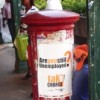
ZIMBABWE: Who Speaks for the People on New Constitution?
"Are you still unemployed? Take charge and complete the change. We the people shall write our own constitution," read the many bright posters now adorning street walls, lampposts and rubbish bins in Zimbabwe’s capital, Harare.RIGHTS: Kenya Cannot Fail to Prosecute Extra-Judicial Killings
When stock is taken of the Kenyan coalition government’s first year in office no marks will be awarded to its handling of extra-judicial killings in the country. Human rights activists claim that the police have murdered about 500 people in the past 16 months.
Q&A: ‘‘Poor Countries Struggle to Mainstream Gender in Trade’’
Trade affects women and men differently. Women's livelihoods, in particular, can be undermined by trade liberalisation. Despite this fact, gender analysis is usually absent from trade negotiations and agreements.« Previous Page — Next Page » *#*

The Week with IPS

NEXT STOP - SDGs
Tracking global progress towards a sustainable world
