Languages
Saturday, October 17, 2026



News and Views from the Global South
Asia-Pacific
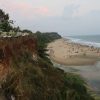
Rampant Tourism, Climate Change Threatens Varkala’s Unique Geodiversity
From the top of the cliff, the beach down below appears like a box of sand, with people scattered on it like tiny ants. This is Varkala, arguably the most sought-after coastal tourism spot in Kerala, India, right now. The Varkala cliff—spanning across Edava Cliff, North Cliff, and South Cliff—is 7.5 km long and has a maximum height of 40 m. Religious rituals take place at the part of Papanasam beach that divides the North and South Cliffs.
Chel Snakehead: A Fish That Time Forgot, Rediscovered
The Chel Snakehead fish, thought to be extinct, has made a dramatic comeback to the eastern Himalayan ecosystem after more than 85 years of absence near its source river in India.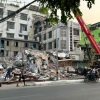
Shaken and Strained: Myanmar’s Earthquake Adding to the Misery of 4 Years of Conflict
As I walked through the streets of Sagaing and Mandalay, the scenes unfolding in the wake of the 7.7 earthquake were hard to comprehend. Tall buildings and hundreds of homes are now lying in rubble. Of those that are still standing, many are lurching at dangerous angles, defying gravity for now, but could collapse at any moment.
Four Rare Snow Leopards Spotted Together on Pakistan’s Northern Peaks
In a remarkable conservation achievement, four rare and elusive snow leopards have been spotted together in the rugged peaks of northern Pakistan, highlighting the success of the ongoing global efforts aimed at protecting this critically endangered species and preserving its fragile habitat.
While India’s RAMSAR Sites Tally Rises, Wetlands Remain Endangered
Late in February, India’s noted ornithologist and conservationist, Asad Rahmani, wrote a letter to a wildlife warden in north India expressing his satisfaction about the availability of water in four important wetlands in Kashmir, where migratory birds from central Asia and Europe arrive annually for wintering.
Rohingya Refugees Are Not Safe in Bangladesh or Myanmar
On April 4, it was confirmed by Myanmar authorities that there were approximately 180,000 Rohingya refugees residing in Bangladesh that are eligible to return. Following numerous cuts in funding as a result of President Donald Trump’s reduction of USAID, as well as the increasingly volatile humanitarian crisis in Myanmar, it is uncertain if repatriation will best serve Rohingya refugee communities.
‘Act Before It Gets Worse’ – Experts Warn as Agrifood Problems in Global South Intensify
As agrifood systems in the Global South buckle under the weight of climate change, biodiversity, and even pollution, experts such as Dr. Himanshu Pathak call for urgent innovative solutions, as, at the current pace, the problems of the Global South are going to intensify with escalating climate change.
South Korea’s Rapid Aging Doesn’t Have to Be Economic Destiny
Strong economic fundamentals and sound macroeconomic policies have helped the Korean economy through multiple shocks in recent years. However, potential growth has slowed more quickly than in other major advanced economies, and the economic expansion is likely to moderate this year.
Lessons from the Global South on Transforming AgriFood Systems
The state of food and nutrition security in the Global South masks the great strides and investments made to increase agricultural yields to feed a rapidly growing population. As discussions deepen at the ongoing CGIAR Science Week, plenary discussions on Wednesday (April 9) explored transformative strategies and innovations driving agricultural resilience across Africa, the Caribbean, and Latin America.
ASEAN-CGIAR Regional Programme Can Encourage South-South Collaboration
The ASEAN-CGIAR program "unlocks opportunities to look at commodities in the region, interest, markets, and capacity building, Director General of the International Rice Research Institute (IRRI) Dr. Yvonne Pinto said during a plenary that focused on fostering regional integration, scaling innovation, and amplifying the impact of CGIAR's research in addressing agricultural challenges.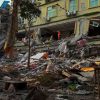
Myanmar Reels From Its Strongest Earthquake in Over a Century
The 7.7 magnitude earthquake that struck central Myanmar on March 28, marked the strongest earthquake the nation has experienced in over a century and the second deadliest in it’s history. The earthquake caused extensive damage in Myanmar and Thailand, with infrastructures in southern China and Vietnam also having been affected.
Challenging the Taliban’s Violations of Afghan Women’s Rights
The Taliban’s egregious violations of women's rights in Afghanistan, especially banning women from education and even from speaking in public, are beyond the pale. Imposing economic sanctions alone, however, has not changed in any significant way the Taliban’s treatment of women.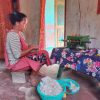
Solar-Powered Spinning Machines Help Indian Women Save Time and Earn More
As light enters through the small window of a modestly constructed tin-roofed house, Philim Makri sits on a chair deftly spinning cocoons of eri silk with the help of a solar-powered spinning machine in Warmawsaw village in Ri Bhoi district of Meghalaya in northeast India.
Regime Obstructs Aid But Finally Declares Ceasefire in Quake-hit Myanmar
Boosting faint hopes of still finding survivors, rescue workers from Myanmar and Turkey pulled a man alive from the rubble of a hotel in the capital early on Wednesday, five days after the quake hit. But hope of finding more survivors is slim after central Myanmar was devastated by a massive earthquake last Friday. Now aid workers are struggling to deliver body bags, medicines and food and water against the backdrop of civil war.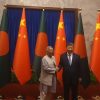
Bangladesh Chief Advisor’s China Tour Cements Dhaka-Beijing Relations
Bangladesh's Chief Adviser, Professor Muhammad Yunus's state visit to China, where he met Chinese President Xi Jinping, was seen as an opportunity to reaffirm old diplomatic and economic ties between the two countries.
Southeast Asia’s Economies Can Gain Most by Packaging Ambitious Reforms
Southeast Asia’s major economies have made major strides over the last couple of decades. The largest have seen income per capita grow at least three-fold over the past 20 years amid global integration and prudent policymaking.
Water and Food Security in Europe and Central Asia: A Shared Challenge for a Sustainable and Just Future
Degrading soil, air pollution, vanishing biodiversity, emerging plant and animal health issues and more are coming together in the current situation of multiple crisis. Ensuring water security is just one, among the many challenges individuals, countries, and the world faces. Yet, we shouldn’t forget that water makes up the largest percentage of our bodies and the same applies to animals, plants and the planet’s surface. The threat of water insecurity is, as we all see, not a petty problem, but one of the greatest challenges of our century.
Indian Colonialism in Sri Lanka
Following independence from Britain, both India and Sri Lanka emerged as leaders of the Non-Aligned Movement, which sought to advance developing nations' interests during the Cold War. Indeed, the term "non-alignment" was itself coined by Indian Prime Minister Jawaharlal Nehru during his 1954 speech in Colombo.
Bangladesh’s Ethnic People Safeguarding Forests and Wildlife
Kishore Kumar Chakma, a young man from an ethnic community in Rangamati district, voluntarily guards a village common forest (VCF) so that none can hunt wild animals and fell trees from it.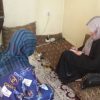
Young Women in Afghanistan Driven to Suicide Amid Widespread Frustration
Azar Shaimaa sits in grief, her voice trembling with sorrow as she recounts the devastating loss of her daughter, Benazir. A bright ninth-grade student, Benazir took her own life. Just three years earlier, Shaimaa lost her husband in a car accident.
Papua New Guinea: Years of Environmental Clean Up Ahead Following New Report on Abandoned Bougainville Mine
Local communities are finally witnessing progress in their mission for justice, 36 years after the Panguna copper mine in Papua New Guinea’s Autonomous Region of Bougainville became the centre of landowner grievances about environmental damage.« Previous Page — Next Page »





The Week with IPS

NEXT STOP - SDGs
Tracking global progress towards a sustainable world
Tracking global progress towards a sustainable world
