Languages
Wednesday, November 11, 2026



News and Views from the Global South
Asia-Pacific

No More Lost Generations: Global Fund Provides Education for Children in Crisis
15-year-old Humaira* sits on the mud floor of her hut in Ukhiya camp, Cox's Bazar, listening as the rain beats down on the tarpaulin roof.
Getting India’s Construction Workers Their Entitlements
Basant Lal Chaudhary migrated from his village of 1,200 people in Madhya Pradesh, to a city of 90,000 people in Jammu and Kashmir in 2016. He last worked as a construction worker, before the COVID-19 lockdown forced him out of employment.“I used to earn a daily wage of INR 350. That was my only source of income,” he shares. During the lockdown, he along with others who worked with him, are finding it difficult to make the ends meet.”I don’t know whether I will be able to find work here anytime soon.”
Crisis Management 101: Treating the Climate Crisis Like a Pandemic
On 23 February 2020, the South Korean government raised the national Crisis Alert Level to the highest tier in response to the Covid-19 pandemic. Since then, we have witnessed what our society is capable of when faced with a crisis.
75 Years after the Bomb, Hiroshima Still Chooses ‘Reconciliation and Hope’
In a video message delivered to a Peace Memorial Ceremony in Japan on Thursday, UN Secretary-General António Guterres has paid tribute to the victims of the atomic bombing of Hiroshima, which devastated the city in 1945.
Mental Health and COVID-19 in India
To fully realise the mental health crisis that India faces in relation to COVID-19, one has to begin with recognising the very serious situation that existed even before the pandemic.
Bangladesh Deals with Triple Disasters of Flooding, Coronavirus and Lost Livelihoods
With nearly 5.5 million people people across Bangladesh affected by severe flooding -- the worst in two decades -- humanitarian experts are concerned that millions of people, already badly impacted by COVID-19, will be pushed further into poverty.
The New Poor Post-pandemic: Time for Cushioning the Most Vulnerable in Southeast Asia
After decades of impressive growth, for the first time, Southeast Asia is experiencing a drop in measured human development. The economic fallout from the COVID-19 pandemic will likely take months to reveal itself and years to put right. Yet, a legacy of mobilizing under constraints is leading Southeast Asia’s pandemic response.
Kashmir Now Hotspot of Illegal Riverbed Mining
Going against its own orders, the government in the Indian Union Territory of Jammu and Kashmir has ordered the fast-tracking of environmental clearances despite manifest evidence of illegal sand mining.
The COVID-19 Plastic Pandemic
The coronavirus pandemic was a respite for nature everywhere. The air was cleaner, trekking trails were pristine, the summit of Mt Everest was deserted, and worldwide carbon emission dipped by -26%.
Modern Tools, Age-old Wisdom: on India-Sri Lanka Relations
The unique India-Sri Lanka relationship, de jure, is between equals as sovereign nations. But it’s asymmetric in terms of geographic size, population, military and economic power, on the one hand, and social indicators and geographical location, on the other. It is steeped in myth and legend, and influenced by religious, cultural and social affinities.
Southeast Asia Has a Chance to Build Back Better Post-Pandemic
Southeast Asia’s response to the coronavirus pandemic has been efficient, but some areas such as data privacy, measures to go back to normalcy after lockdown is lifted, and resources for migrant or transient populations will need addressing.
Google’s $10 Billion Investment in India Should be Inclusive of Persons with Disabilities
Over the next seven years, Google will invest a whopping $10 billion in India to improve technology, health and education, according to CEO Sundar Pichai. This is unprecedented and could be a game changer that could improve health, education and economic empowerment.
Only Governments Can Prevent Covid-19 Recessions Becoming Depressions
Covid-19 threatens economic life the world over. The most urgent and important need is for governments, businesses and families to survive. Governments must revive economies and livelihoods to prevent Covid-19 recessions from becoming protracted depressions. The Covid-19 crisis is clearly a ‘black swan event’, threatening both public health and livelihoods. Both the pandemic and containment efforts are not due to business operations and decisions, but nonetheless have compelling consequences for them.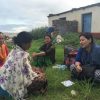
Include Indigenous People in COVID-19 Response
In Nepal the COVID-19 crisis has been especially hard on indigenous peoples. We had to learn a new vocabulary and use words like quarantine, self-isolation, hand sanitizers and social distancing.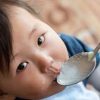
COVID-19 Means Development Setbacks for Mongolia
Mongolia has recorded very few cases of COVID-19, less than 300 as on date, despite its more than 4,000 kilometre porous border with China. However, the country faces a major economic impact from the pandemic.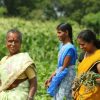
Securing Property and Land Rights in India
Secure property rights are fundamental to the economic and social development of any country. However, in India, we are faced with a curious conundrum where more than 70 percent of a household’s assets are held in land and housing, yet there is insufficient data and research on people’s property rights.
A Determined Path to the SDGs in 2030 Despite the COVID-19 Pandemic
As lockdowns ease in countries across Asia and the Pacific in the wake of the COVID-19 pandemic, one thing is clear—a return to business as usual is unimaginable in a region that was already off track to meet the Sustainable Development Goals (SDGs). The virtual High-Level Political Forum on Sustainable Development recently convened governments and stakeholders across the globe to focus on the imperative to build back better while keeping an eye on the Global Goals.
Gender Inequality and Oppression of Women: A Survivor’s Story
“What do you think happens to kerosene when it is poured on your head?” Surya stumbles as she speaks to IPS. “It goes down, it goes trickling down.” When someone speaks to a burn victim, one naturally feels shocked, sad, and sympathetic. But in talking to Surya, who has the major part of her body burned, the feelings were of hope and inspiration. How is it possible to survive this trauma and still have so much love and joy to share?
Rohingya Women Take a Seat at the Table & Share Stories in a Growing Rights Movement
Rohingya women are coming together to feature their own work, plight and stories in mainstream conversations about their community — a space they say they’ve been left out of. “If we think of revolutions or liberty or think of any ways to liberate ourselves from the shackle of suffering and being dubbed as 'the most persecuted minority on earth', women have to be part of it,” Yasmin Ullah, president of the Rohingya Human Rights Network, told IPS.
Singaporeans Opt for Continuity in Polls: ‘Strong Mandate’ for Government, but ‘no Blank Cheque’!
Singaporeans went to polls on Friday the 10th of July. It was a crisis election, seen as the most significant since the country’s independence in 1965, given the backdrop of the COVID 19 pandemic and its massive negative impact on the economy on this small but wealthy island republic. Out of a population of nearly 5.85 million on election day, the number of registered voters stood at 2.65 million. It was no surprise that in a nation with a reputation of unmatchable discipline, the voting was an orderly process. In conformity with rules each voter was masked, safe distancing was scrupulously maintained, and their hands were sanitized as they entered the booths. The elderly, who needed it, were provided assistance. The electorate returned what has been assessed as a sophisticated, calibrated and mature outcome. It re-elected the incumbent People’s Action Party (PAP) to power with a sufficiently strong enough mandate to help it pull the nation out of the crisis. At the same time, it also created a diversity in the legislature that would ensure that the government did not have a blank cheque for unrestricted authority.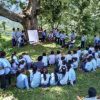
Digital Divide Exposes Class Divide in Nepal Schools
Nepal’s education system was in crisis long before the pandemic hit. But with schools closed now for four straight months, remote learning has also exposed the class divide in access to education.« Previous Page — Next Page »





The Week with IPS

NEXT STOP - SDGs
Tracking global progress towards a sustainable world
Tracking global progress towards a sustainable world
