Languages
Tuesday, November 17, 2026



News and Views from the Global South
Europe
ABKHAZIA: Russia Offers a Boost
Russia is stepping up investment in Abkhazia and South Ossetia after recognising their independence last year.RIGHTS: Roma Are Scapegoats During Downturn
On International Roma Day, Wednesday, human rights groups voiced their concern for the discrimination and violence against Roma in European countries.BALKANS: Cluster Bombs Threaten Thousands
An estimated 160,000 people in Serbia are still in danger from thousands of unexploded cluster bombs, ten years after the NATO bombing campaign. The danger is gravest in the south, close to the border with Kosovo.TRADE: EC Urges SADC on About EPA as ‘‘Time Is Not on Our Side’’
Southern African countries remain mum on the interim economic partnership agreement (EPA), despite a letter from European Commission (EC) trade commissioner Catherine Ashton urging them to sign.GREECE: For Refugees, Could Afghanistan be Worse
For more than a decade migrants and refugees have been landing up at a slum in Patras town in the hope of catching a boat to Italy.EUROPE: Communist Ideology, as bad as Nazism?
A declaration which equates communism to Nazism and condemns communist ideology as "directly responsible for crimes against humanity" has been debated in the European Parliament on the initiative of the Czech Presidency of the European Union.ROMANIA: Pushed by Crisis Into Dubious Borrowing
The Romanian government is borrowing close to 20 billion euros from international financial institutions in order to stem the effects of the global financial crisis. But few in the country seem to know precisely how the money will be used and whether it will have a more positive than constricting effect.FRANCE: Film on Migrants Sparks Legal Debate
A new film on undocumented migrants has sparked heated discussion among the public and lawmakers here.MOLDOVA: New Look Communists Offer Stability
Moldavians are heading for general elections this Sunday. After a campaign marred with illegalities, the incumbent Communist Party is confident of winning most seats in the national parliament.PARAGUAY: Debt for Education
The start of the new school year in Paraguay in March once again highlighted the serious shortcomings plaguing the educational system, like rundown school buildings and a shortage of classrooms. But an agreement to swap debt for education will help the government begin to address the problems.TURKEY: Poll Win a Setback for AKP
Turkey's ruling party won the local elections last week, but the reduced majority comes as indicator that its popularity may be in decline.EUROPE: Scrambling to get it Right on Afghanistan
As NATO prepares to celebrate its 60th year, Europe's somewhat fractured Afghanistan policy, which will feature large in discussions at the organisation's anniversary summit this weekend, needs to improve significantly if it is to gain any credibility in the region, say policy experts in Brussels.EUROPE: Made in Israeli Settlements, But Never Mind
European Union officials are seeking evidence to support claims that fruit and vegetables from Israeli settlements in the Palestinian territories are being exported under false pretence.G20: Where Is the Money, and Who Is the Moneylender
It seemed like a lot of money at the time. The leaders of the group of eight richest countries, the G8, met in Gleneagles in Scotland and announced 50 billion dollars in new aid, half of that for Africa and half for the rest of the world.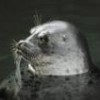
CLIMATE CHANGE: Seals in the Baltic Left without Ice
Ringed seals in the Baltic Sea are finding fewer and fewer ice caves in which to raise their young. Rising global temperatures are the problem, and in turn are depleting the main food source of the giant polar bear, say scientists.POLITICS: U.S., Russia Affirm Ideal of “Nuclear-Free” World
In a meeting on the eve of the G20 summit in London, the leaders of the U.S. and Russia set out to take the first concrete steps towards a "reset" of relations between the two countries.ENERGY: Oil Producers Look for Ways out of Crisis
With the price of crude oil down more than 50 percent from a year ago, and with U.S. President Barack Obama championing alternative forms of energy, oil producers are scrambling to find ways to protect their industry.G20: One Size Does Not Fit All
There is on the face of it a fairness in the language hanging over the G20 summit that is quite seductive. "A global crisis requires a global solution," everyone who matters seems to be saying, at least towards the richer end of the G20 spectrum. Such talk is getting louder by the day as heads of state and government head for a meeting in London Thursday to address the global economic crisis.G20: Next Time, Perhaps…
If the draft declaration of the G20 meeting in London is anything to go by, the most specific outcome of this summit is that there will be another one later in the year.GHANA: Cadbury’s Deal Destined to Sweeten More Farmers’ Lives
The initiative linking British chocolate giant Cadbury’s with a Ghanaian cooperative representing 40,000 cocoa farmers is set to grow further and enhance the livelihoods of more farmers.G20: Japan Carries African Concerns To London
Japan, the world's second largest economy, is calling for global initiatives to reactivate financial flows to Africa, including government grants, concessional loans and lines of credit.« Previous Page — Next Page »


The Week with IPS

NEXT STOP - SDGs
Tracking global progress towards a sustainable world
Tracking global progress towards a sustainable world
